The 10% Rule: Who is Really Driving the GenAI Boom
November 17, 2025
"10% of users drive 62% of visits" with demographic breakdowns by age, gender, employment.
Learn morePublished December 1, 2025
Shows GenAI is a "9 to 5 tool" with demographic variations affecting weekend engagement.

Look at when people actually open ChatGPT, Gemini, or Claude and a clear rhythm emerges: GenAI behaves like a workplace tool, not a leisure one. Using UK demographic data from September 2025, we mapped visits to major GenAI platforms across every day of the week, and the shape that comes back looks a lot like a 9-to-5 job.
Across the whole panel, unique users fall 13% at weekends and total visits drop 23%.
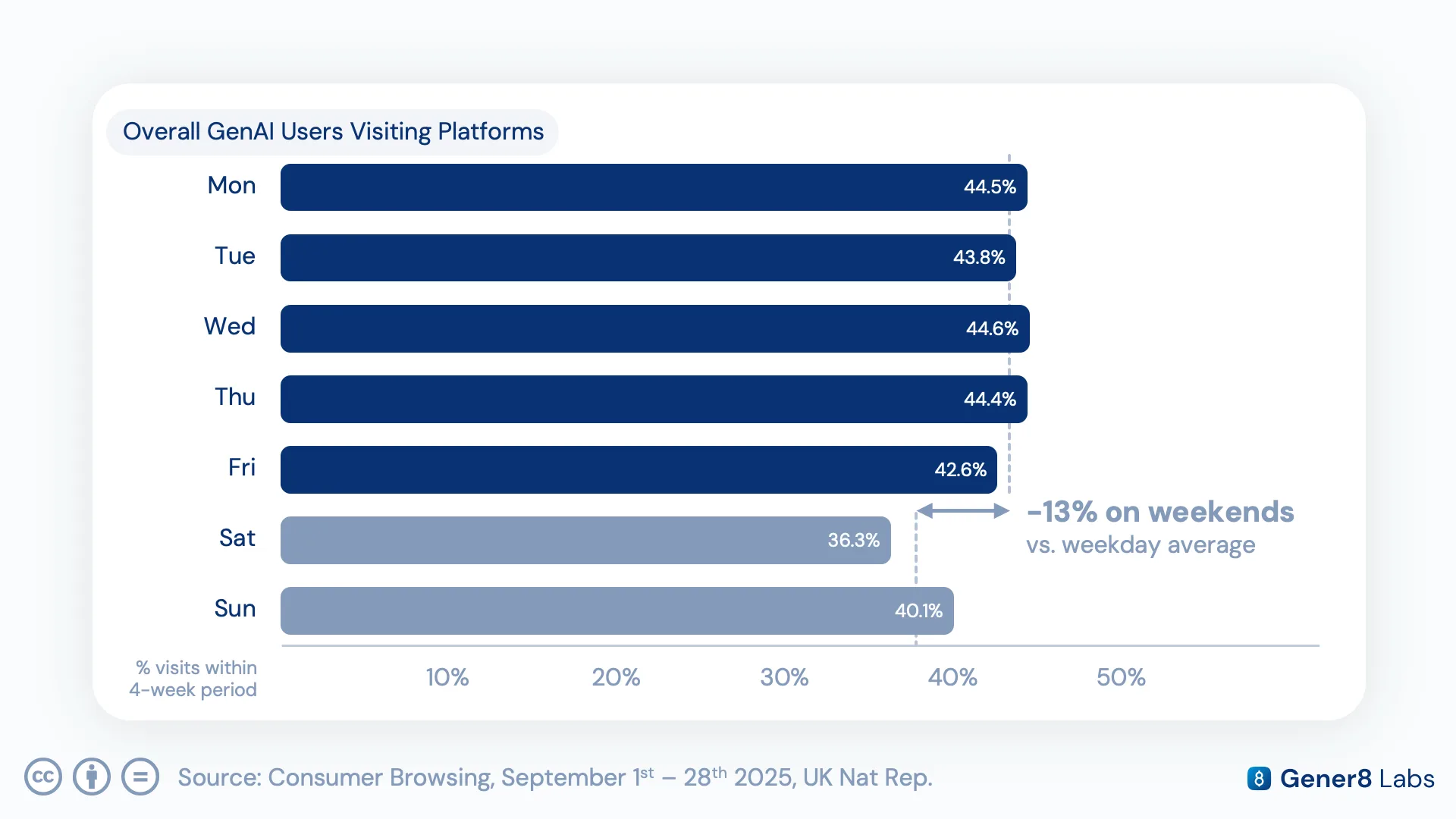
Monday is the peak day for engagement, while Friday, arguably the point where the working week is already winding down, shows noticeably softer usage than the rest of the weekdays.
That work-week shape isn't uniform across the panel. Breaking it down by gender, age, education and employment status shows very different-sized weekend drop-offs, and a few groups where usage barely dips at all.
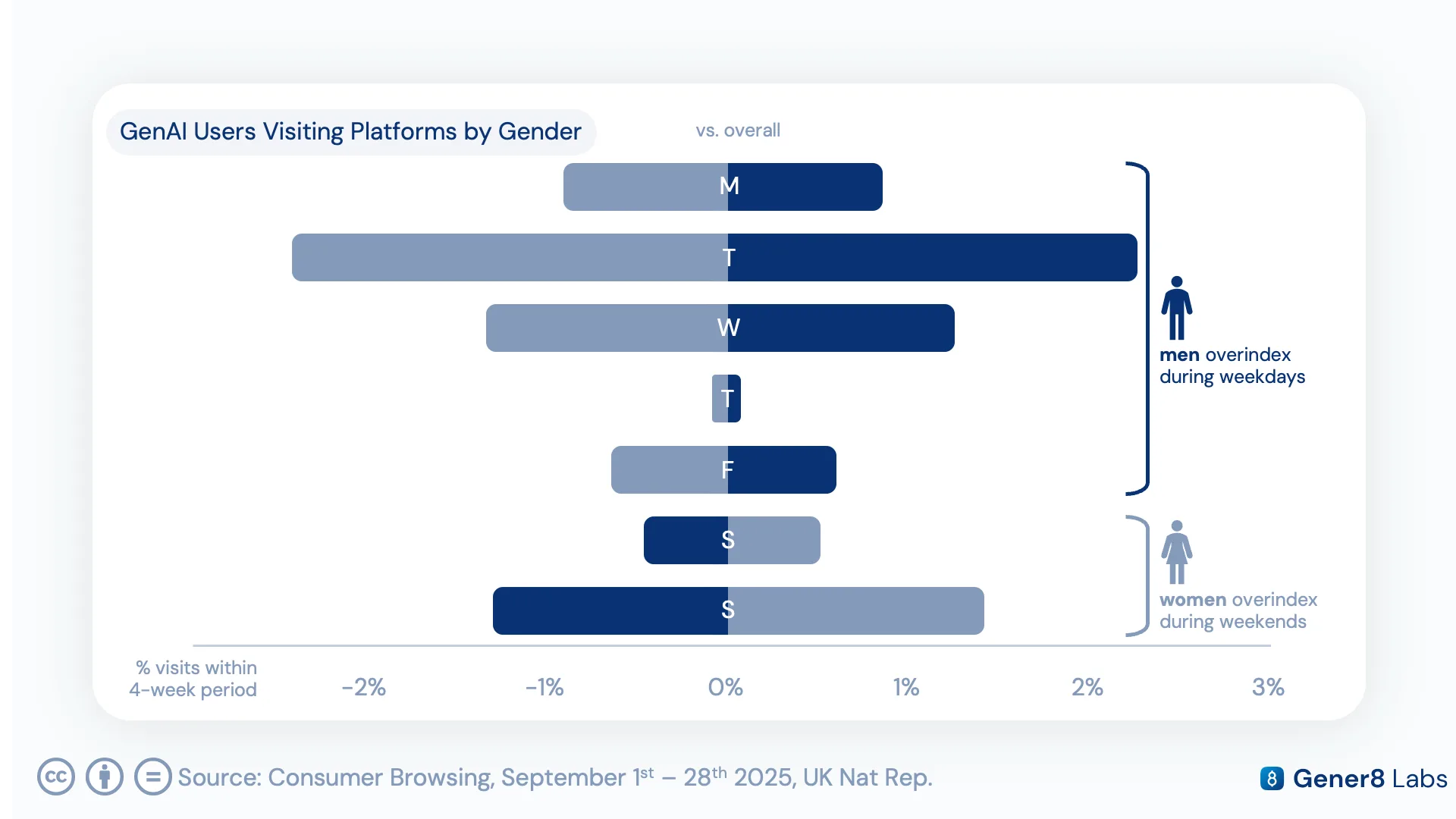
The weekend drop-off isn't even across genders. Men concentrate their GenAI usage heavily inside the working week, falling an average of 17% on weekend days. Women show a noticeably flatter pattern, roughly half the weekend decline of men, with relatively stronger Sunday activity suggesting more personal, non-work use cases.
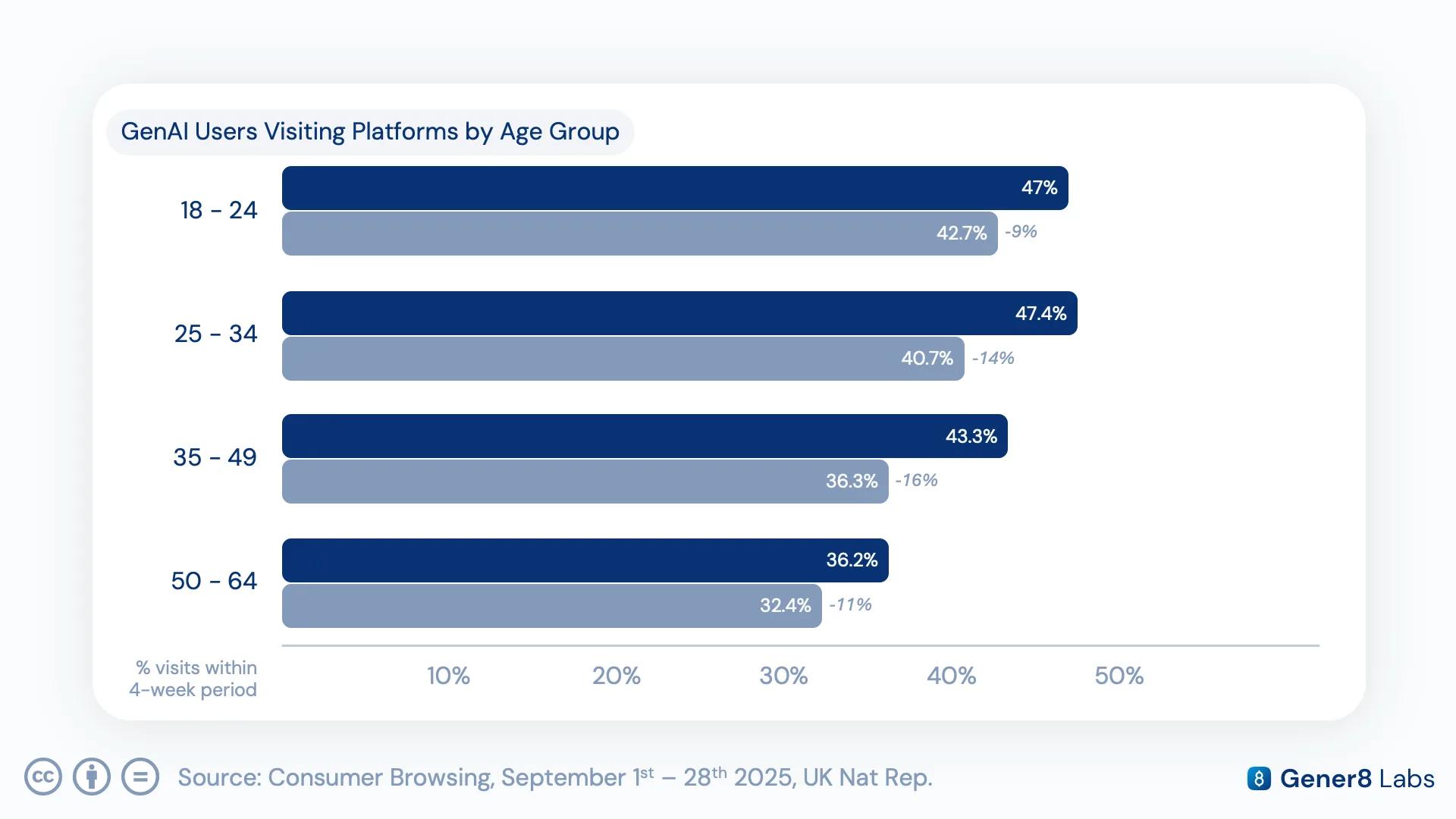
Age tells a similar story. The 25-49 bracket, the core of the workforce, shows the steepest weekend decline, with 25-34 year-olds down 28% on visits. By contrast, 18-24 year-olds barely change their habits at weekends (an 8% dip in users, 12% in visits), likely reflecting coursework and study routines that don't respect a Monday-to-Friday schedule.
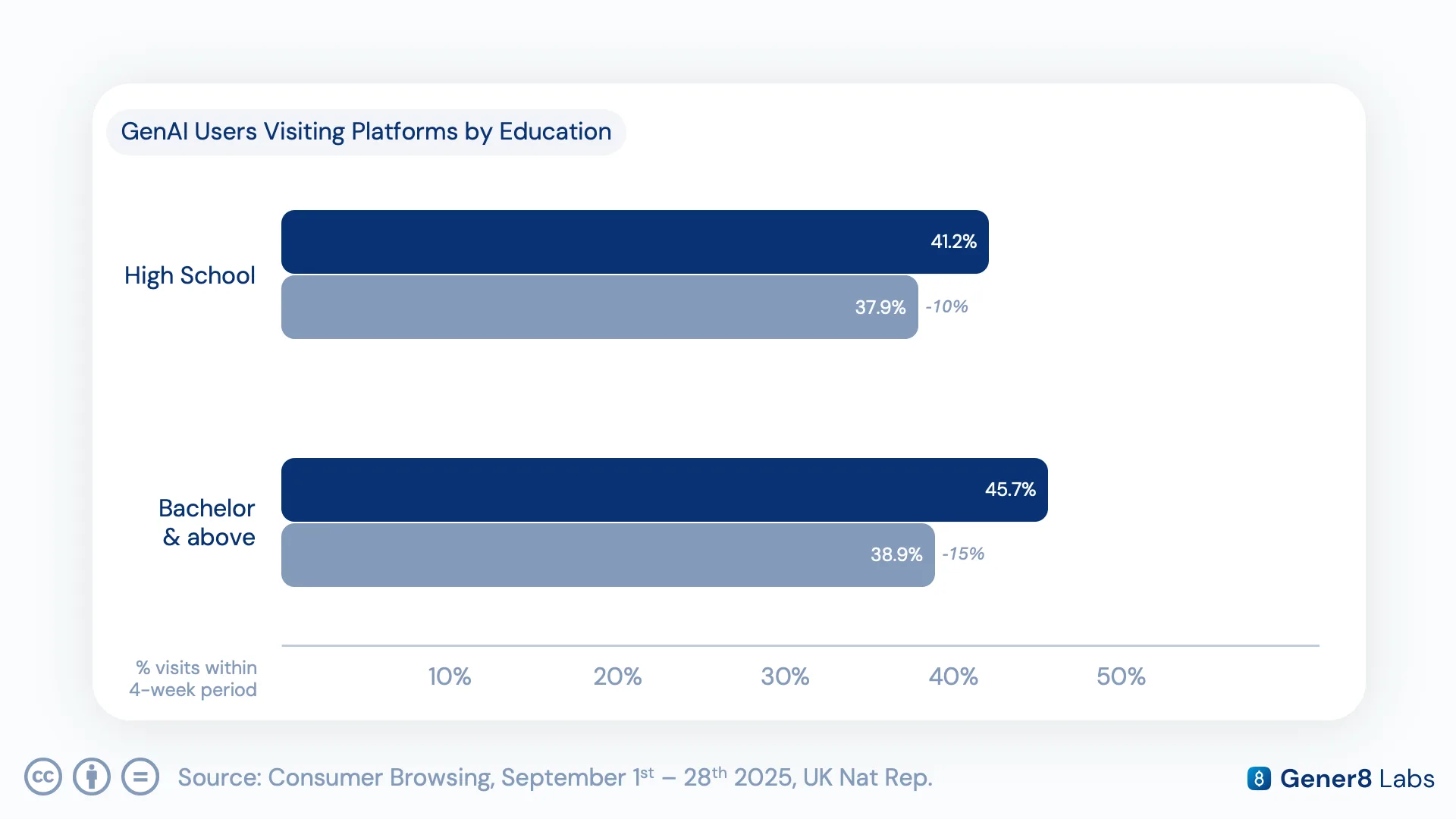
More education tracks with a sharper weekend fall-off: degree holders drop 15% on weekend visits versus 10% for high school graduates, consistent with AI being tied to knowledge work.
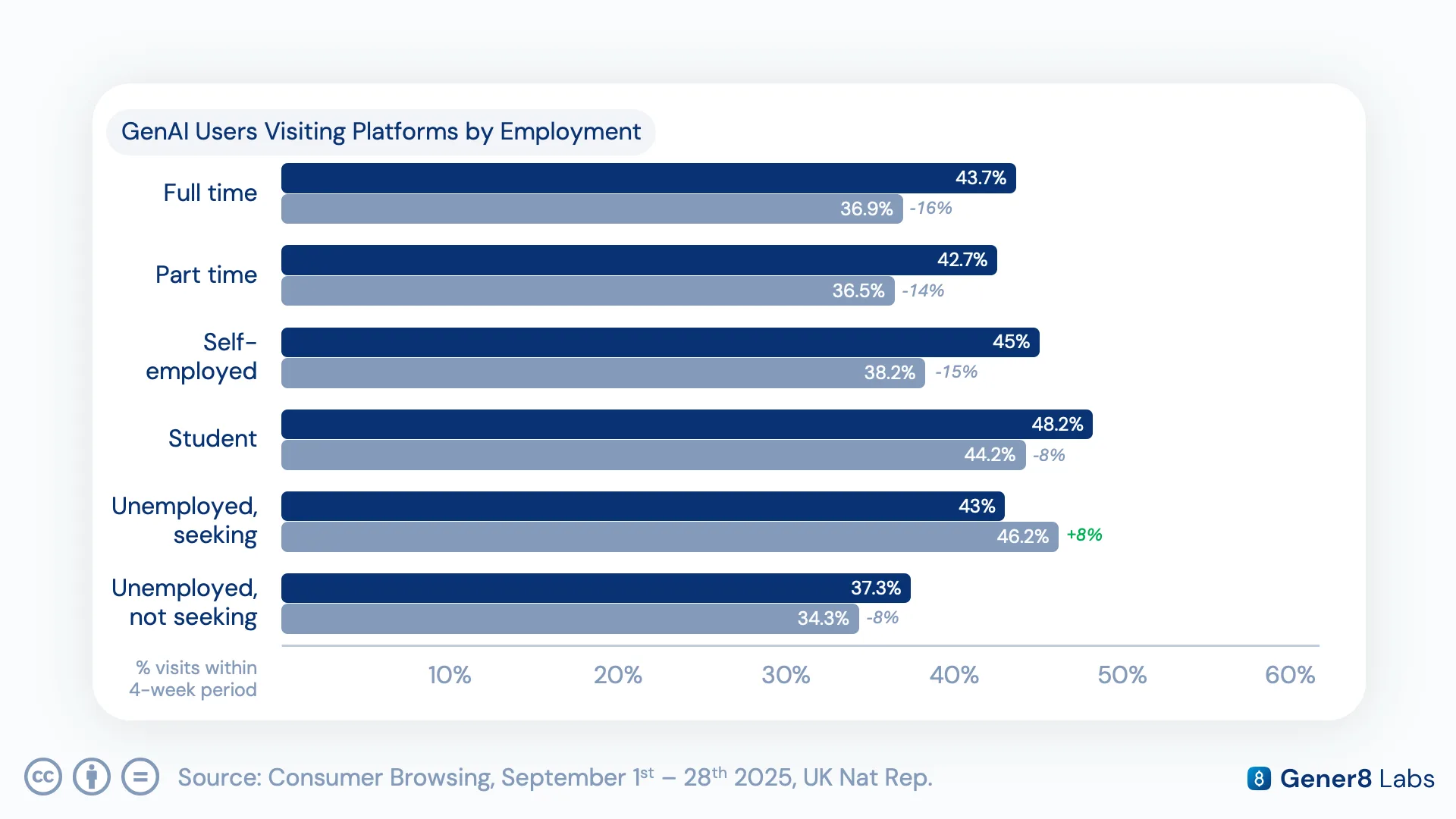
Employment status adds more texture still: full-time, part-time and self-employed workers all see roughly 15% weekend user declines, though part-timers' visit counts hold up better thanks to more flexible schedules. Students keep weekend engagement relatively strong (an 18% visit decline versus 30% for full-time employees), and job seekers are the outlier entirely, increasing weekend usage by 8% in users and 6% in visits, a pattern that points to active career preparation rather than routine productivity use.
This analysis draws on Gener8's Consumer Browsing dataset layered with panel demographics, tracking real visits to major GenAI platforms by day, gender, age, education and employment status. Get in touch to see how the same data can benchmark your own audience's AI usage against the wider UK panel.