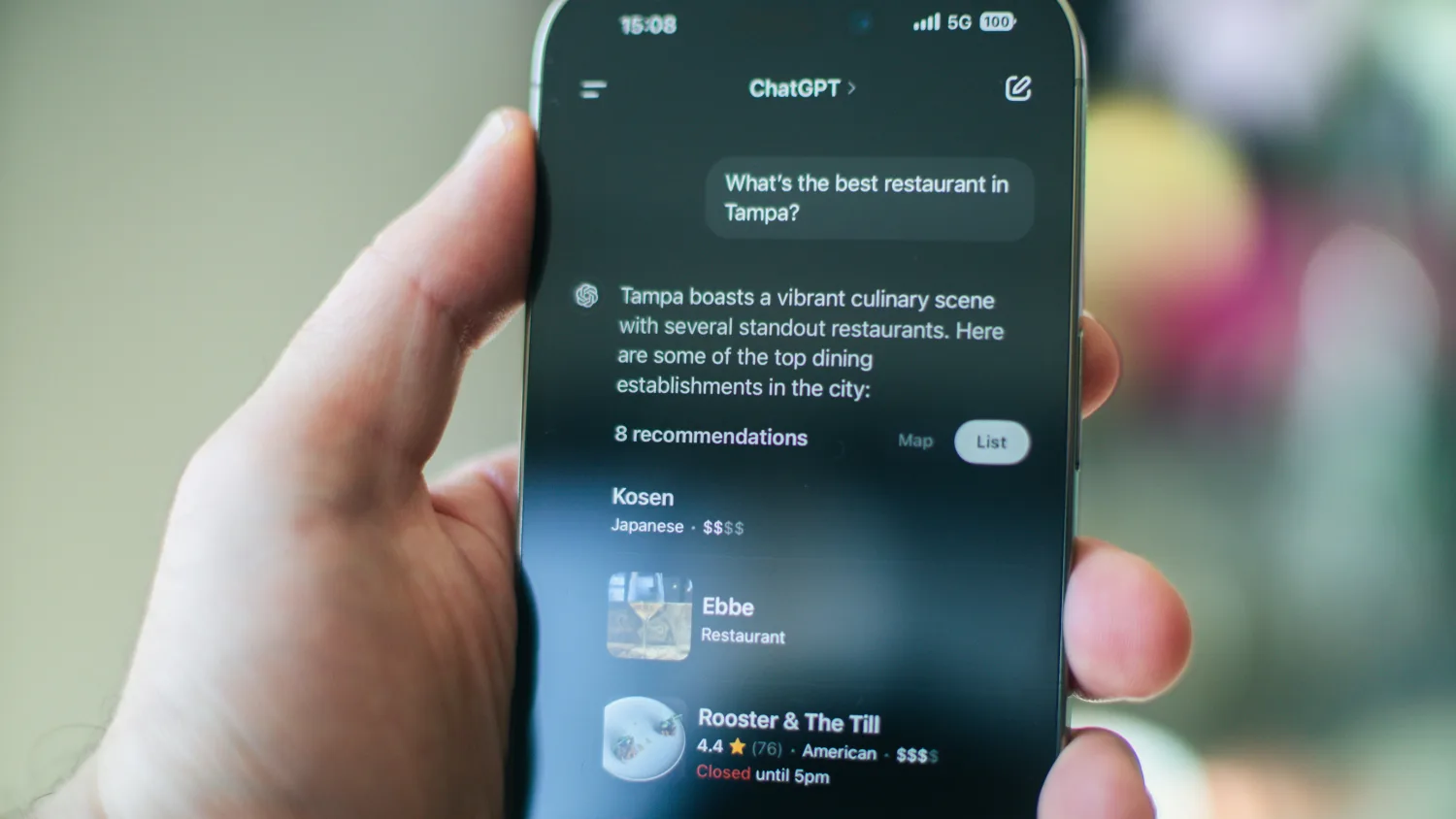
3 Ways LLMs Are Reshaping the Shopping Journey
September 28, 2025
Explores how ChatGPT-like tools solve friction, act as launchers, and influence purchases.
Learn morePublished October 19, 2025
Reveals real LLM adoption patterns across UK demographics, education, and employment sectors.

Most public narratives about GenAI adoption lean on raw sign-up or visit counts, which reward one-off curiosity as much as genuine habit. We wanted a sharper lens, so our analysis of UK consumer clickstream data centres on a different metric entirely: the average number of days per month a user actually returns to platforms like ChatGPT and Gemini. That consistency-of-use measure is a far better proxy for whether AI has actually earned a place in someone's routine.
Web sessions and aggregate time-on-platform reward one-off curiosity as much as genuine habit, so they make a poor gauge of real product traction. Frequency of return (how many days a month someone actually opens an LLM platform) is a far better indicator of whether a tool has earned a permanent place in someone's routine, which is why it anchors this analysis.
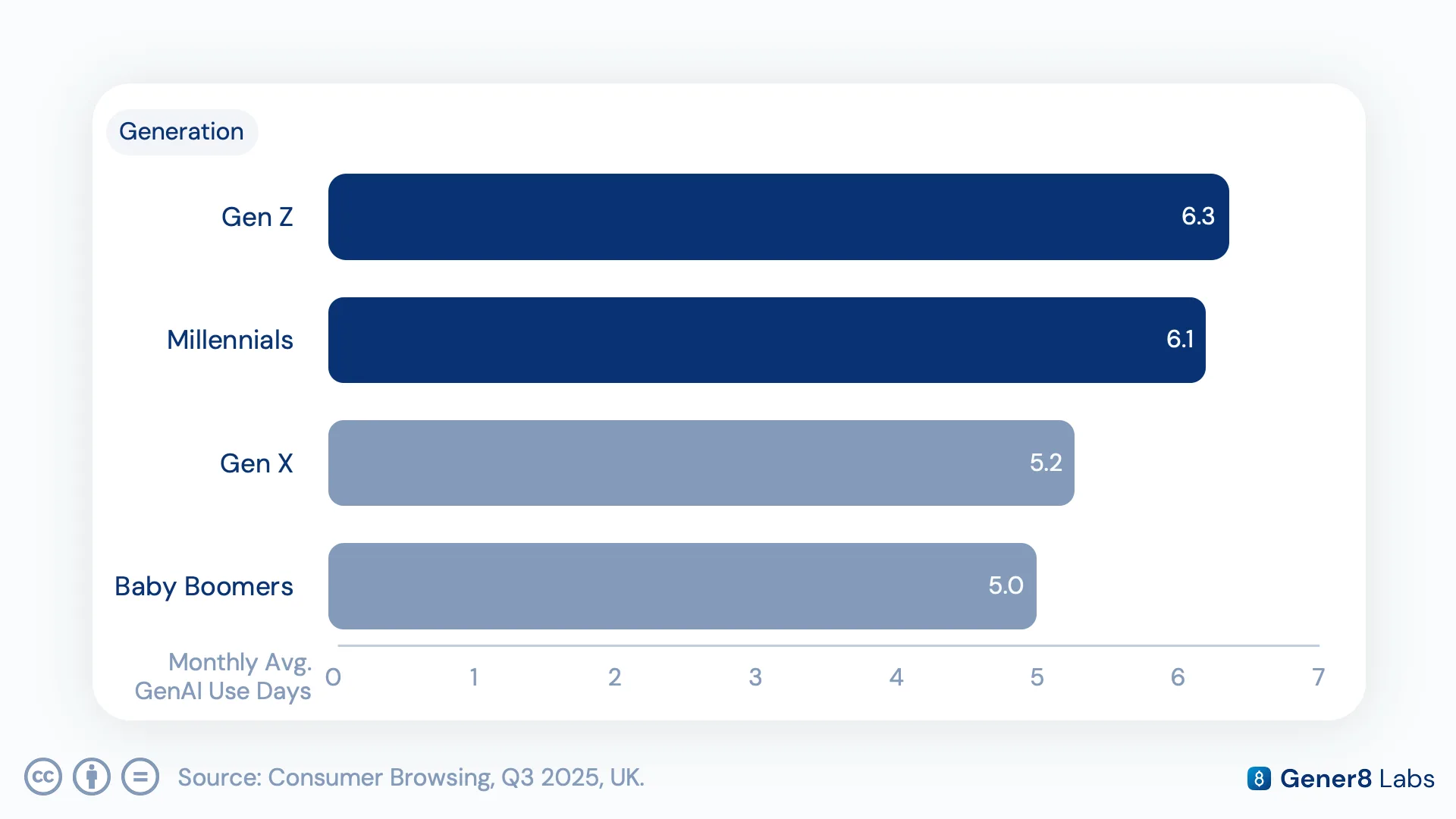
Gen Z leads UK adoption at 6.3 days of GenAI use per month, with Millennials close behind. Together, the two younger generations use AI roughly 18% more than Gen X on a monthly basis.
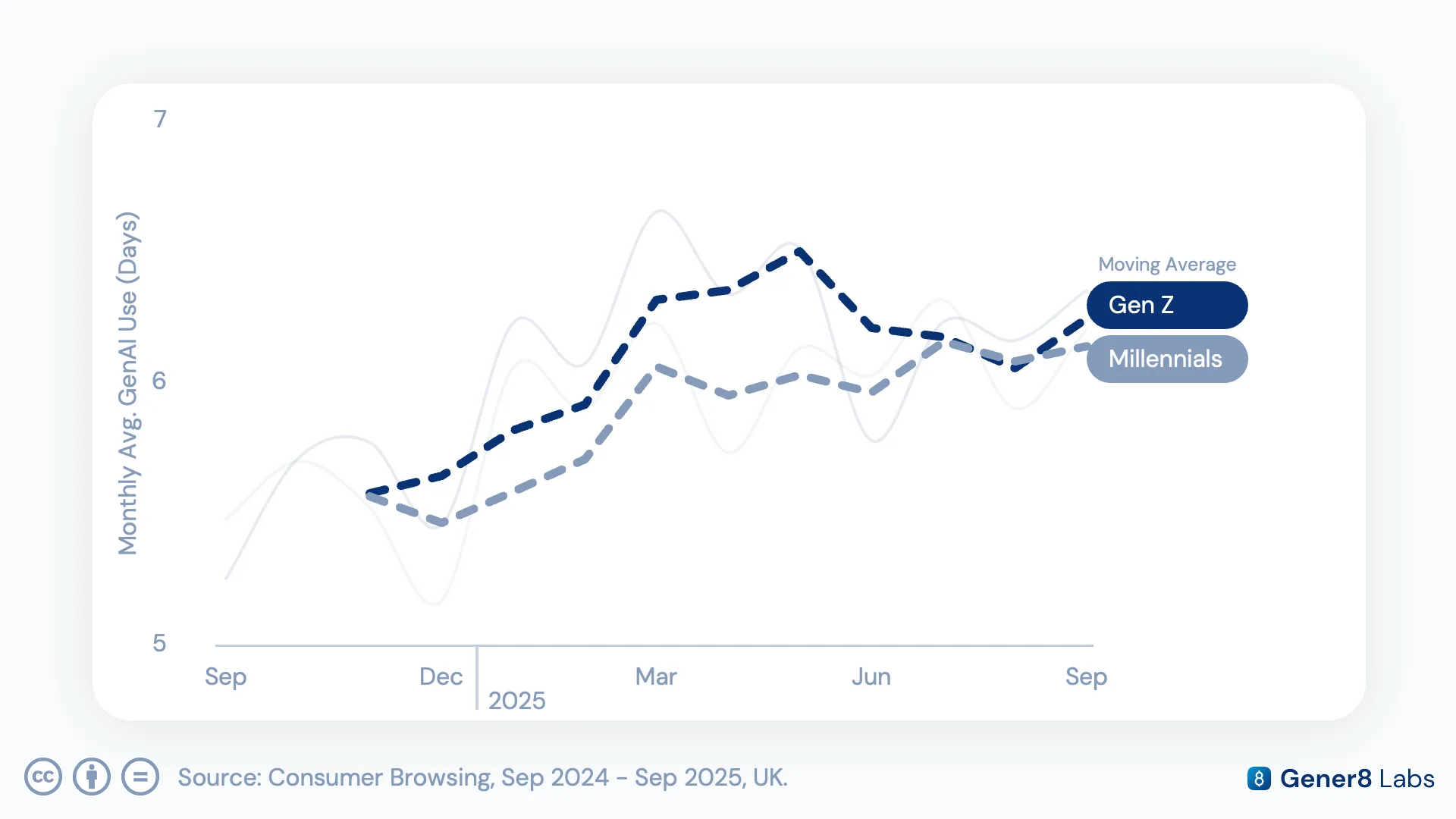
The gap is also widening: Gen Z usage grew 21% year-over-year, Millennials grew 13%, while Gen X was nearly flat at just 1% growth: evidence that fluency with these tools is becoming a native digital skill for younger cohorts rather than a habit older users are catching up to.
Education level tracks closely with how embedded AI has become in someone's month. Postgraduate degree holders use GenAI 6.1 days a month and undergraduates 5.9 days, with university-educated users overall averaging 17% more monthly usage than those without a degree.
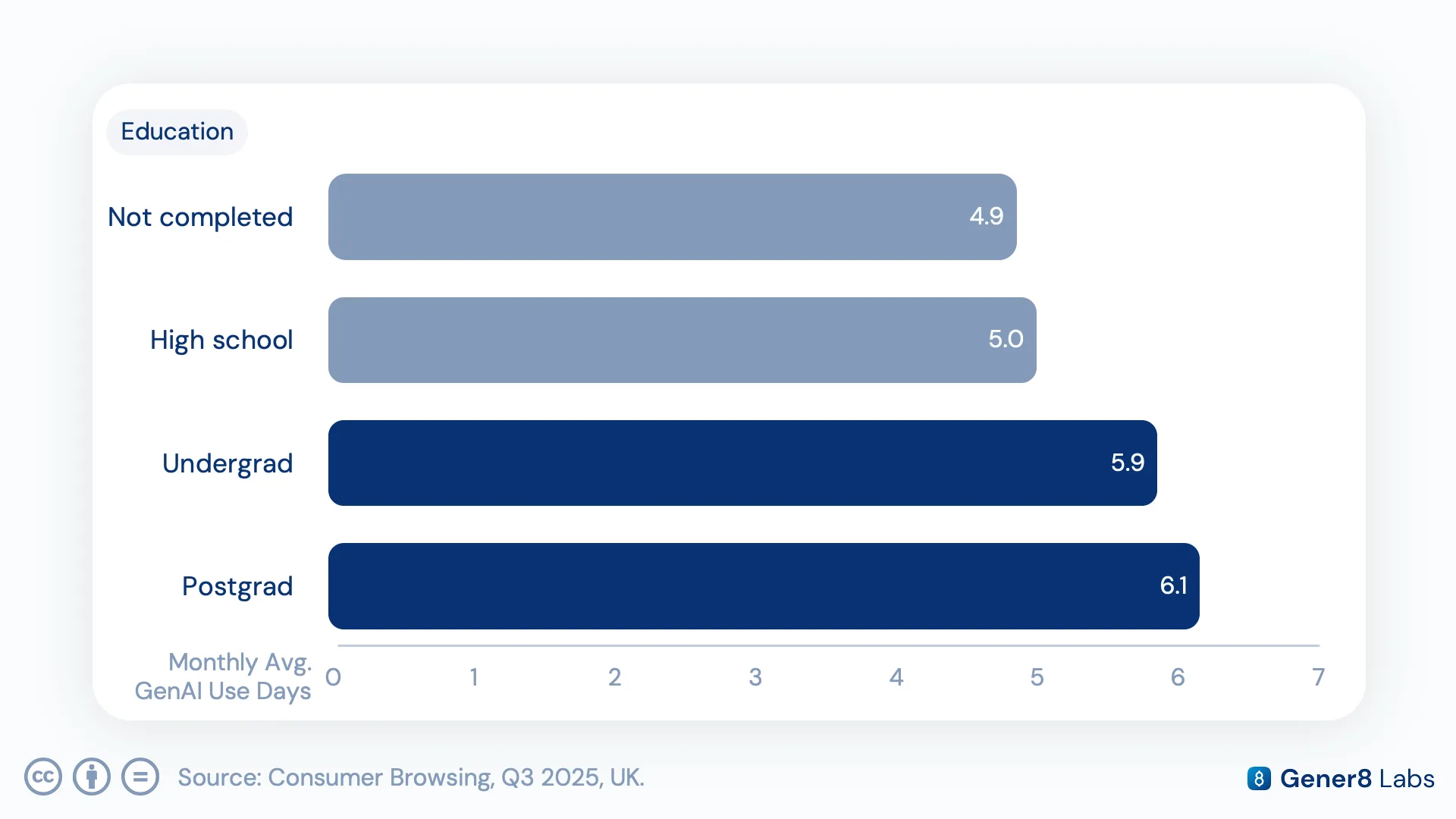
The likely driver is the nature of the work itself: research synthesis, complex document drafting, data analysis and coding are exactly the knowledge-intensive tasks where these tools deliver clear, measurable time savings.
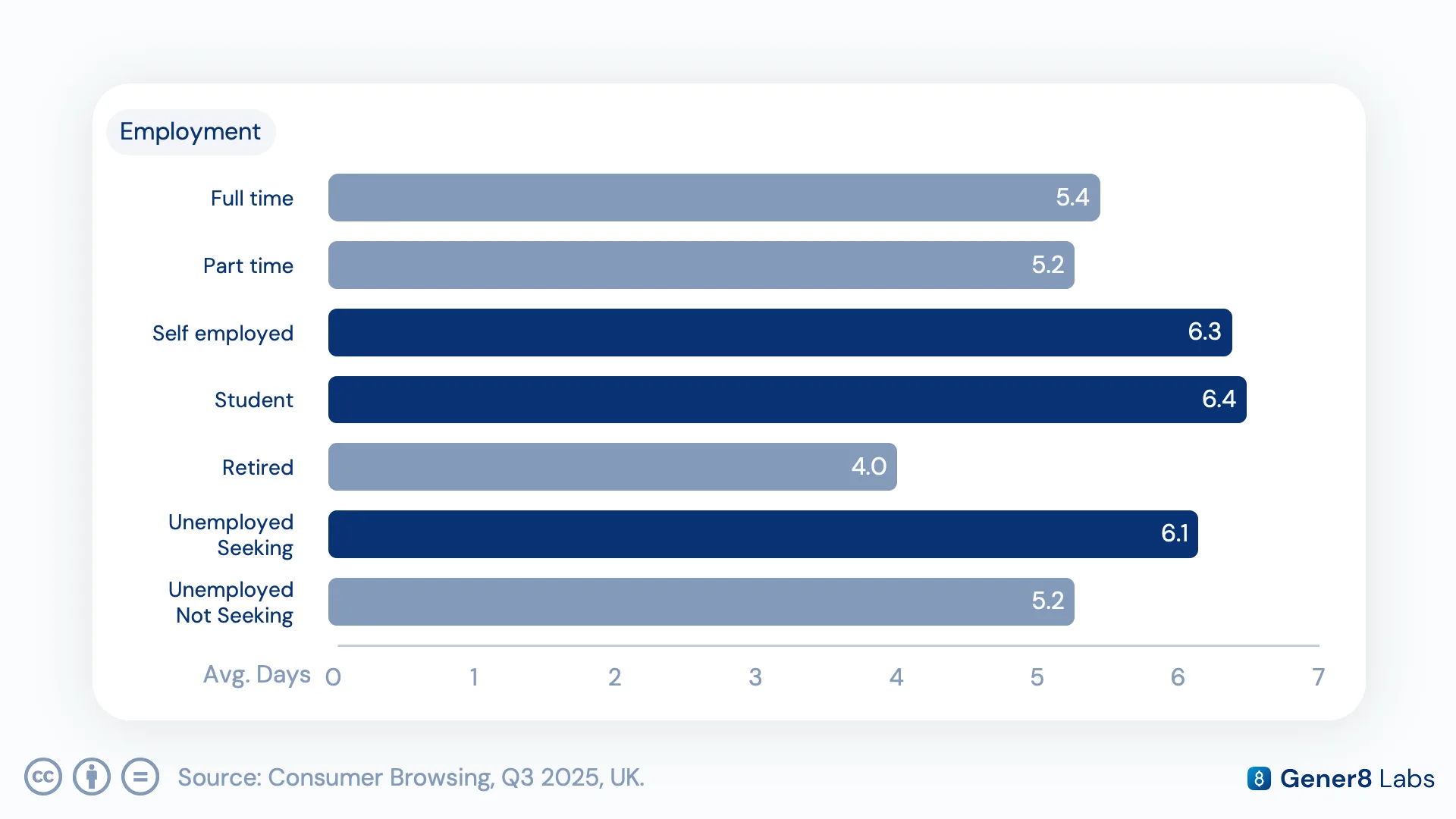
Outside of traditional employment, three groups stand out as the highest-frequency users of all: students, the self-employed and active job seekers.
Students are the single highest-frequency group at 6.4 days per month, growing 20% annually with clear peaks around March and April exam season.
The self-employed follow closely at 6.3 days, and job seekers at 6.1 days, 15% ahead of unemployed non-seekers, pointing to AI's role in CV writing, interview prep and job-search research.
Full-time employees, meanwhile, show steadier but still substantial growth at 16% year-over-year, reflecting a more gradual, linear integration into day-to-day work rather than a single high-stakes use case.
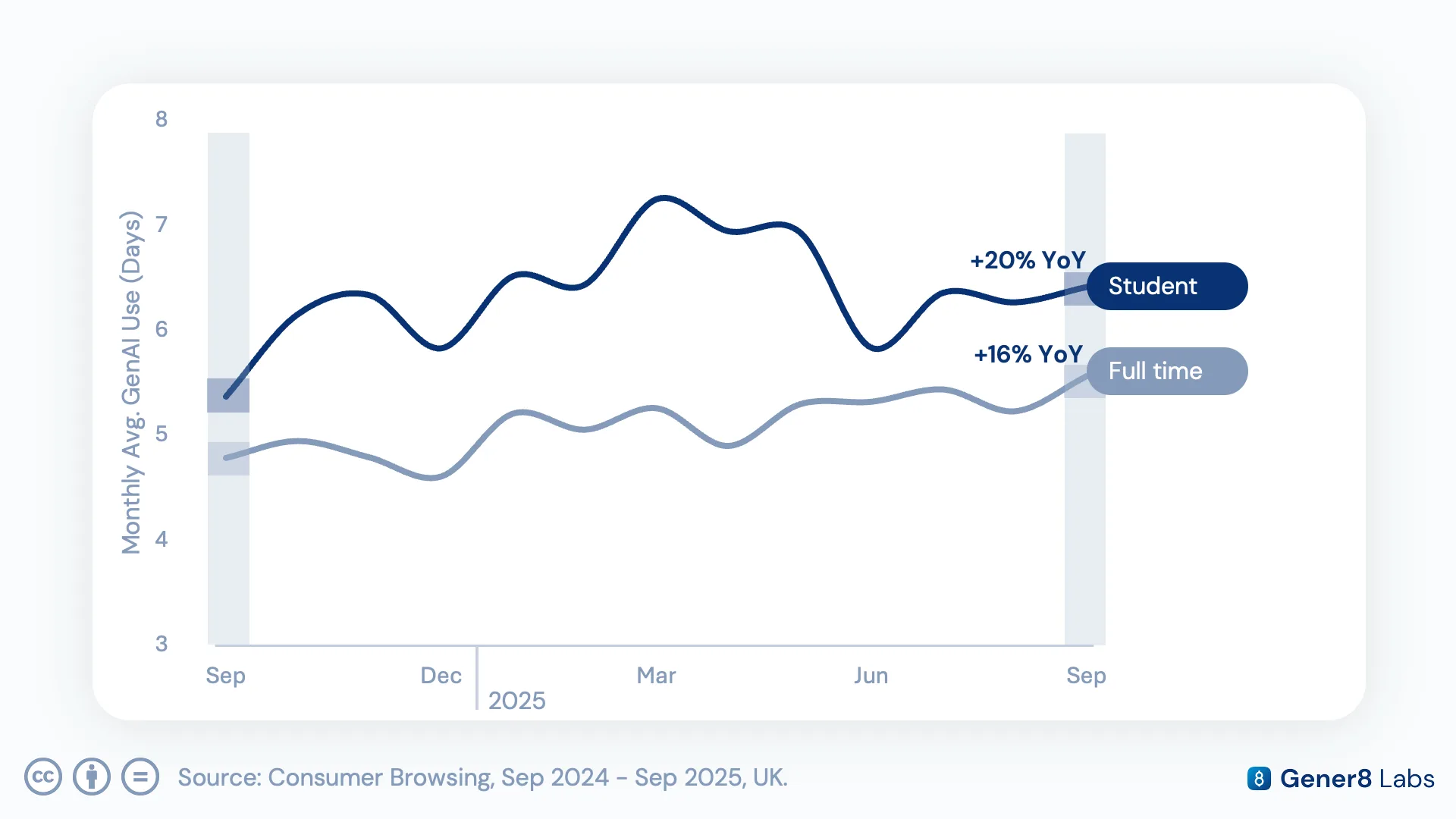
The common thread across generation, education and employment status is the same: the people using GenAI most consistently are the ones facing high-stakes, knowledge-heavy tasks or moments of real career pressure, not simply the demographics assumed to be "digitally native."
This analysis draws on Gener8's Consumer Browsing and Demographics datasets, tracking real monthly return frequency to major GenAI platforms across generation, education and employment status. Get in touch to see how the same data can benchmark your own audience's GenAI adoption against the wider UK panel.