Decoding Nike's Path to Purchase AOV Paradox
August 19, 2025
"More engagement doesn't always mean higher spend": moderate engagement drives the highest AOV.
Learn morePublished September 3, 2025
Shows a complementary workflow where users leverage the unique strengths of ChatGPT, Gemini, and traditional search.
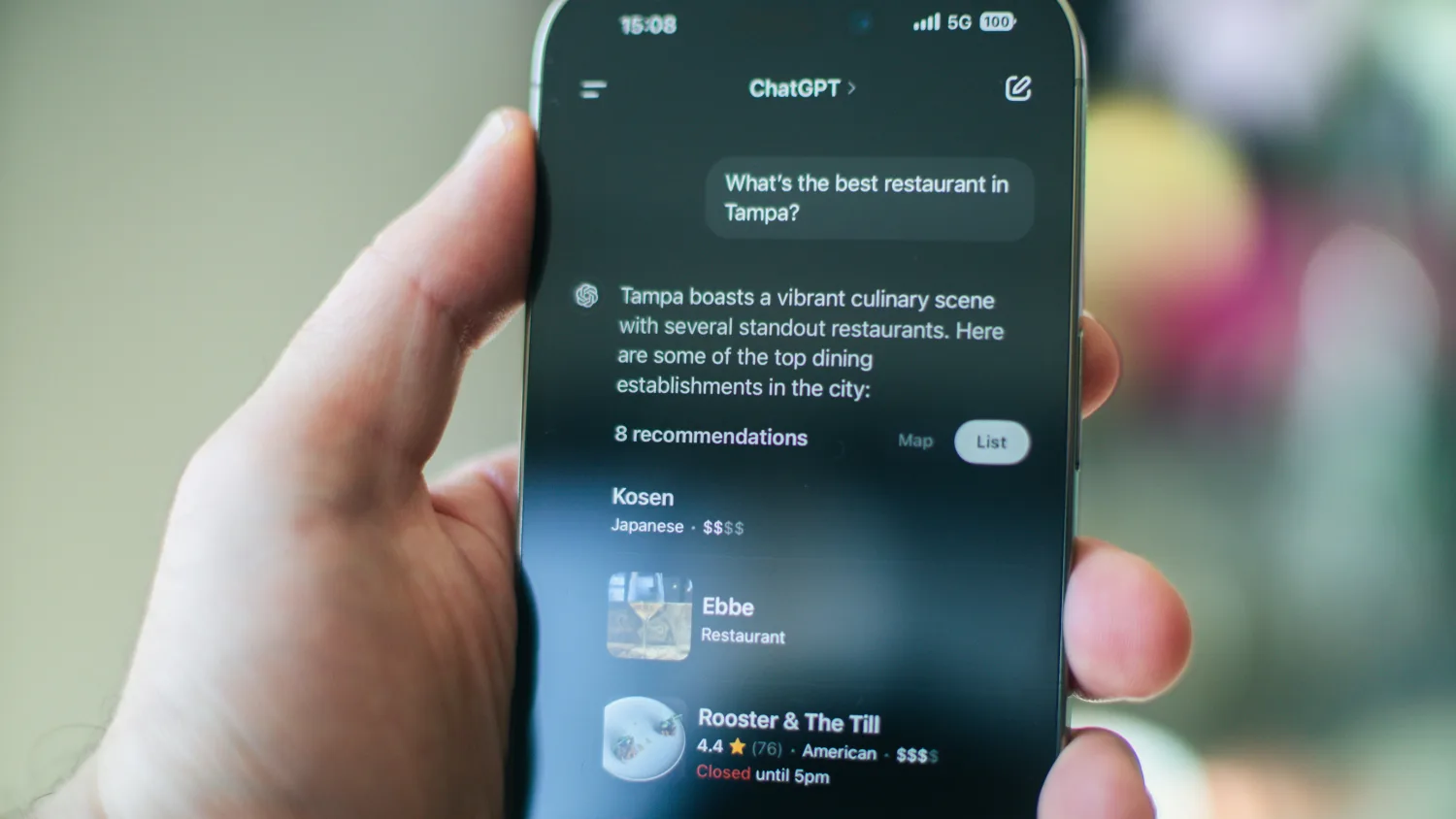
The prevailing narrative says generative AI is coming for Google's search dominance. Gener8's clickstream data tells a more nuanced story: a digital handshake, where users turn to ChatGPT or Gemini for synthesis, then head straight back to Google to verify, explore further, or actually get something done.
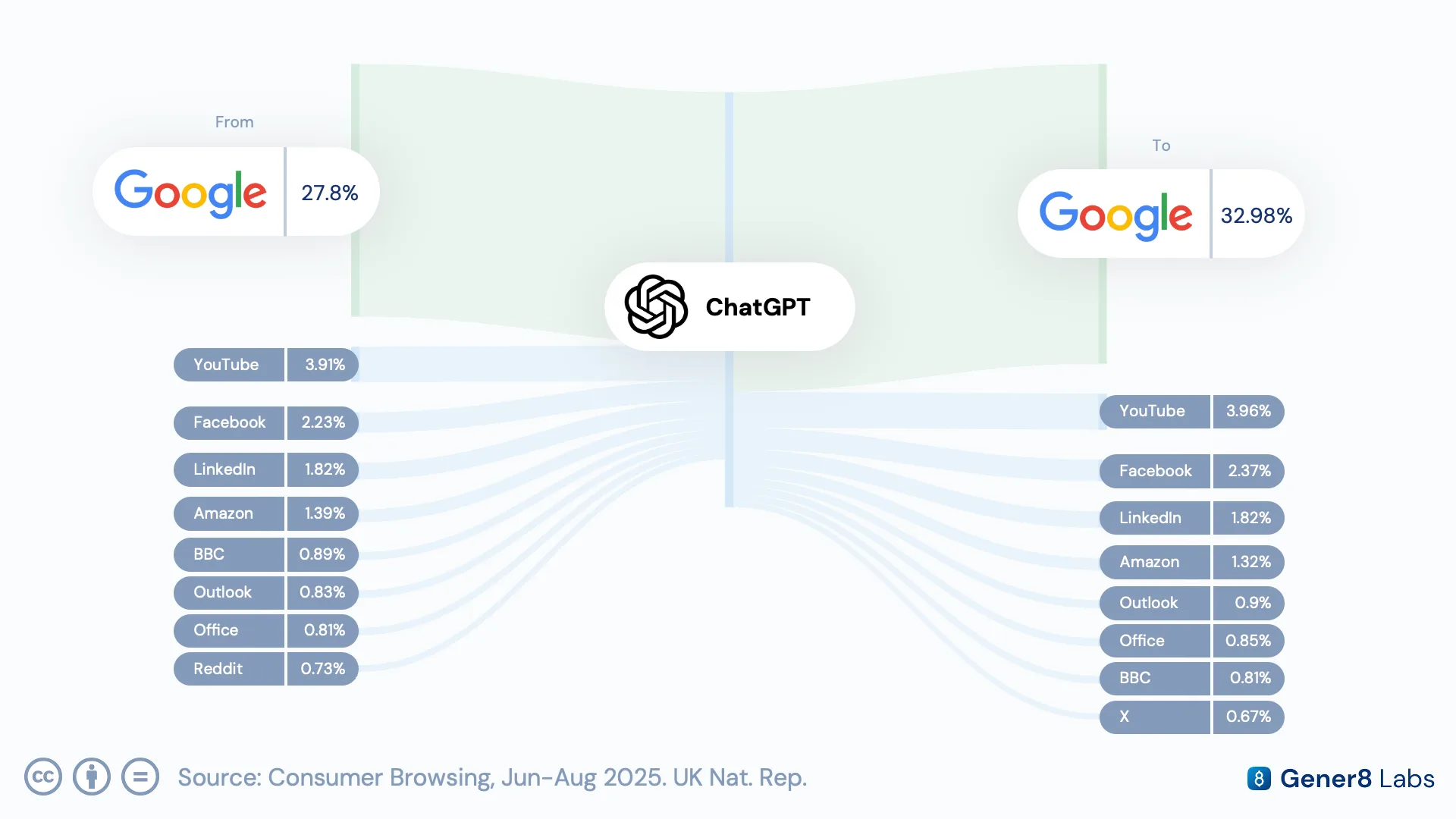
Google drives a meaningful share of traffic into ChatGPT, but ChatGPT sends even more users back to Google, a pattern that points to complementary rather than competitive dynamics between the two.
Four behaviours drive the return trip. The verification imperative sends users to check AI claims against authoritative sources. The exploration launchpad turns a tidy AI summary into the starting point for a deeper search. The transactional bridge reflects the simple fact that most purchases and bookings still require Google to complete. And the citation pathway sends users straight from a cited source link back into the indexed web.
The typical journey isn't AI-first, it's AI-in-the-middle: discovery starts on Google, synthesis happens in ChatGPT, and the final action (verifying, buying, booking) lands back on Google.
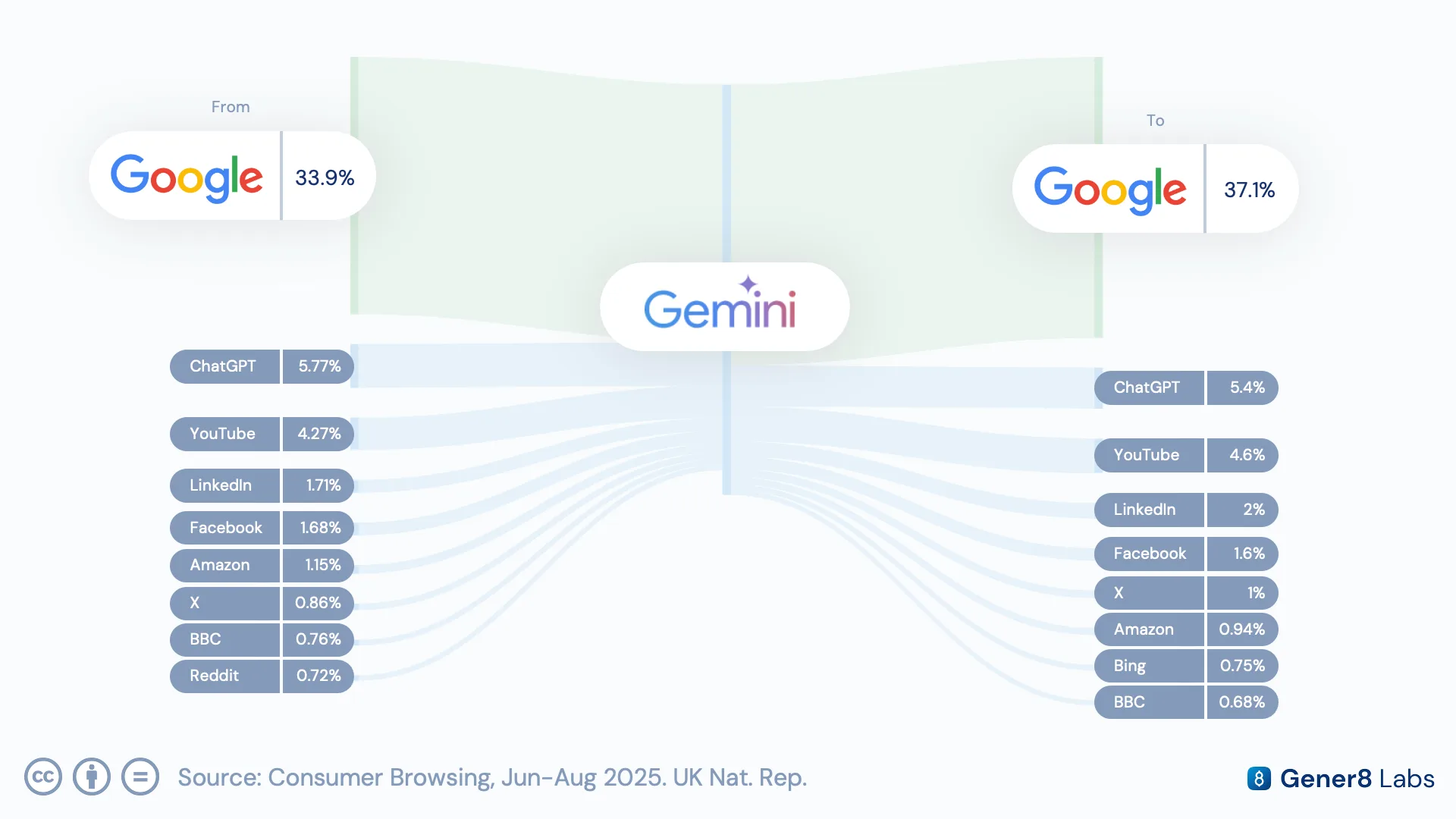
Gemini shows a similar pattern, behaving more like an extension of Google Search than a replacement for it. Users lean on it for a first pass of synthesis, then return to search to verify and dig deeper.
Perhaps the clearest evidence that AI tools are a stop, not a destination: in roughly 28.8% of instances, users land on the exact same domain immediately after leaving an AI platform that they were on just before arriving.
That pattern holds across Technology & Computing, Society, Business, and Arts & Entertainment content, consistent with people pausing mid-task to summarise an article or debug a snippet of code before picking their original task back up.
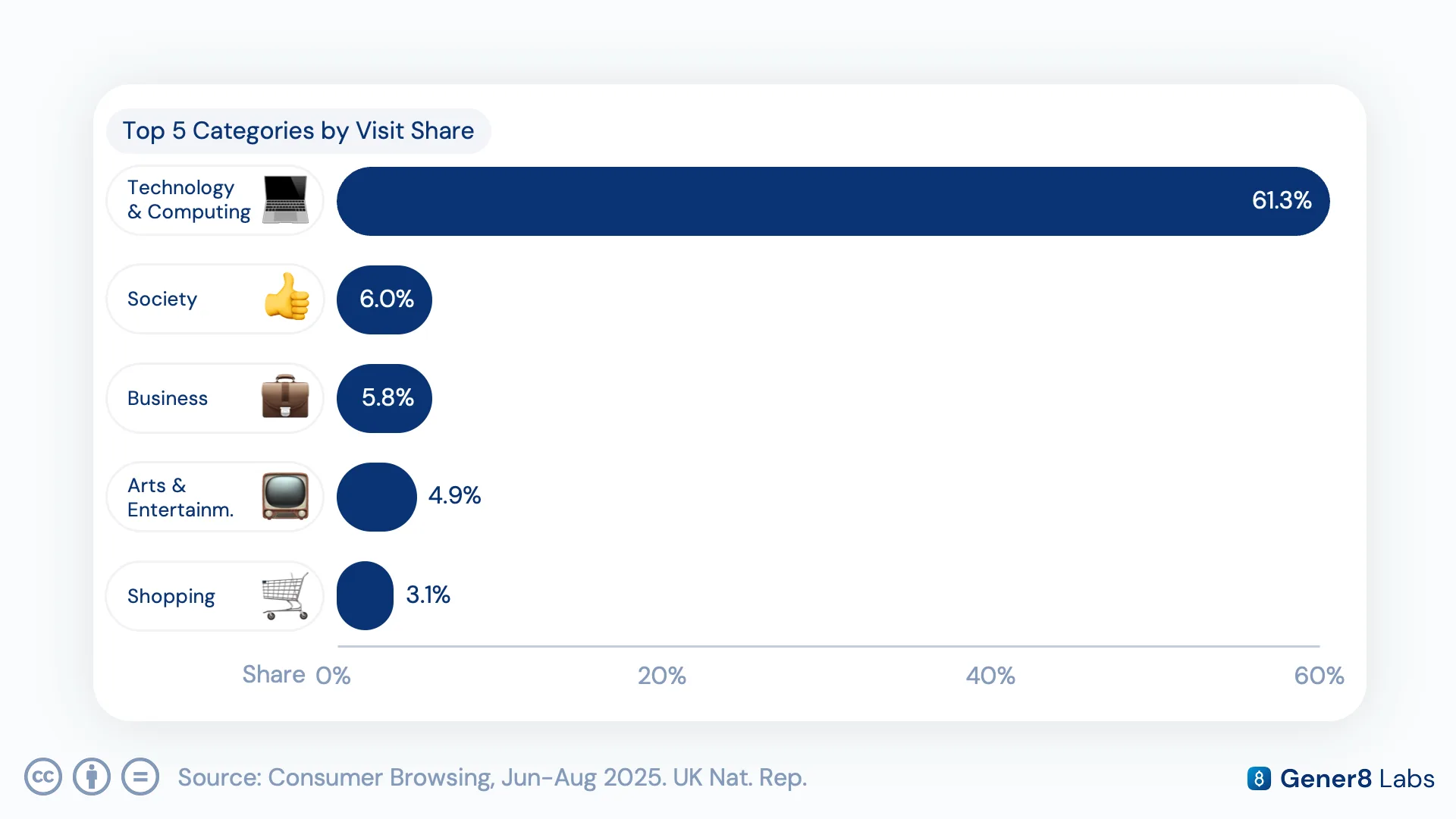
For marketers, the takeaway isn't to abandon search in favour of AI optimisation, or vice versa: it's to treat the two as one connected journey. Understanding where AI synthesis hands off to search, and why, is what makes it possible to show up at the moment users actually convert.
This analysis draws on Gener8's Consumer Browsing dataset, tracking real traffic flows into and out of ChatGPT, Gemini and Google search. Get in touch to see how the same data can map the connected journey across your own audience.