
Prime Day 2025: A Strategic Evolution
July 21, 2025
Consumer BrowsingPurchase IntelligenceApp Usage
Reveals top-selling items and Amazon's "gateway device" strategy for a record-breaking sale.
Learn morePublished July 28, 2025
Goes beyond behavioural data to understand the motivations behind clicks, app opens, and purchases.

Behavioural data can tell you exactly what a person did: the click, the app open, the purchase. It can't tell you why. That gap between action and motivation, what we call the Attitude Action Gap, is where most audience strategies quietly fall apart. Gener8 built Attitudinal Intelligence to close it.
The framework is built on more than 60 survey questions probing personal values, lifestyle preferences, brand perception, openness to innovation, and susceptibility to social influence. Responses are distilled into 10-point scores across a handful of core dimensions (including Lifestyle & Values, Trust & Brand Perception, and Innovation & Openness), each of which can be joined back to the same individual's observed behavioural data.
The strength of the framework lies in its simplicity. Rather than drowning marketers in survey detail, it distils complex, noisy psychological data into a small number of meaningful attitudinal dimensions that are easy to act on.
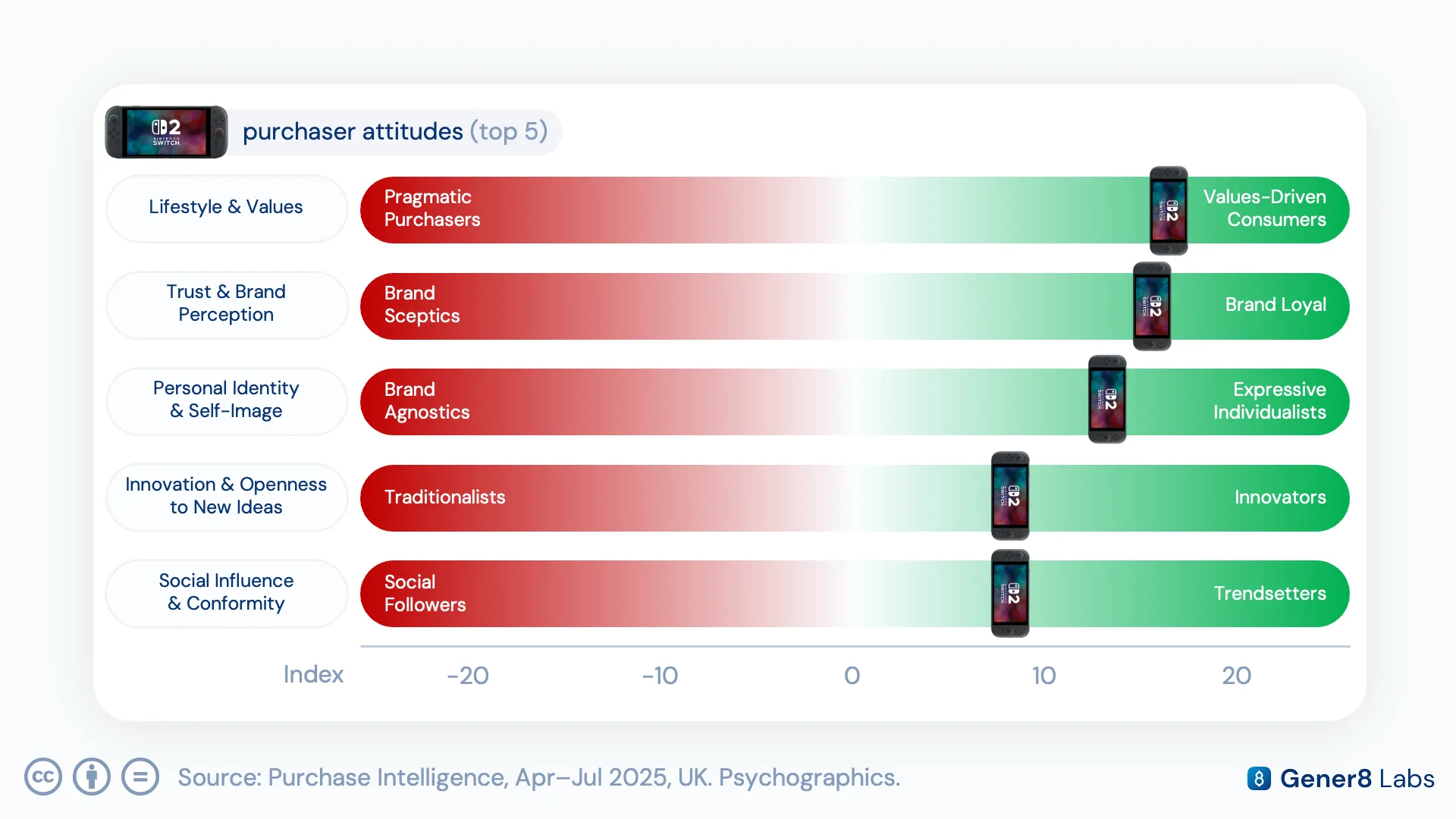
Applied to Nintendo Switch 2 buyers, the framework surfaces a story specs sheets can't tell. This audience indexes highest as Values-Driven, Brand Loyal, and Expressive Individualists: signalling that the purchase is powered by identity, nostalgia, and trust in the Nintendo brand at least as much as by any hardware feature.
Because attitudinal scores sit on the same individual user ID as behavioural and transactional data, they can be layered directly onto existing audience segments, turning a purely behavioural cohort like 'frequent app openers' into a richer one like 'values-driven early adopters who open the app frequently.' That's the difference between targeting an action and targeting a motivation.
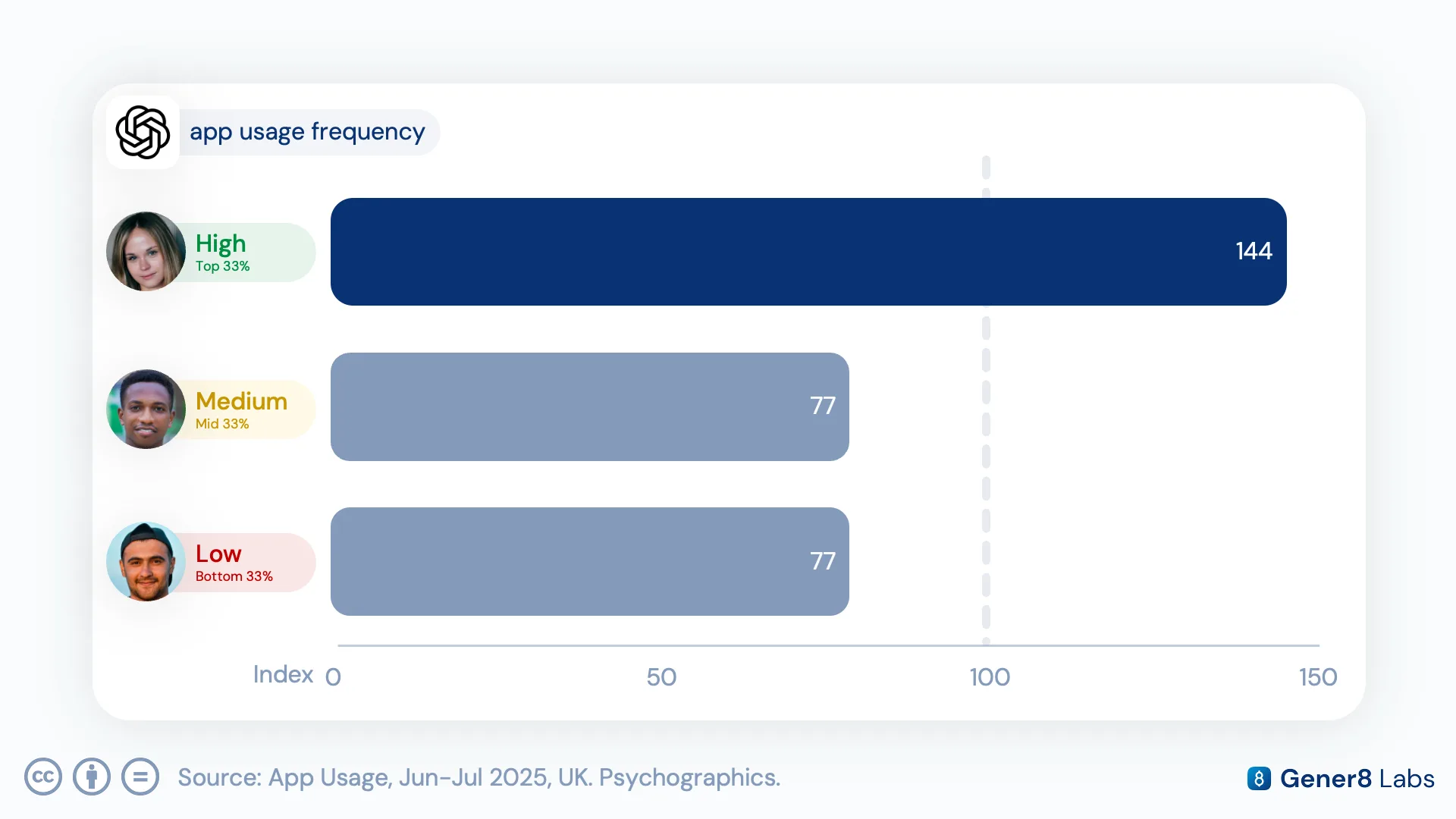
For brands and media owners, this means campaigns and creative can be built around why an audience behaves the way it does, not just what they've been observed doing, a foundation for messaging that actually resonates rather than simply retargeting a click.