Democratising Path to Purchase Insights
May 6, 2025
Reveals full digital customer journeys, bridging gaps in the "Messy Middle" to boost conversions.
Learn morePublished May 19, 2025
AI reshapes search journeys; examines ChatGPT's influence on consumer behavior and digital marketing.
The traditional search journey has changed for good. As AI Overviews and ChatGPT's shopping features insert themselves earlier into discovery and consideration, marketers are losing the level of control they once had over how (and whether) their brand shows up. One eMarketer estimate put the potential impact at a 38% decrease in ad exposure during discovery and 47% during consideration once AI agents take over more of the journey. We used our UK Nat Rep Consumer Browsing panel to see who is actually capturing the referral traffic ChatGPT sends out, and how people behave once they land.

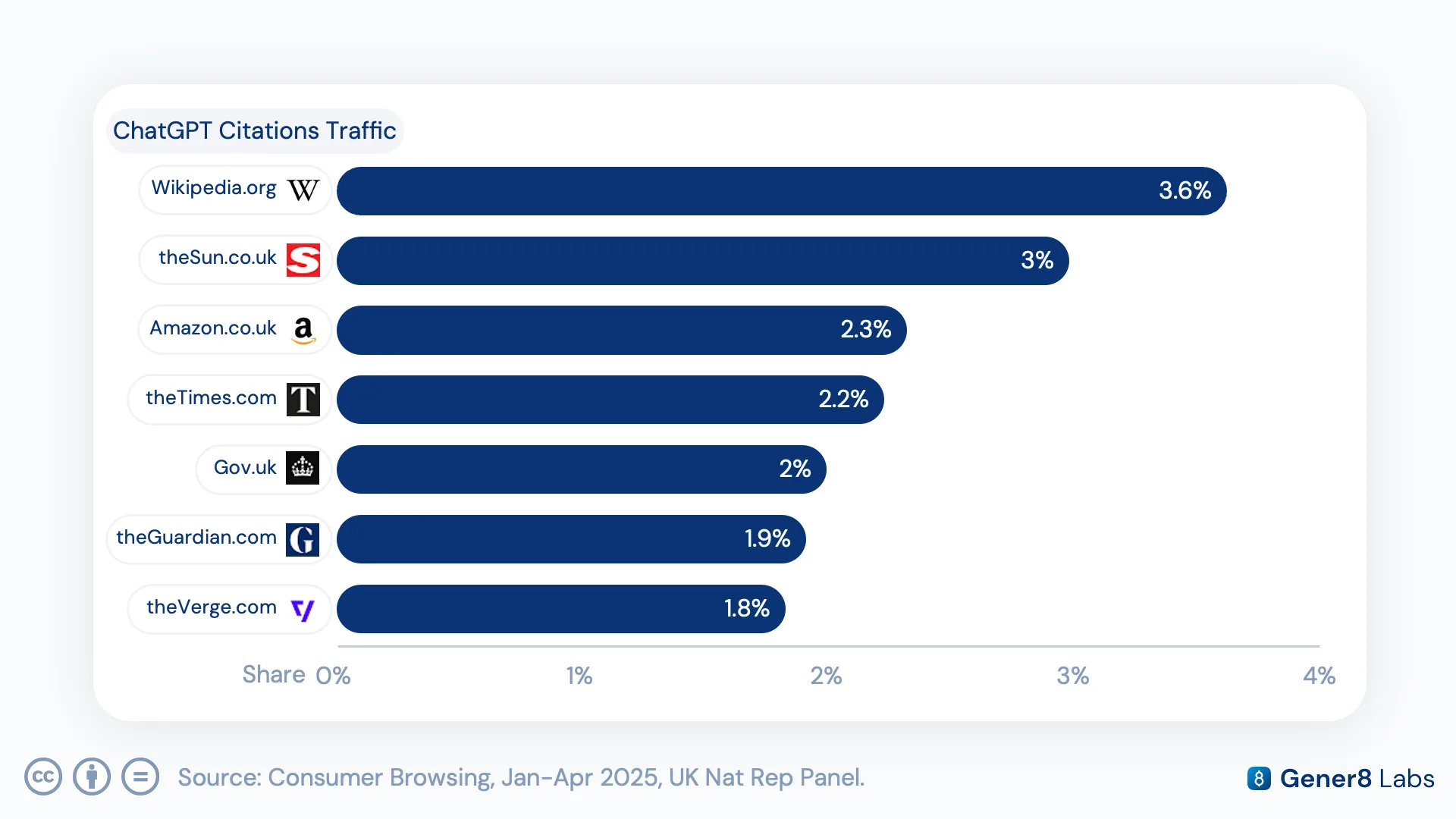
The methodology tracks a 25,000-person UK panel, isolating visits carrying utm_source=chatgpt.com to identify exactly which destinations ChatGPT sends people to. Wikipedia dominates that referral traffic among UK users, the single largest recipient of outbound clicks by a wide margin, a reflection of how heavily ChatGPT leans on it for factual citations.
Beyond Wikipedia, three categories capture the bulk of the remaining traffic: News & Weather, Shopping, and Technology & Computing. Within Shopping specifically, one retailer stands well above the rest.
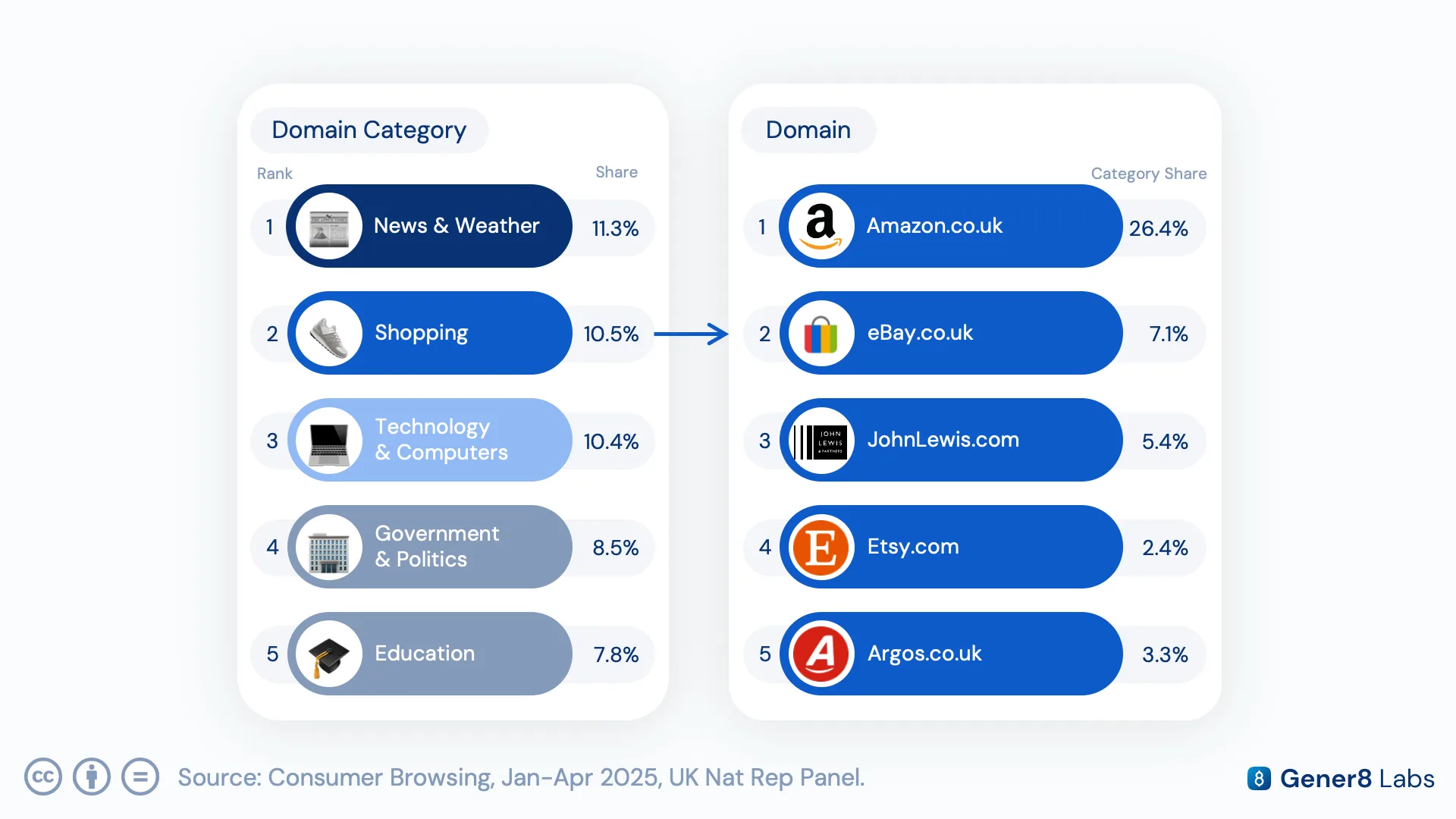
It looks that way. Of the traffic ChatGPT sends to Amazon, 89% lands directly on a Product Detail Page, consistently sitting in the 80–90% range rather than dropping people on a homepage or a generic search results page. That changed further after ChatGPT's May 5, 2025 update introduced product carousels directly in chat responses.
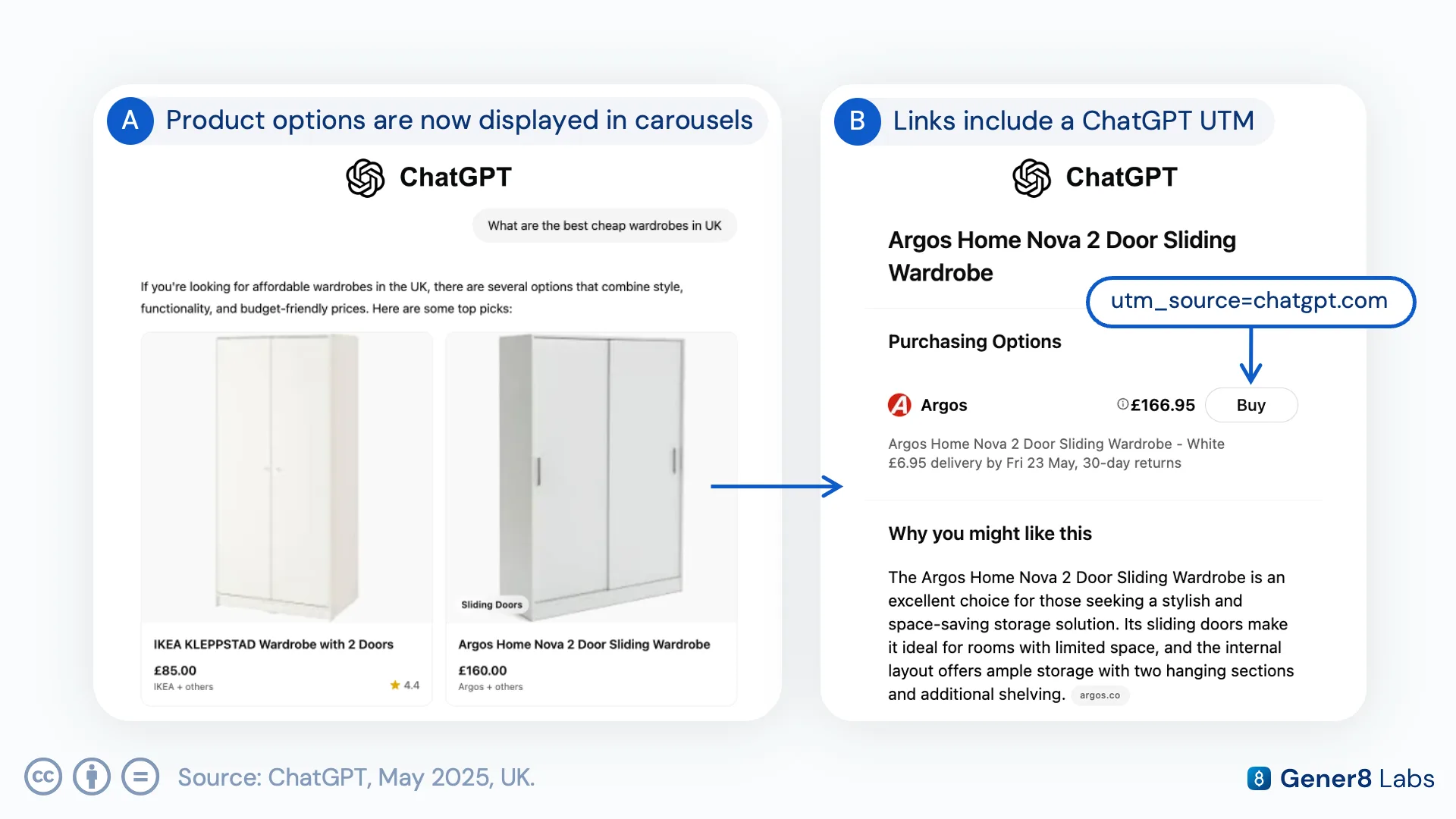
Post-launch data shows users browsing multiple PDPs in a single session: one tracked journey from May 7 moved across Amazon, Etsy, and Ikea listings before settling on a purchase, evidence that ChatGPT is increasingly acting as a comparison layer, not just a jumping-off point.
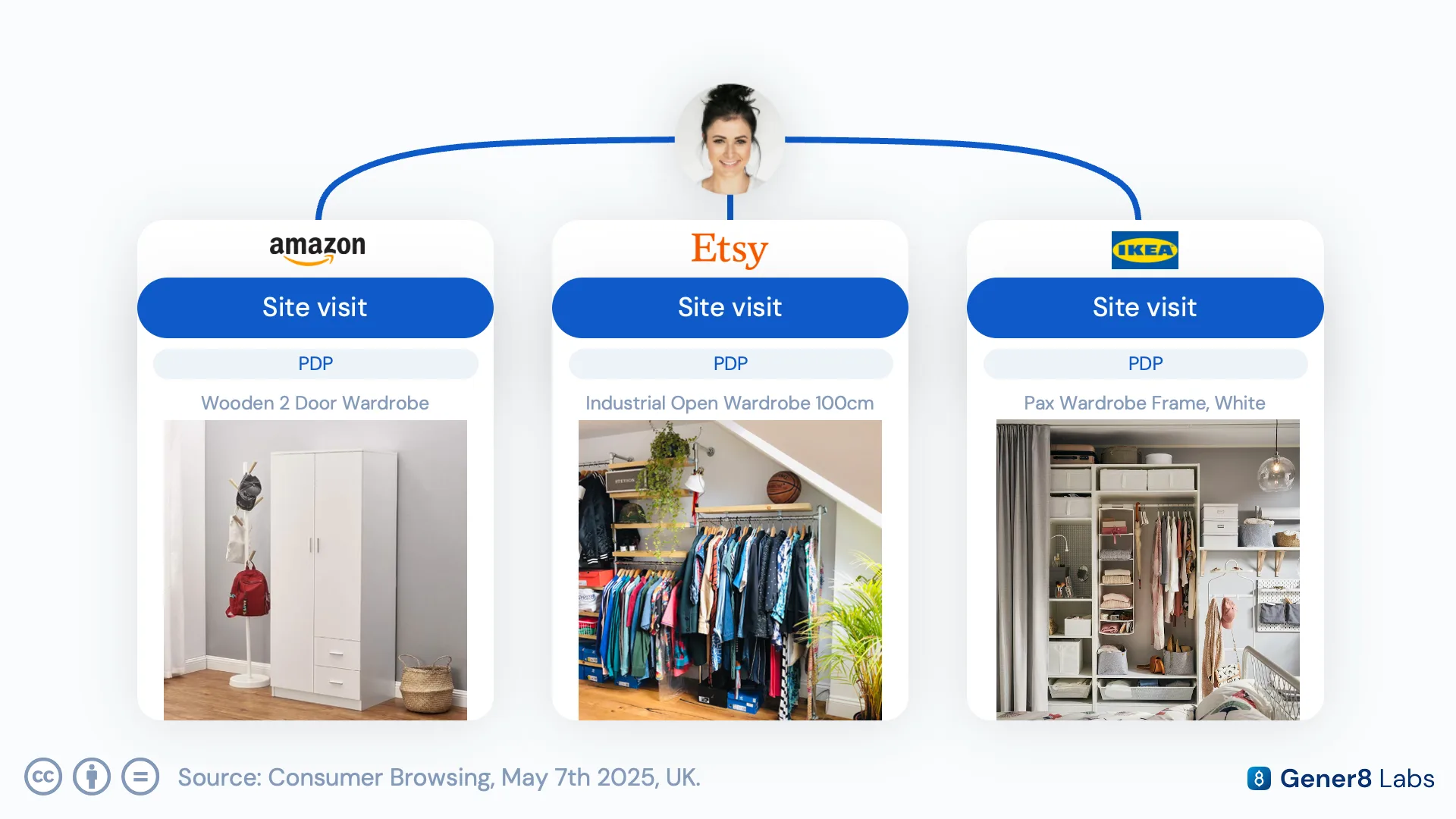
That kind of behaviour makes optimised product feeds increasingly important for AI visibility: brands that show up cleanly across these comparison sessions have a real edge in ChatGPT-driven shopping journeys.
Most brands still have a real blind spot around how much AI influences their own purchase journey. One tracked journey illustrates the pattern well: a user researching a smartwatch ran a standard Google search first, then used ChatGPT as a validation step to compare models and confirm a choice, before finally landing on the retailer's confirmation page. ChatGPT isn't always where the journey starts: often it's where a decision gets confirmed. Gener8's interconnected datasets make that kind of cross-platform journey visible end to end.
These findings draw on Gener8's Consumer Browsing dataset across our UK Nat Rep panel, with pages classified using the IAB Domain Classification taxonomy, giving a consistent, representative view of where ChatGPT sends people and what they do once they arrive. Get in touch to see how the same data can benchmark your own brand's ChatGPT referral performance.