
Decoding UK Purchase Behaviour
March 13, 2025
Purchase IntelligenceConsumer Browsing
Nationally representative panel offers merchant, vendor, and item-level purchase insights.
Learn morePublished April 2, 2025
Passive data reveals real-time user interests for deeper audience understanding and research.

Survey-based interest data has always had a shelf life problem: by the time a respondent answers a question about what they're into, the moment has often passed. Gener8 takes a different approach, using passive behavioural data to build a validated, continuously updating view of what people actually care about, not what they remember caring about when a survey landed in their inbox. Take gaming as an example: among people who buy through the PlayStation Store, our behavioural index for video gaming interest sits at 243 against the average consumer, well ahead of the 210 we see for Xbox Network buyers.
Passive data modelling provides a current, validated view of interests without the fraud and recall-bias risks that come with self-reported survey answers. Drill into the PlayStation Store audience further and 76% engage with games on a weekly basis, indexing at 152.
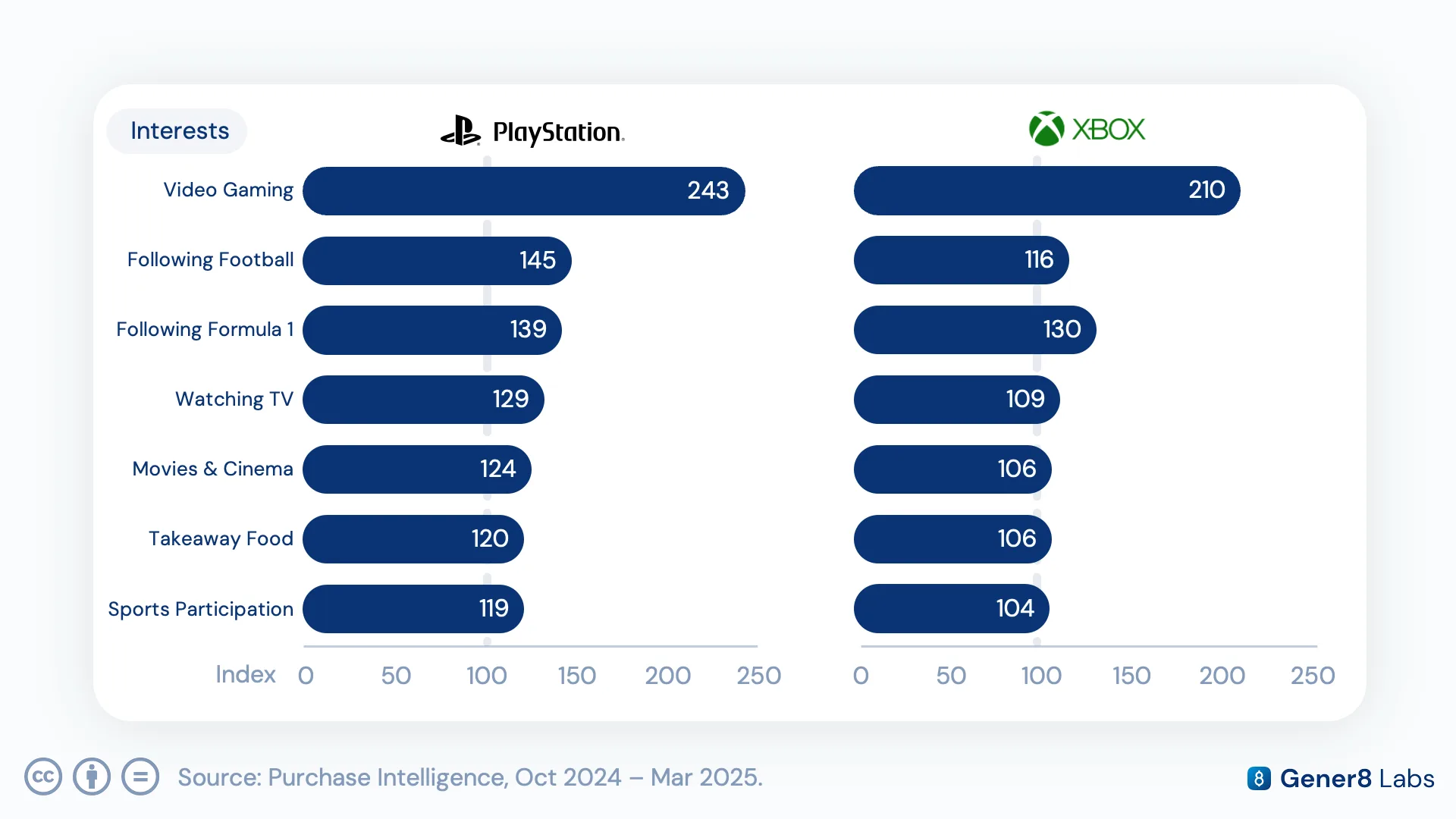
That same PlayStation audience also over-indexes on following football (145), Formula 1 (139), and general TV viewing (129), a fuller picture of a lifestyle, not just a purchase category. Drilling in further to buyers of the football title FC25 sharpens the picture even more.
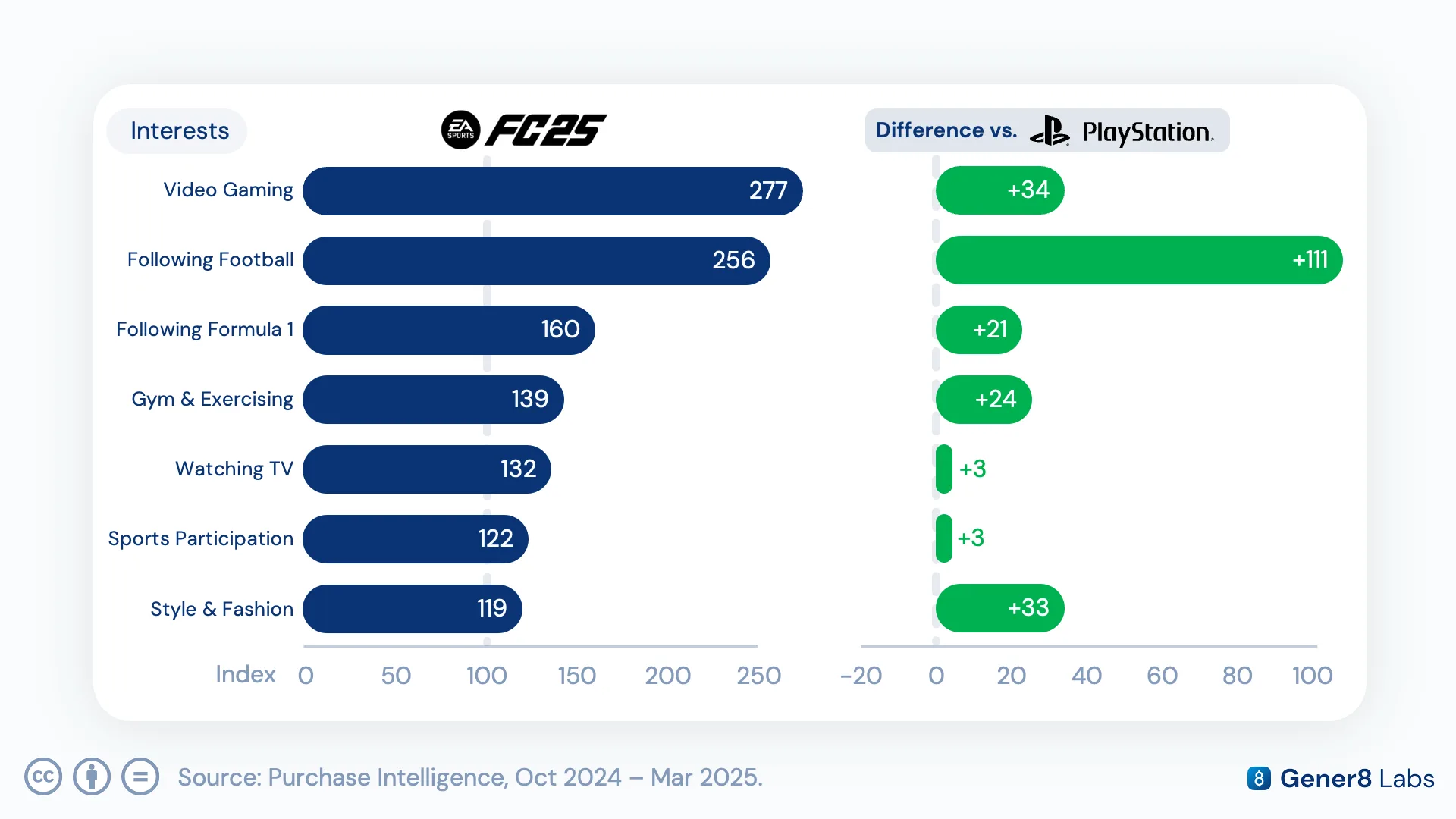
That same FC25 buyer group also shows meaningfully elevated interest in gym and exercise (+24) and fashion (+33) relative to typical PlayStation players, the kind of cross-category signal that would be expensive and slow to uncover through a traditional survey instrument alone. Three advantages stand out overall when interest data is inferred from behaviour rather than declared in a form: models update daily so profiles track how preferences evolve; researchers can identify and reach the right respondent cohorts far faster; and declared survey answers can be checked against actual behaviour, surfacing gaps between what people say and what they do.
Underneath this sits three connected data sources: Consumer Browsing, which captures search terms and site visits; Purchase Intelligence, which tracks brand and item-level buying across hundreds of merchants; and App Usage, which reflects ongoing engagement with specific applications. Pre-built intent-trigger models score activity by frequency and depth, so confidence in an inferred interest strengthens the more consistently a behaviour repeats.

The result is a psychographic layer that sits alongside, and validates, the answers researchers get from Gener8 Snapshot surveys, giving teams a behavioural truth set to check declared data against before it ever reaches a report.