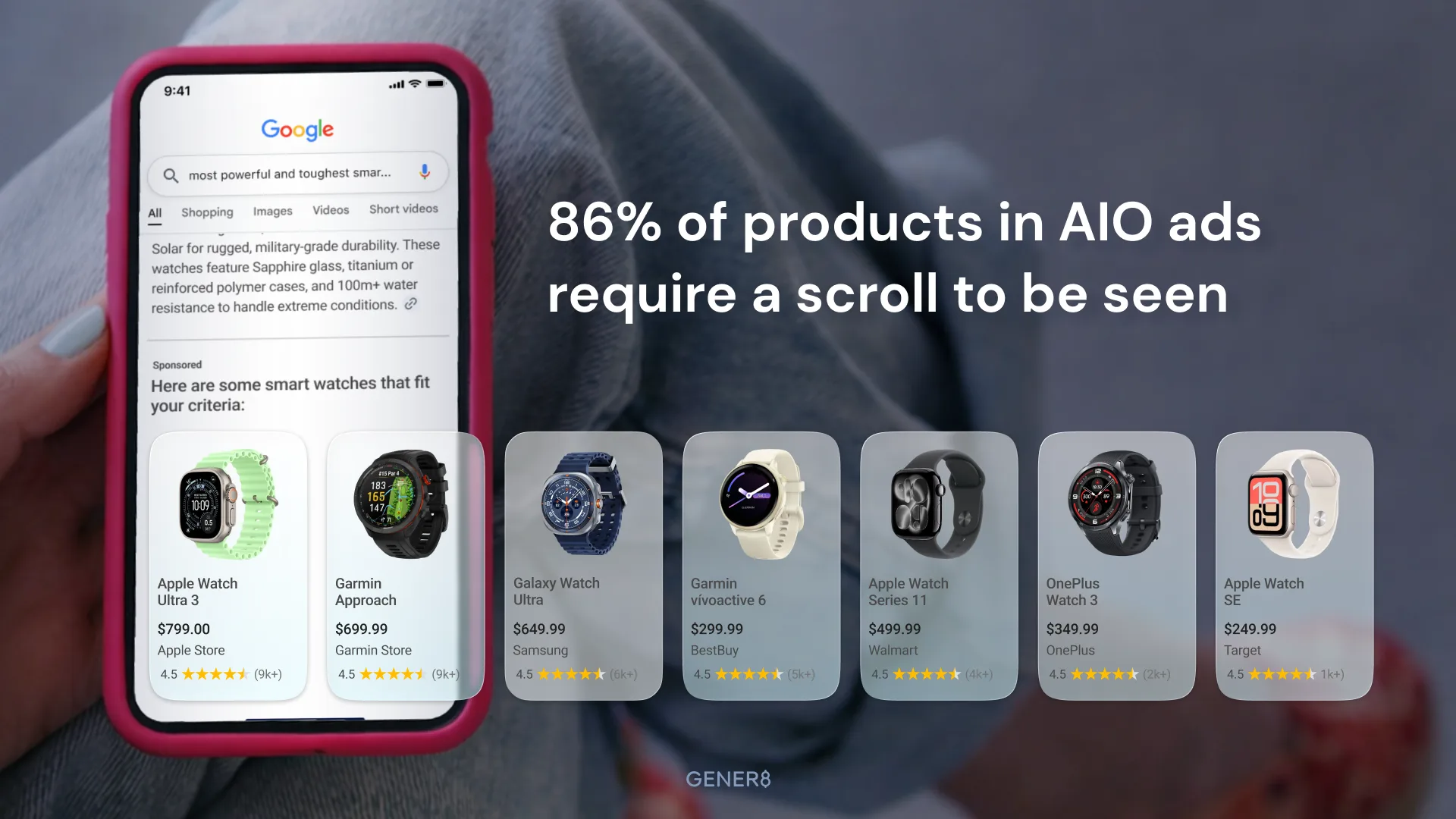
Google AI Overview Ads Analysis: February 2026
March 17, 2026
Examines how AI Overview ads are reshaping search and identifies which merchants are winning AI ad visibility.
Learn morePublished September 28, 2024
Consumer data explains the brand's surprise surge in popularity among younger drinkers.
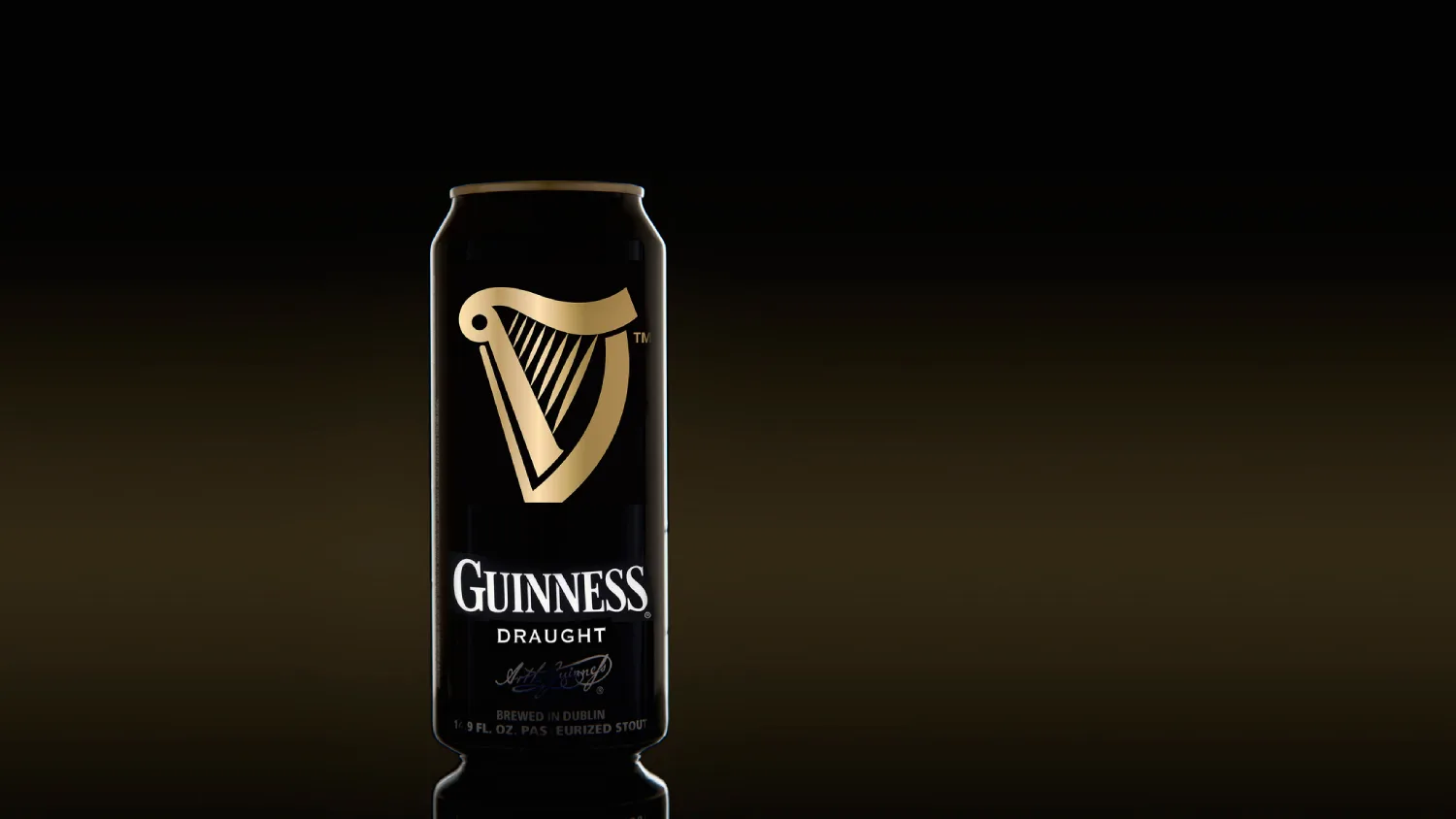
Guinness is not a young brand. The Irish stout has been poured since 1759, and its dark, almost-black appearance and thick, creamy head have made it one of the most recognisable drinks in the world. What's new is who's ordering it: Gener8's eReceipt data shows Gen Z consumers buying Guinness at notably higher rates than the average beer drinker, a surprising surge for a brand more associated with an older, traditional pub crowd.
That shift is sharpest among students, who show a particularly strong preference for Guinness over competing beer brands. Part of the appeal seems to be exactly what makes Guinness feel old-fashioned: its heritage. Gen Z consumers consistently favour brands with authentic, storied histories over newer entrants without a clear identity, and few drinks can match 265 years of continuous brewing.
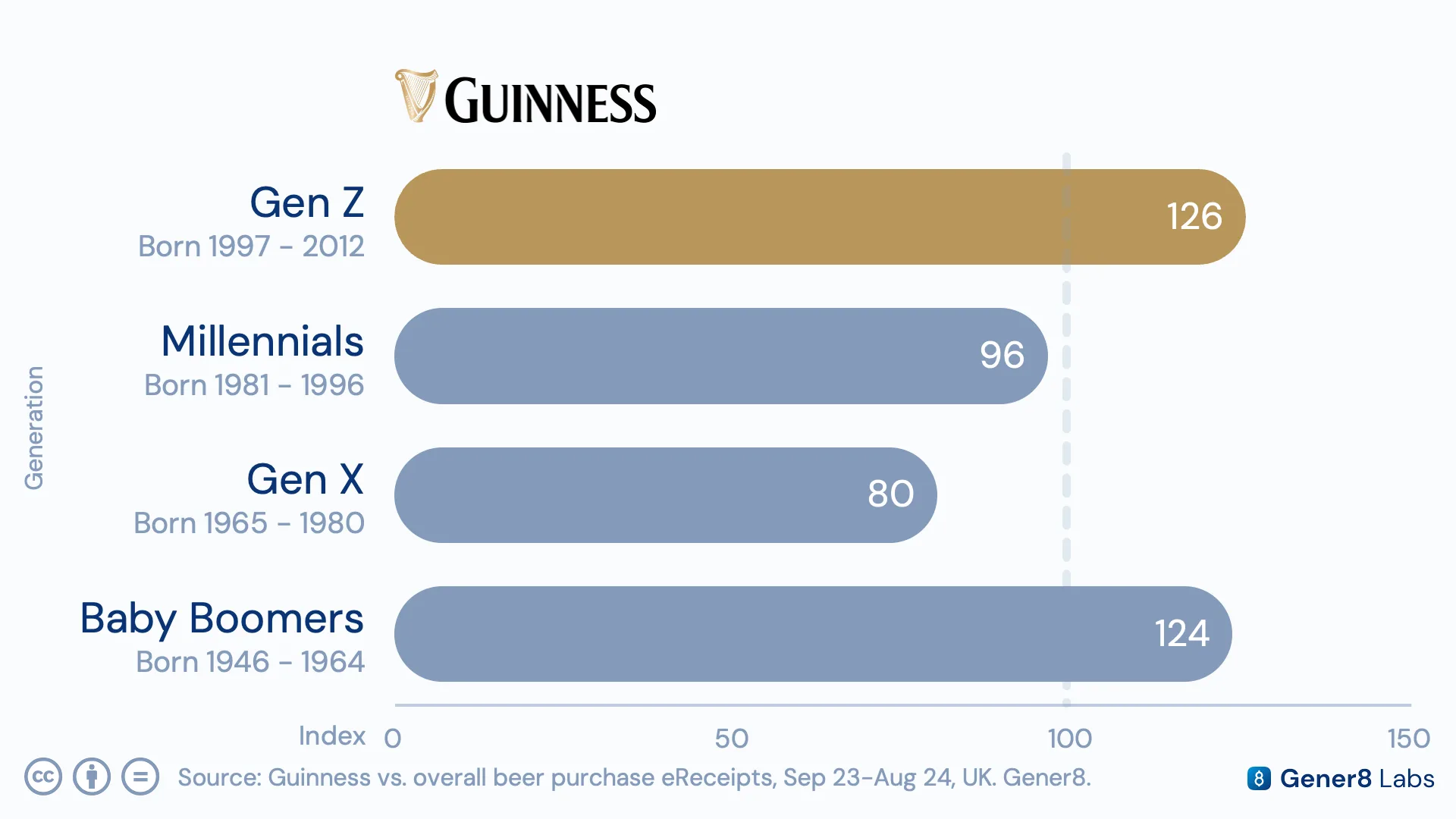
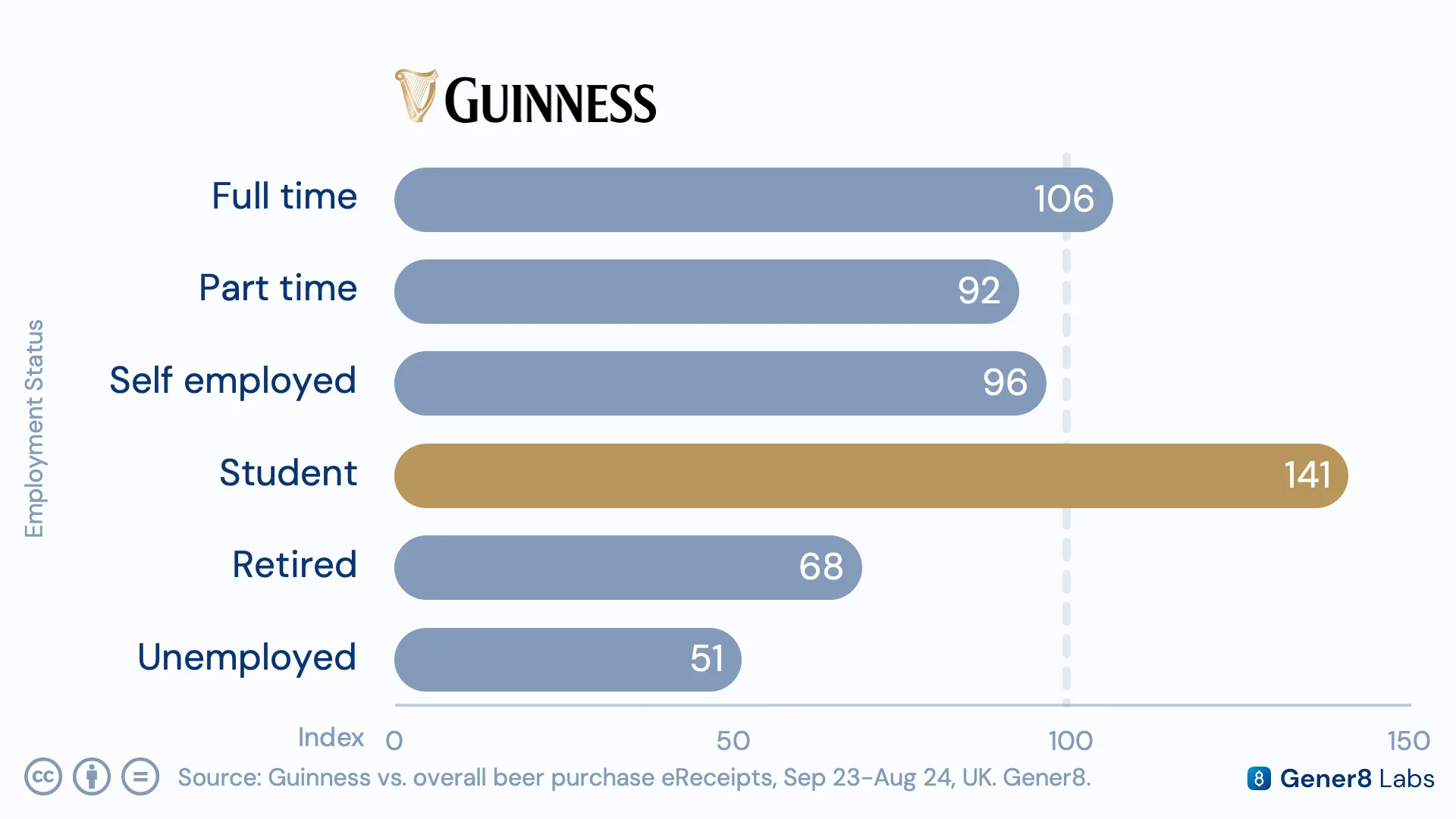
The other driver is entirely modern: social media. The Guinness two-part pour (an initial cascade poured to about three-quarters, left to settle, then topped off to form the signature creamy head) has become genuine short-form video content. "Guinness Guru" creators and accounts like Instagram's Sh#t London Guinness, with roughly 250,000 followers, have turned a decades-old pouring ritual into a recurring cultural moment.
Gener8's validated survey data backs this up: Gen Z Guinness buyers are substantially more likely than average to say social media influences their drink choices.
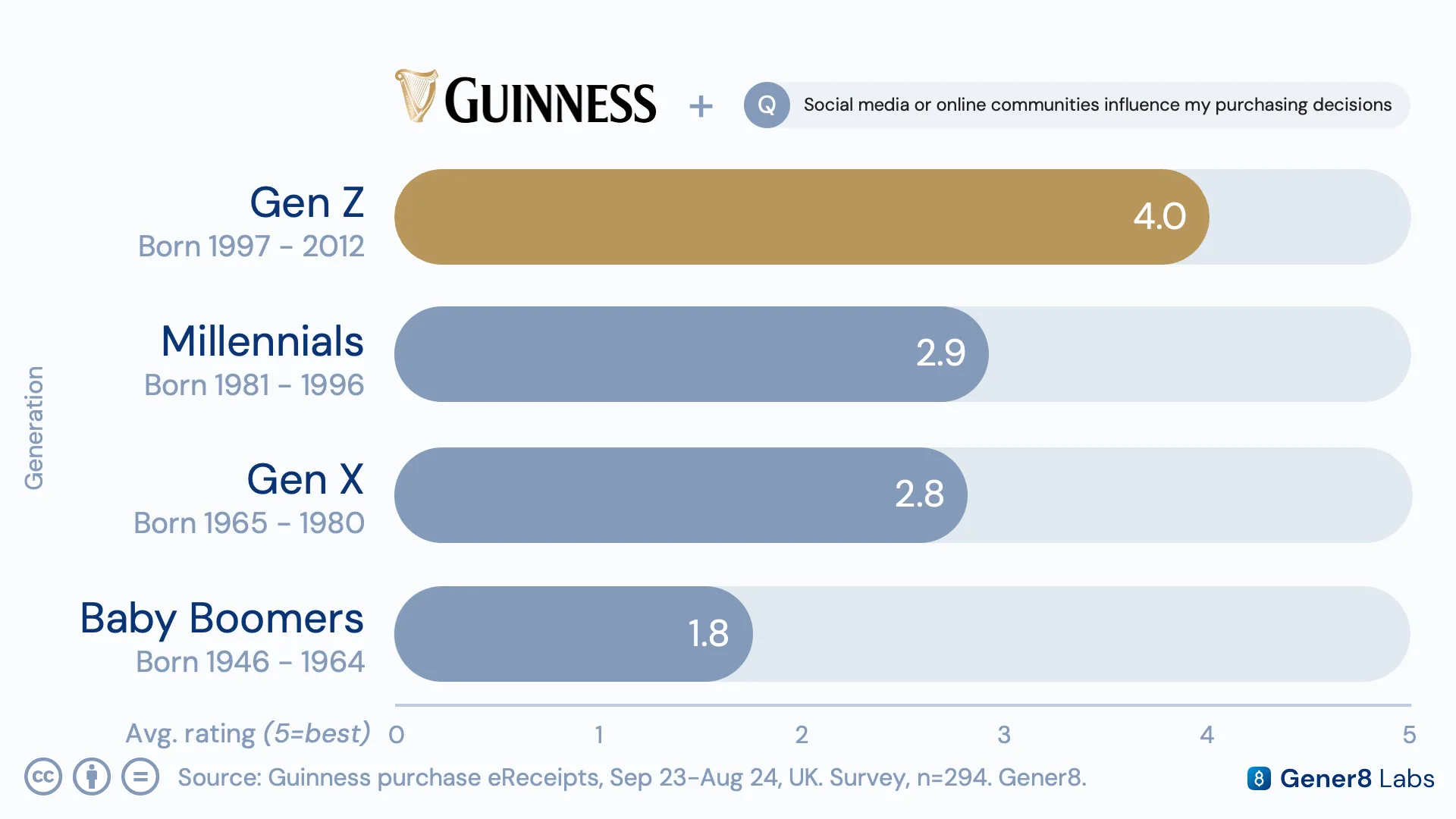
There's also a psychological pull in the ritual itself: the hands-on, two-part pour stands in deliberate contrast to the convenience of ready-to-drink alternatives, and that friction seems to be part of the appeal, turning a pint into a small shared moment rather than a quick transaction.
This analysis combined Gener8's eReceipt dataset with validated survey responses to connect actual purchase behaviour to the attitudes driving it, the kind of integrated, first-party view that explains not just what a demographic is buying, but why.