
Case Study: Enriching Captify's Travel Insights
January 2, 2025
Browsing data connected to a bespoke survey enhanced an annual travel report.
Learn morePublished January 8, 2025
App usage dataset reveals gym-goer behaviors, demographics, and preferences through passive data.

January is the busiest month of the year for gyms, as New Year's resolutions send a fresh wave of members through the door. Browsing data can hint at fitness intent, but it can't confirm who actually shows up. Gym apps can: every check-in and class booking is a passive, first-party signal of real-world attendance, and that makes them one of the richest sources we have for understanding who gym-goers are and how they behave.
Consistent gym app usage is a highly reliable indicator that someone actively attends a gym, rather than merely claiming to in a survey response. We built a gym-goer cohort from our App Usage dataset, filtered to the most popular UK gym and fitness apps, then tracked how activity moved across the calendar.
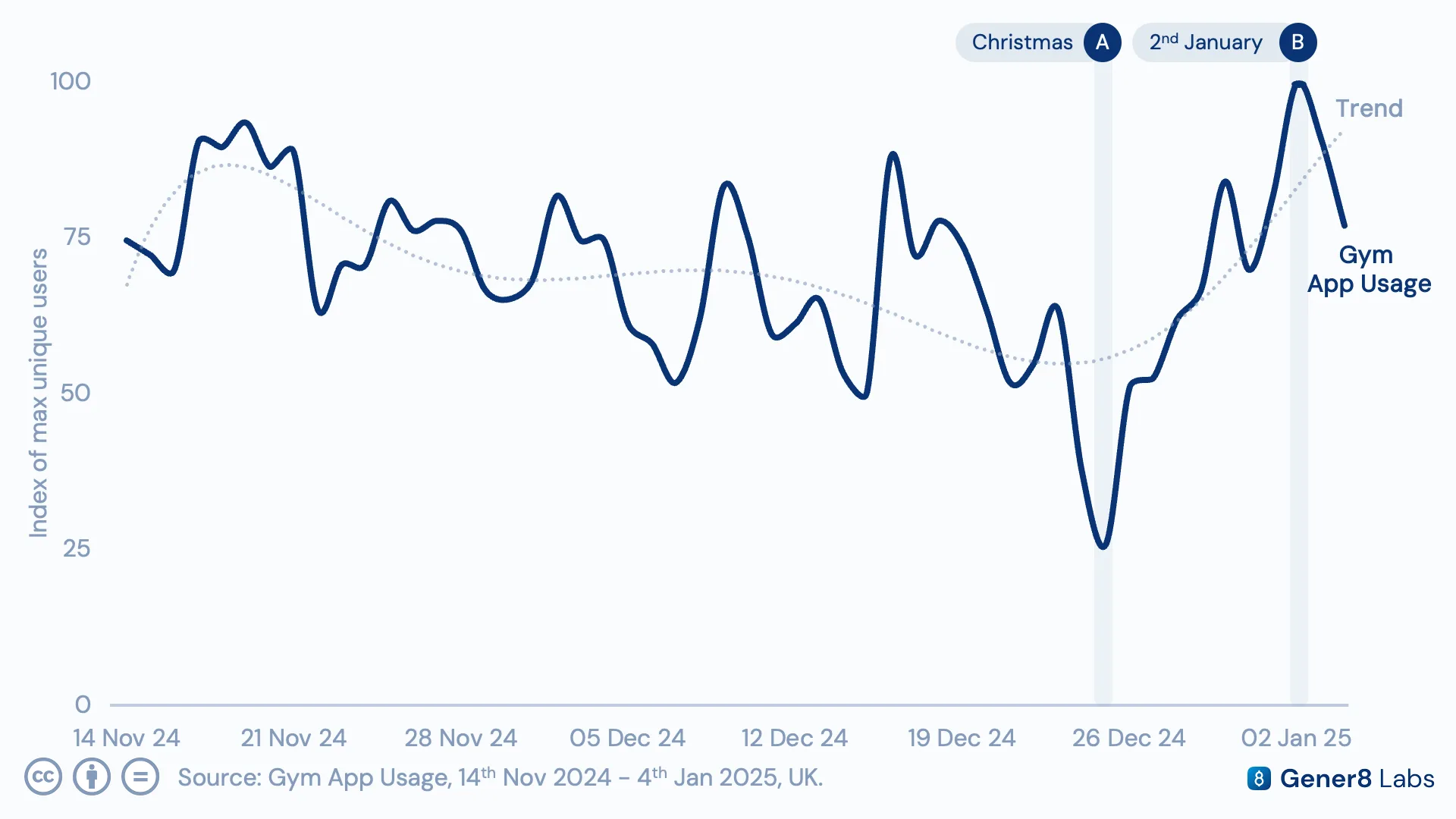
As anticipated, significantly fewer users opened gym apps on Christmas Day, tracking gym closures and reduced hours almost exactly, before a notable spike on January 2nd as members returned to their routines with renewed fitness goals.
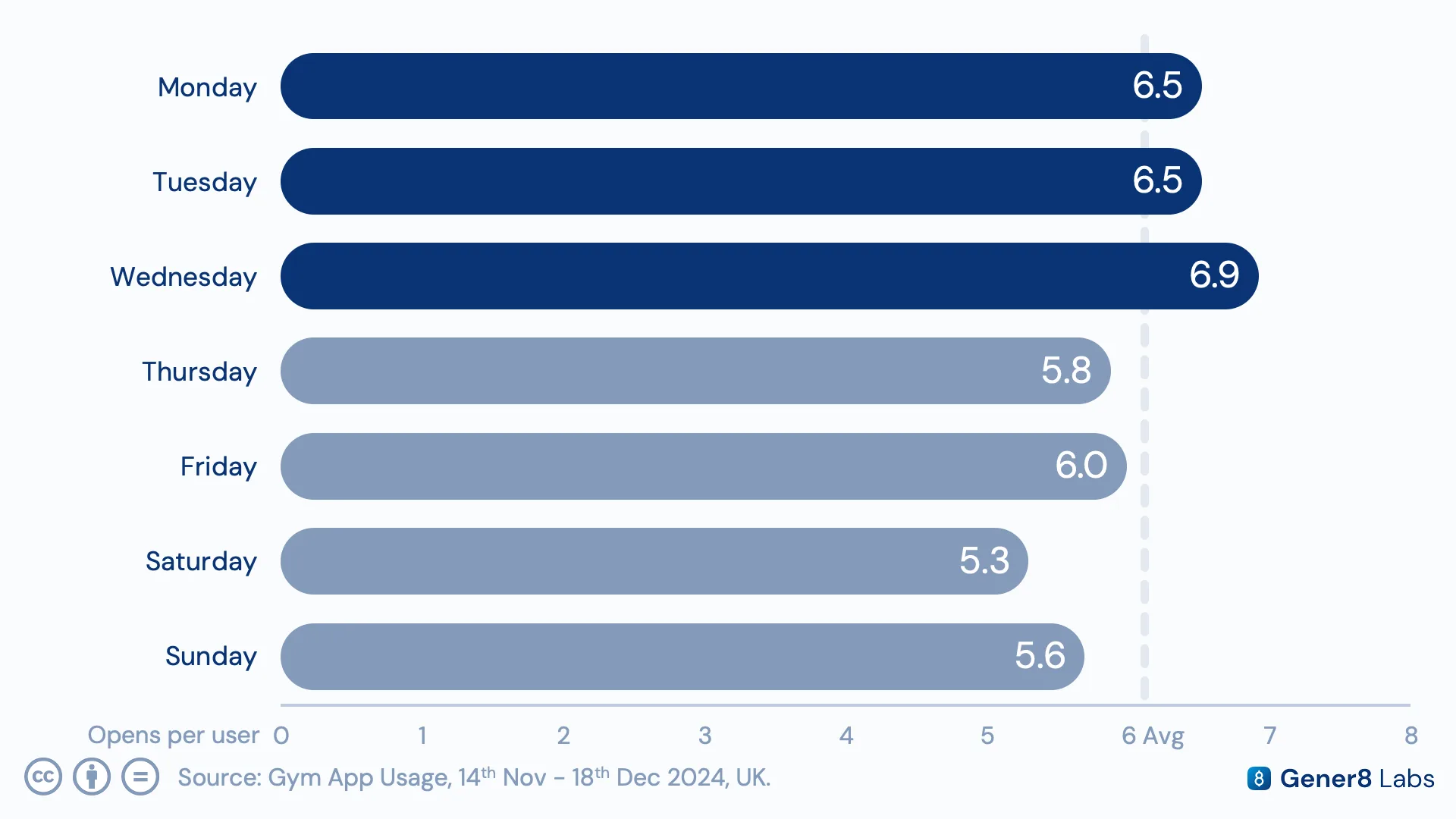
Breaking activity down by day of week added another layer: Monday through Wednesday are the clear peak gym days, while weekend attendance is consistently the quietest. That rhythm has obvious implications for when fitness and wellness messaging should land.
By filtering other passive datasets and survey responses by the gym-goer cohort, we can gain deeper insights into their preferences, enabled by Gener8's datasets being interconnected by a single user ID.
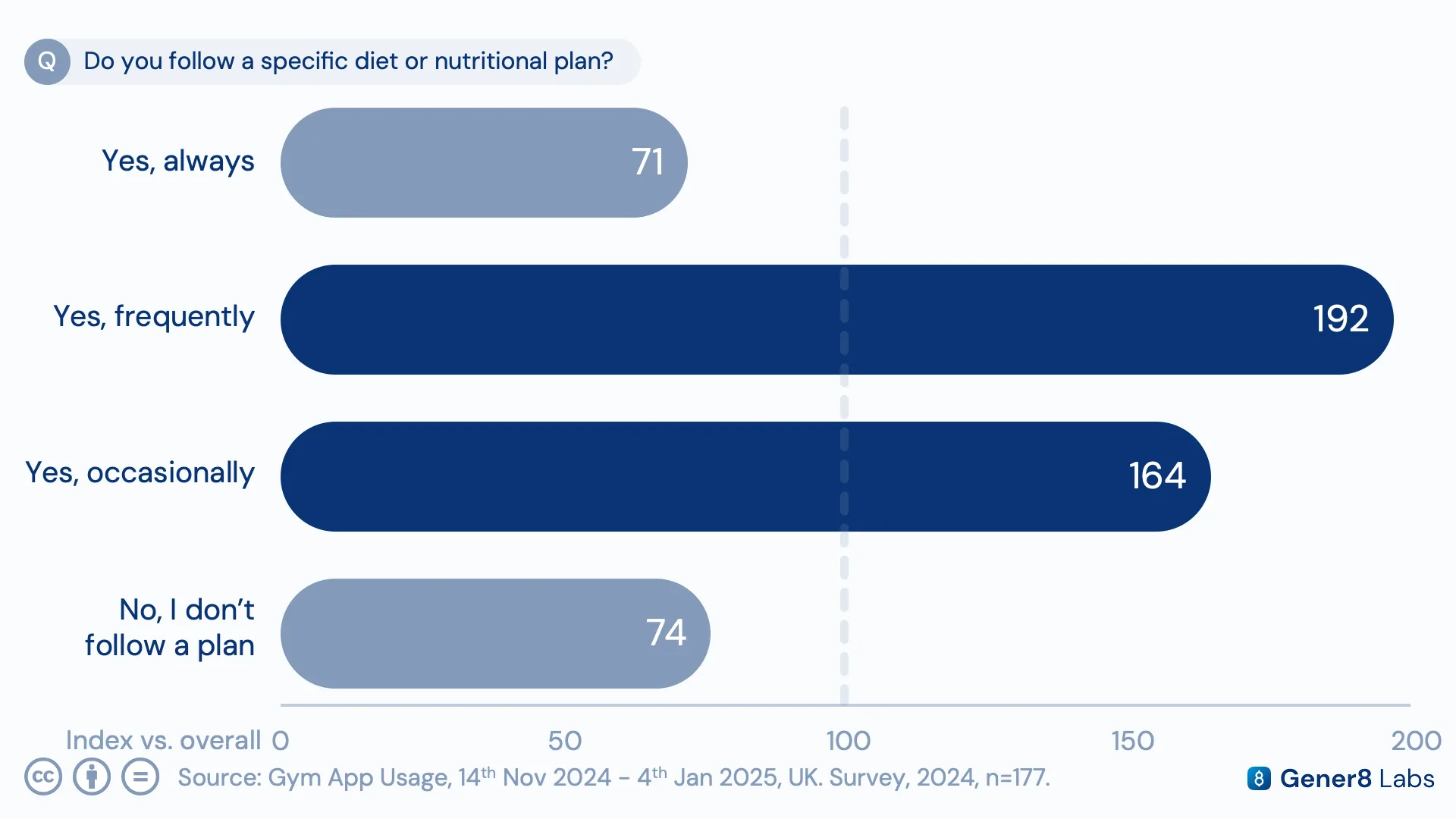
Connecting to Gener8 Snapshot survey data, we can see that gym-goers index highly for following a specific diet or nutritional plan most of the time.
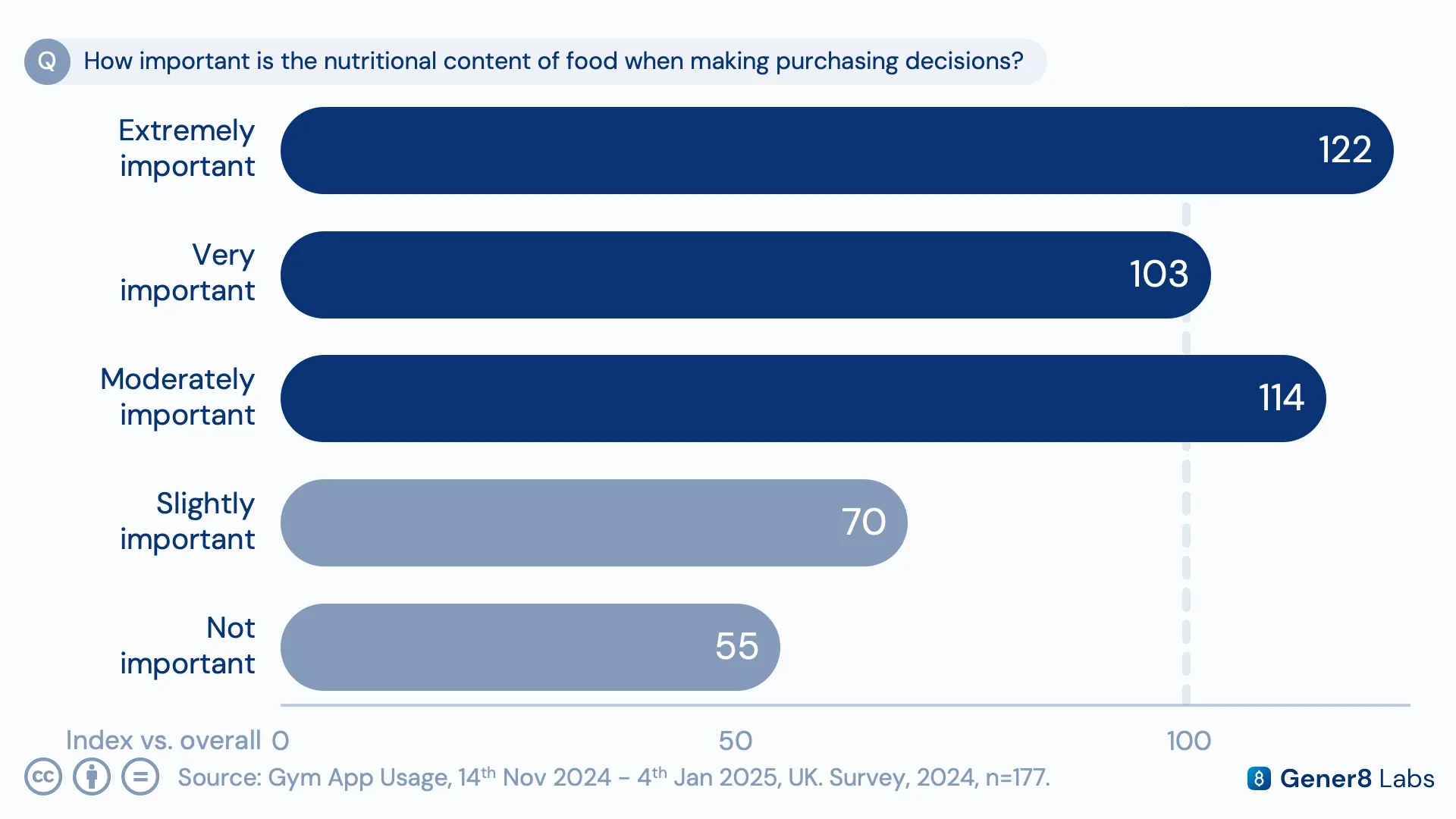
Additionally, compared with the general population, gym-goers place a higher importance on the nutritional content of their food. Connecting a target app usage cohort to multiple data sources like this makes it possible to quickly build a holistic understanding of that audience's demographics, interests, purchase intent and web browsing habits, simplifying the creation of pen portraits and audience insights.
Using a specific gym app not only implies gym activity but also confirms a paid membership to that gym. With gyms differentiating themselves on USPs like monthly membership price and types of classes, we can better understand the impact this has on user demographics, for instance, the notable differences between PureGym and Everyone Active.
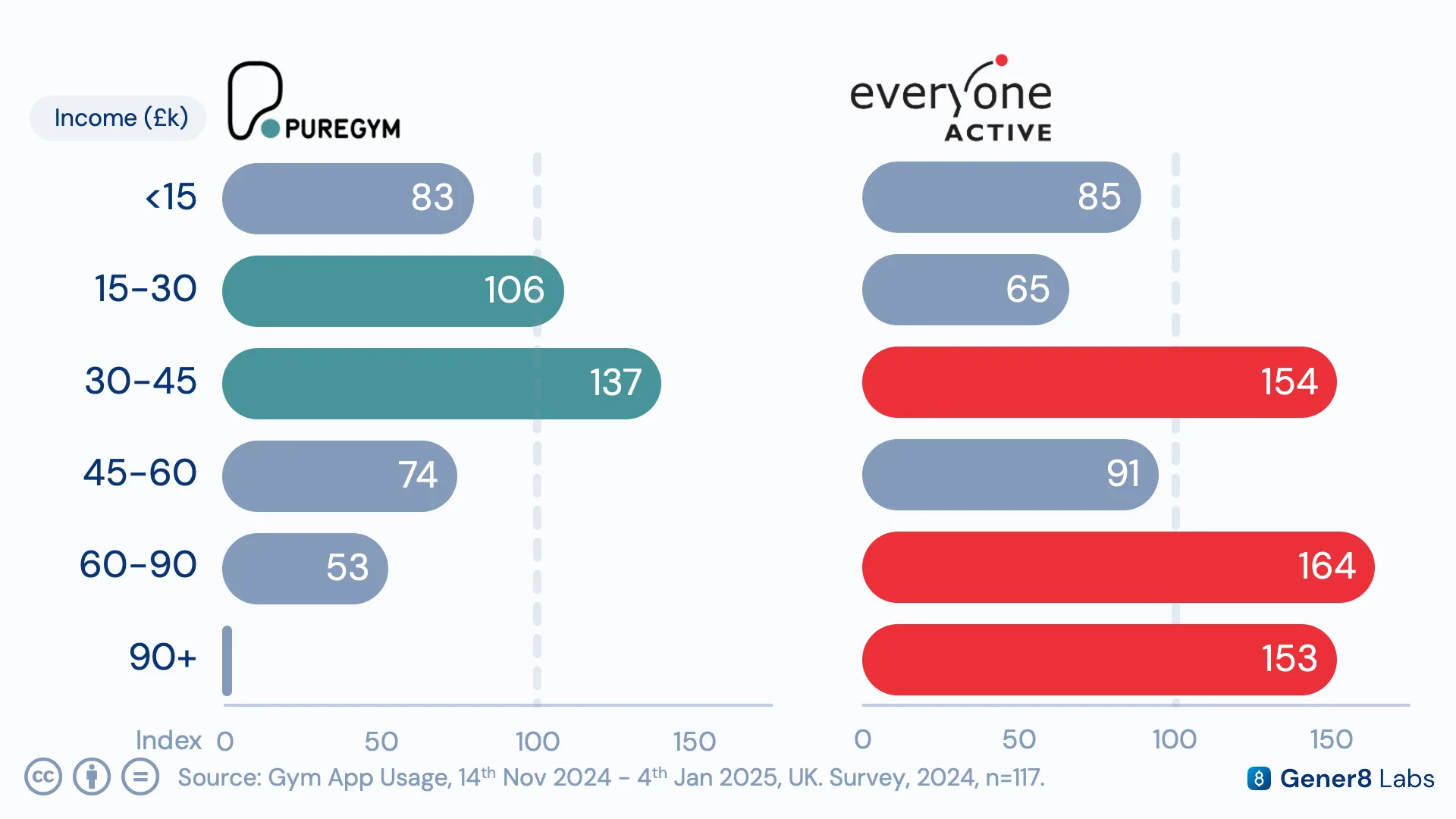
Everyone Active indexes toward higher household income, which makes sense given it offers a broader range of services including swimming pools and group fitness classes, while PureGym focuses on affordability while maintaining 24-hour access and good equipment.
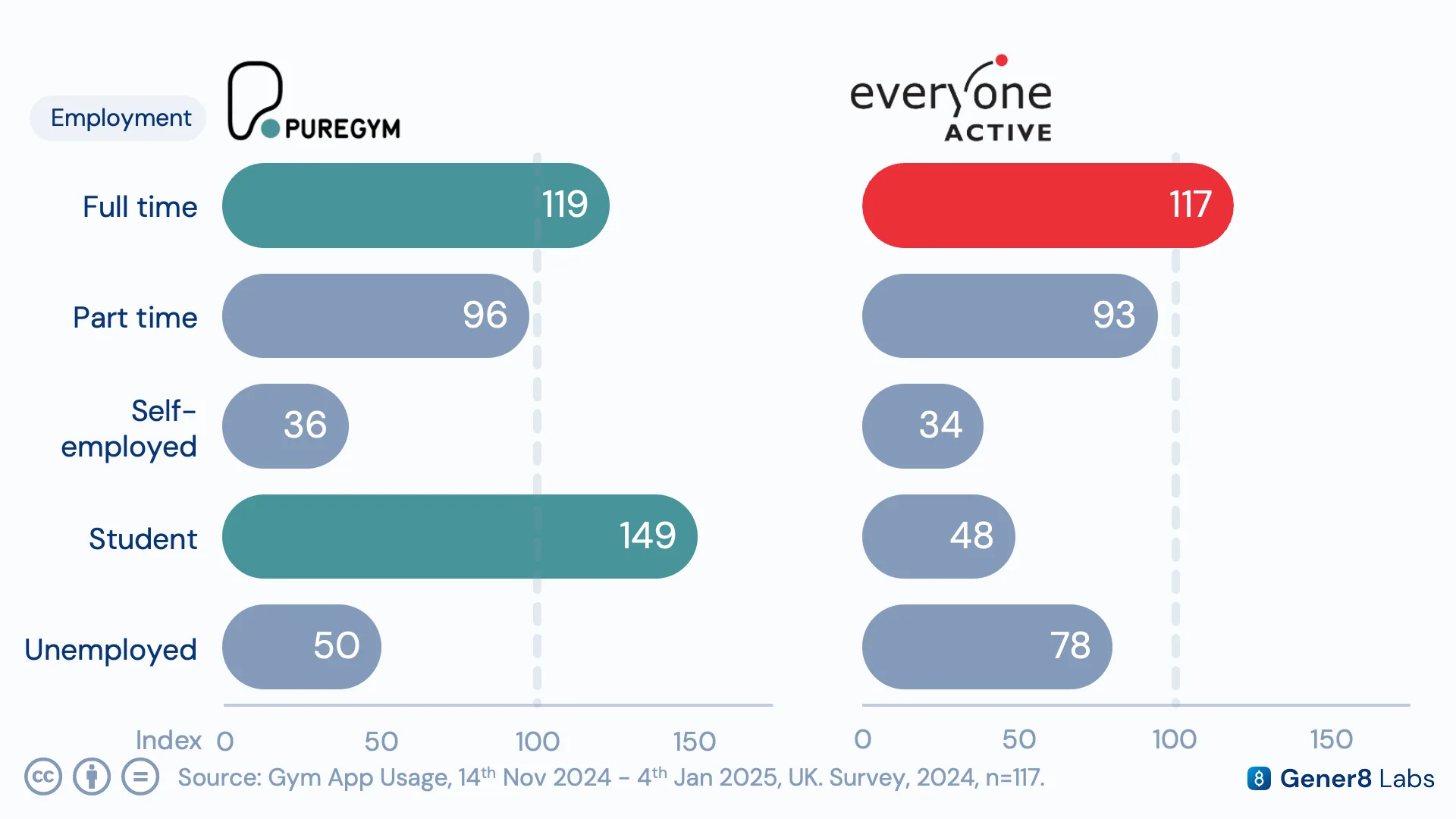
It's perhaps unsurprising, then, that PureGym indexes strongly with students, who are especially price sensitive. These examples show how app usage can validate both user activity and membership to specific services, aiding competitor comparison and planning, which is why app usage is used alongside search, web browsing, and eReceipt data to build an accurate view of behaviour under Gener8's psychographics framework.
We used Gener8's App Usage dataset alongside Gener8 Snapshot survey responses and Demographic datasets to uncover insights from gym-goers. Get in touch to see how the same passive data can validate real-world attendance and membership for your own target audience.