
Decoding UK Web Trends: Q4 2024
January 23, 2025
Consumer BrowsingUK Nat Rep
Q4 showed a surge in Fashion & Style browsing and a decline in Career site visits.
Learn morePublished February 4, 2025
Survey reveals UK public opinions and behavior regarding Hollywood's biggest awards night.

Within days of the January 23rd Oscar nominations, we fielded a survey to the UK public to gauge two separate things: how much people actually trust the Academy's judgement, and how well the public can call the winners before the envelopes are opened. The results paint a picture of an audience more sceptical than sentimental, but still tuning in.
First and foremost, we wanted a clearer sense of whether the UK public views the Oscars as a reliable measure of quality when it comes to movies and performances from the past year.
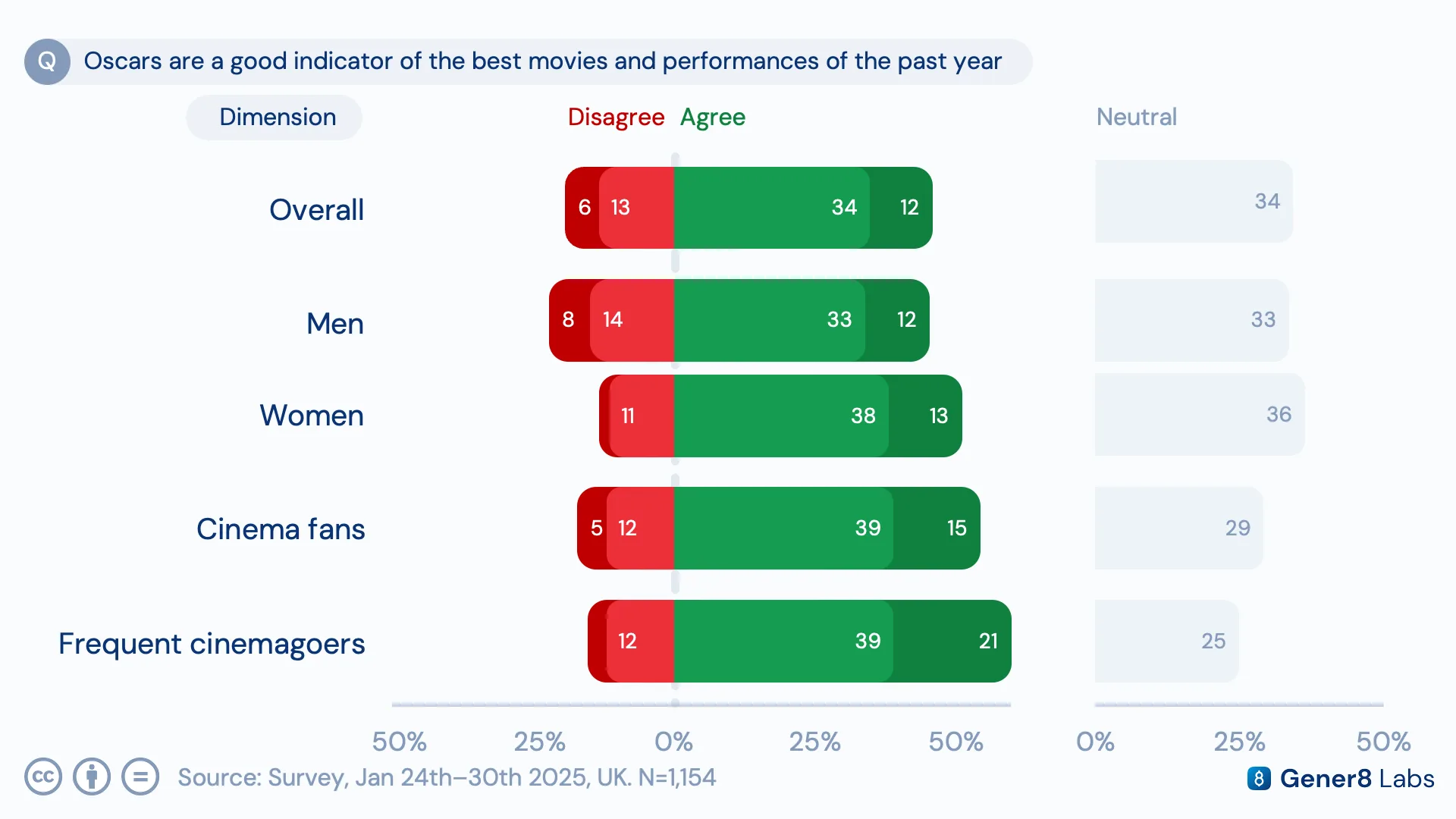
Just under half of respondents, 46%, agreed the Oscars serve as a reliable indicator of the best movies and performances of the year, against only 19% who disagreed outright. Confidence wasn't evenly spread: men were notably more sceptical, with a higher tendency to strongly disagree, while women showed a greater inclination to agree. Among self-described passionate movie fans, agreement rose to 54%, and among frequent cinema-goers it climbed further still, to 60%.
But does receiving an Oscar nomination actually influence whether someone decides to watch a movie?
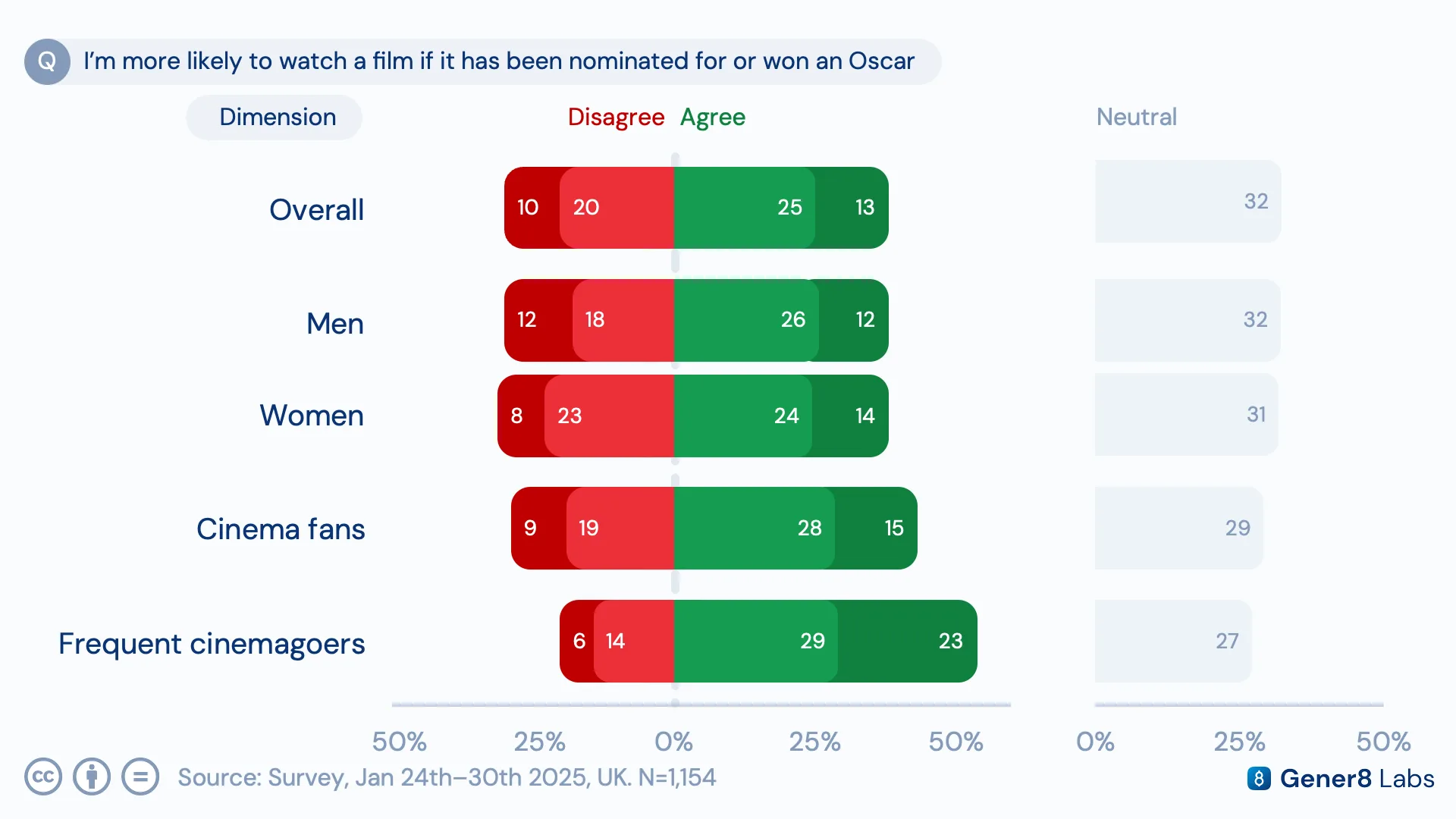
Response patterns were broadly similar between men and women, though men were more likely to strongly disagree with the statement while women were more likely to strongly agree. Among avid cinema fans, agreement rose to 43%, and among the most frequent cinema-goers, to 52%.
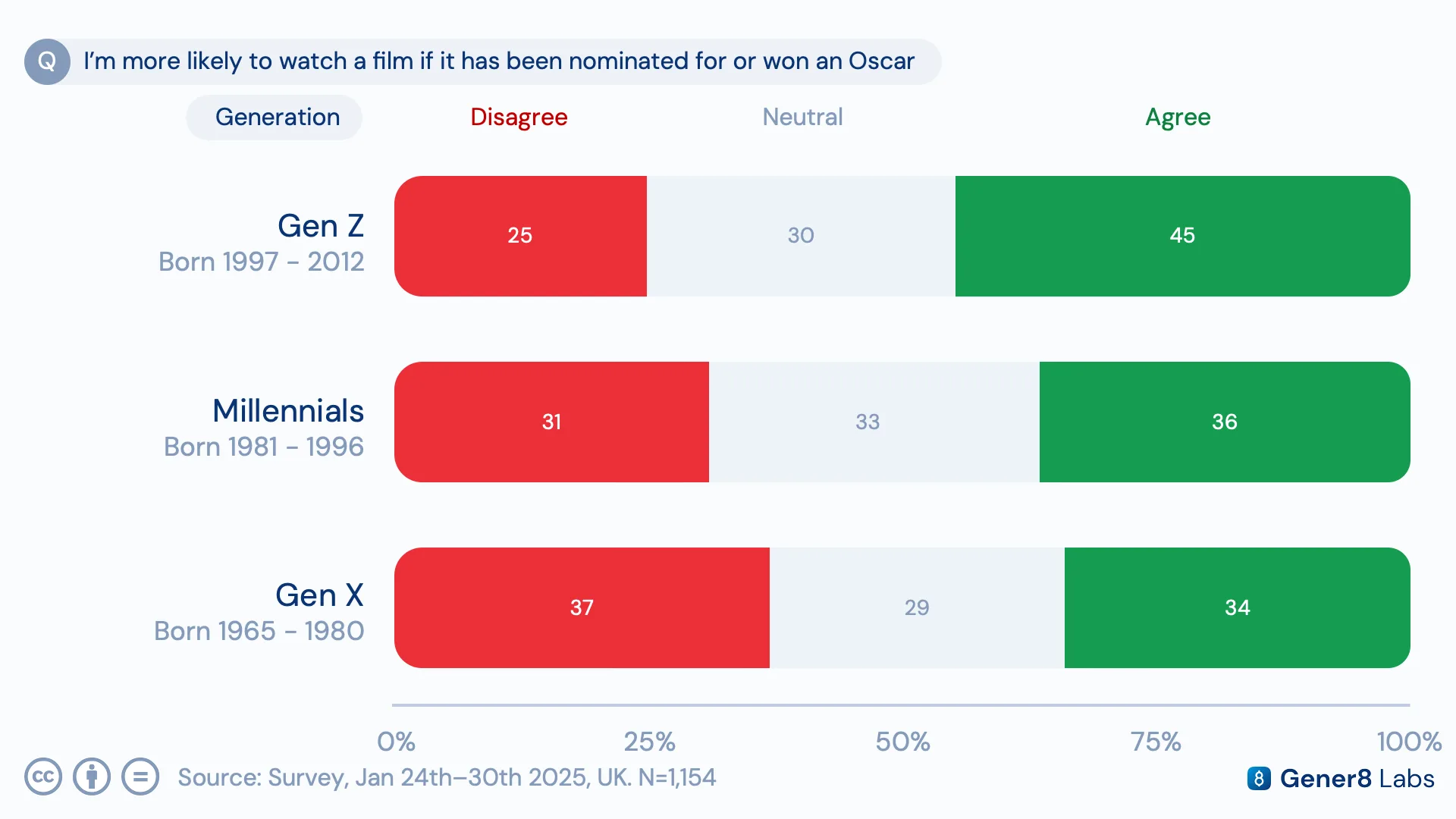
There was also a clear generational trend: younger generations were more likely to watch an Oscar-nominated film, while older generations showed a noticeable decline in their likelihood of doing so.
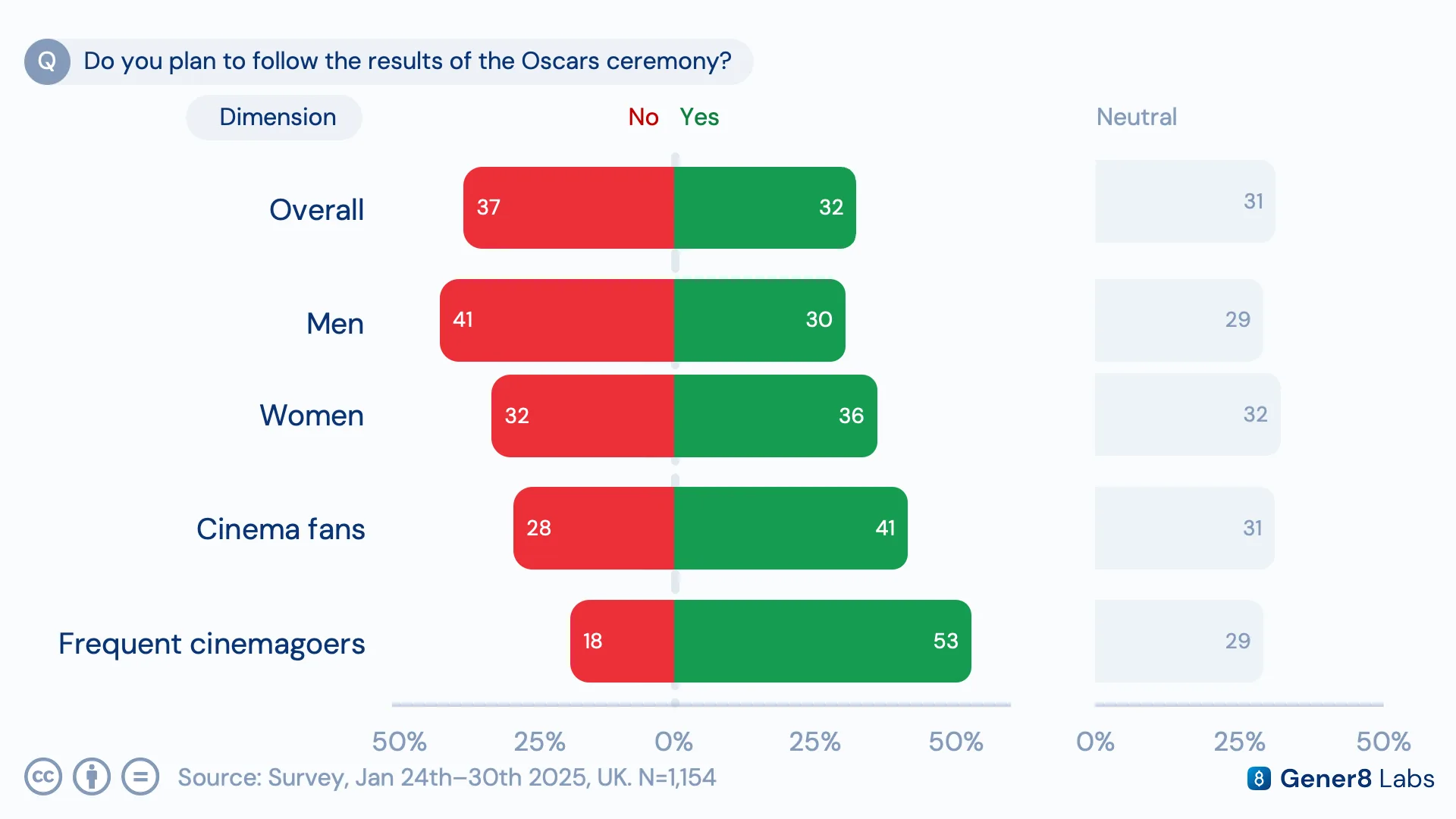
Only 32% of respondents said they plan to keep up with the results of this year's ceremony. Men were less inclined to follow the event, while 36% of women said they would. Movie buffs were significantly more likely to tune in (41%), rising to 53% among frequent moviegoers.
But how do people actually follow the ceremony?
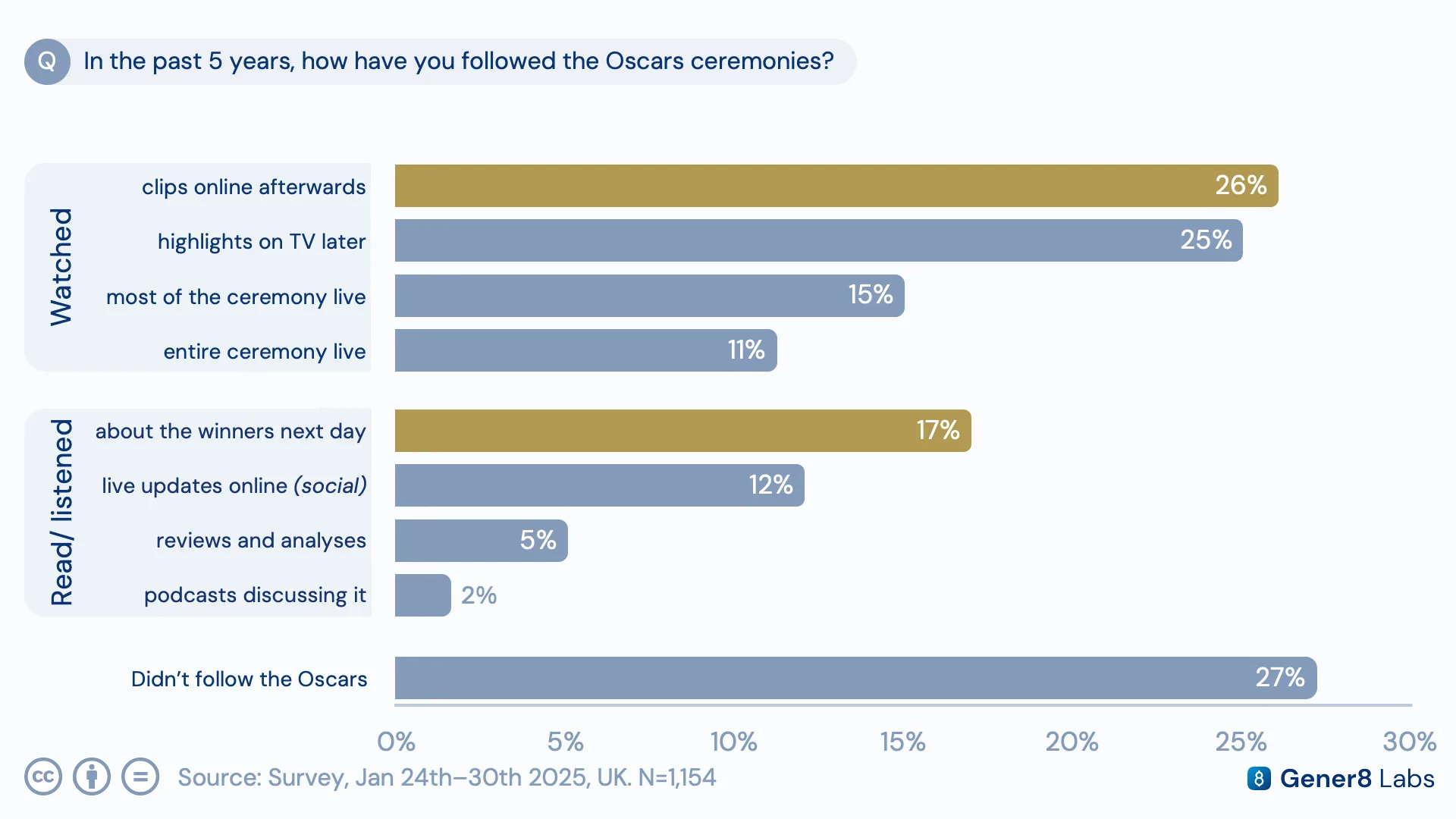
With the ceremony kicking off at 11pm UK time, only 11% had tuned in to watch live over the past five years. Most viewers instead caught clips online afterward (26%) or highlights on TV later, while 17% preferred to simply read about the results the next day. Yet a much larger 73% of respondents had watched, read, or listened to the results in some form over the past five years, a reminder that Gener8's behavioural data can help combat the 'say-do gap' in stated intent versus real, validated behaviour.
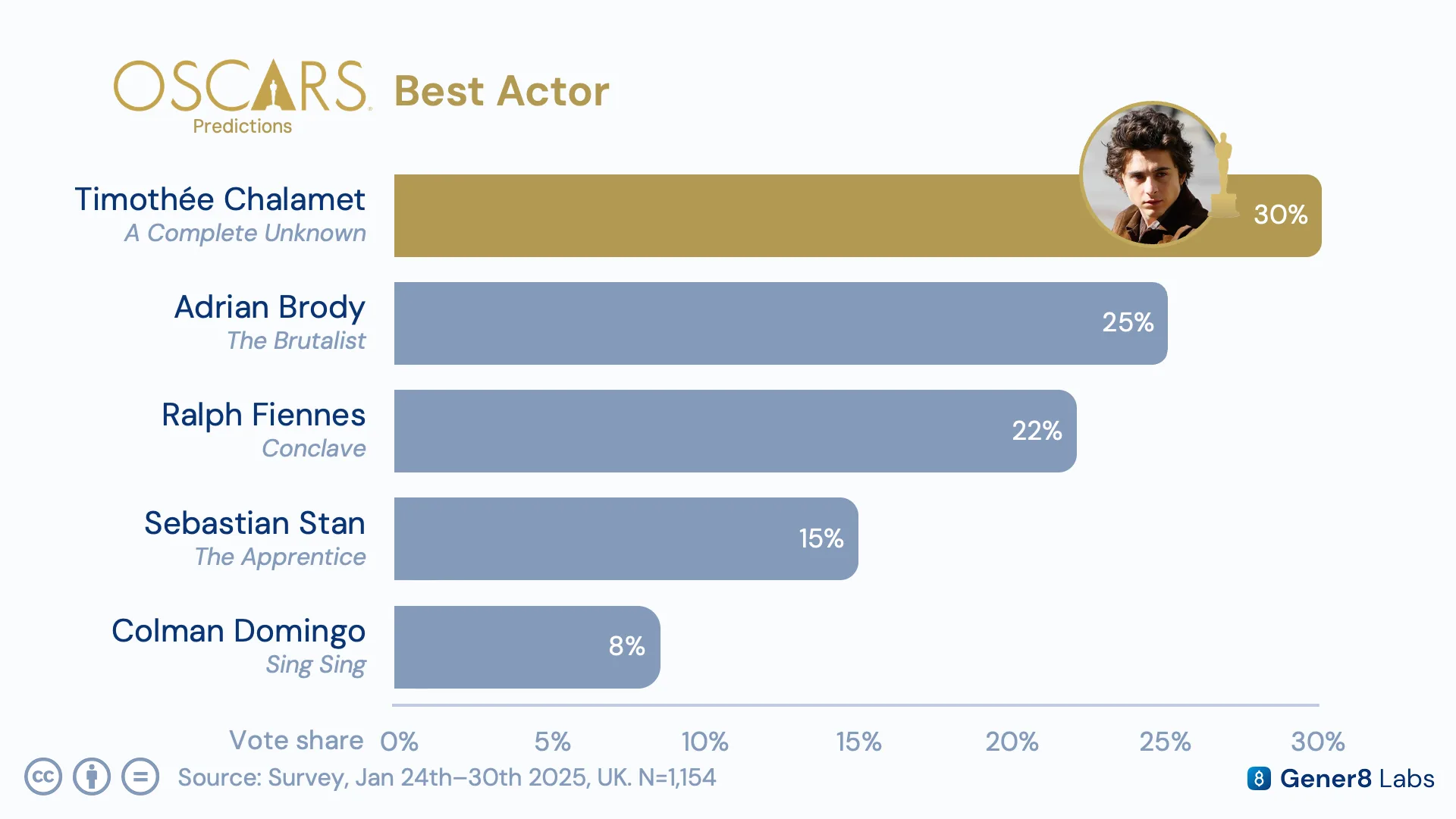
For Best Actor, the UK public backed Timothée Chalamet for his role in A Complete Unknown, with fairly balanced demographics beyond a lean toward Millennials (i109). Support for Colman Domingo's performance in Sing Sing skewed heavily Gen Z (i154).
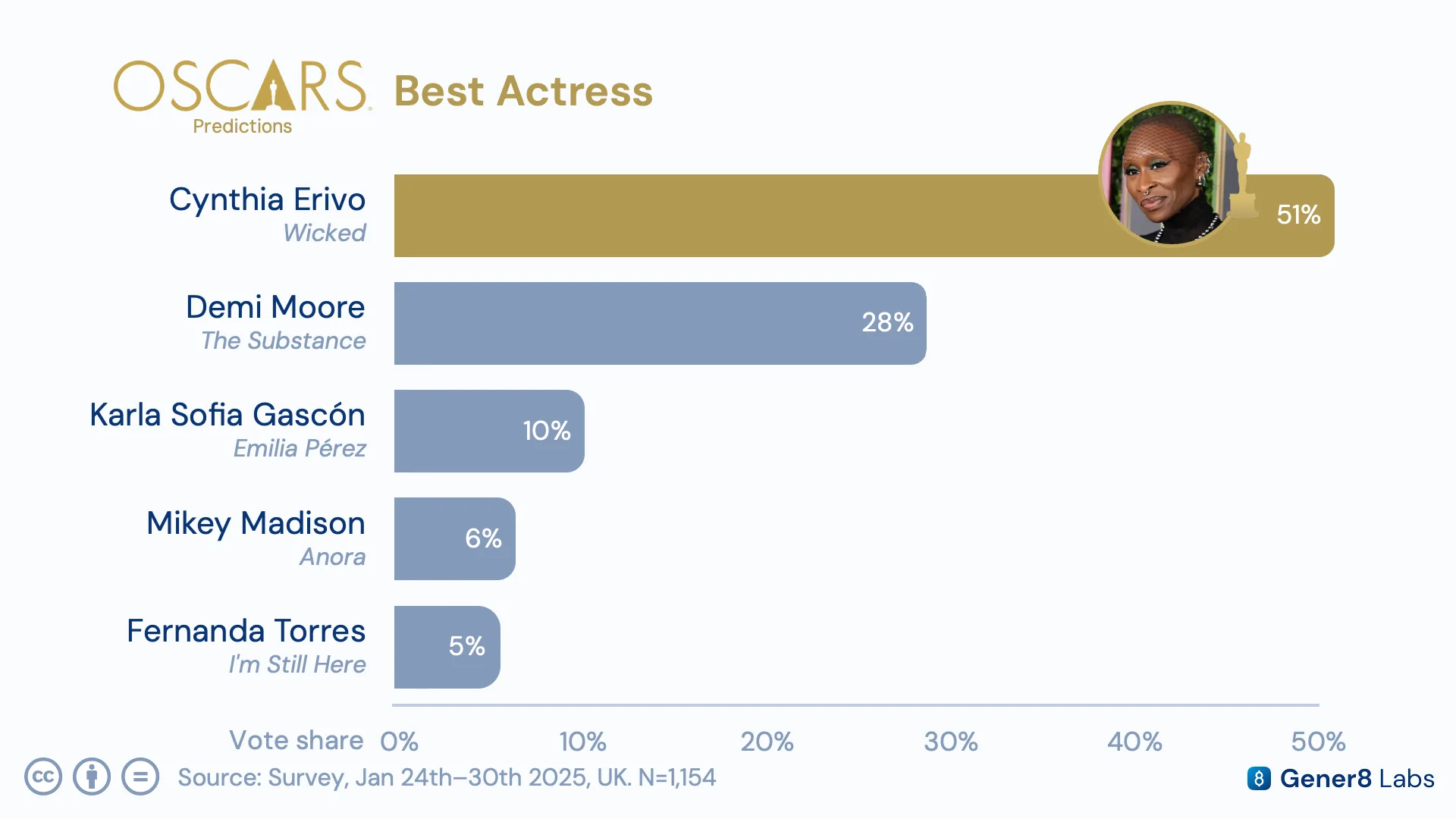
Cynthia Erivo was the runaway pick for Best Actress for Wicked, particularly among women (i166 versus i90 for men). Support for Mikey Madison's Anora performance skewed male (i131 versus i60 for women) and strongly Gen Z (i150).
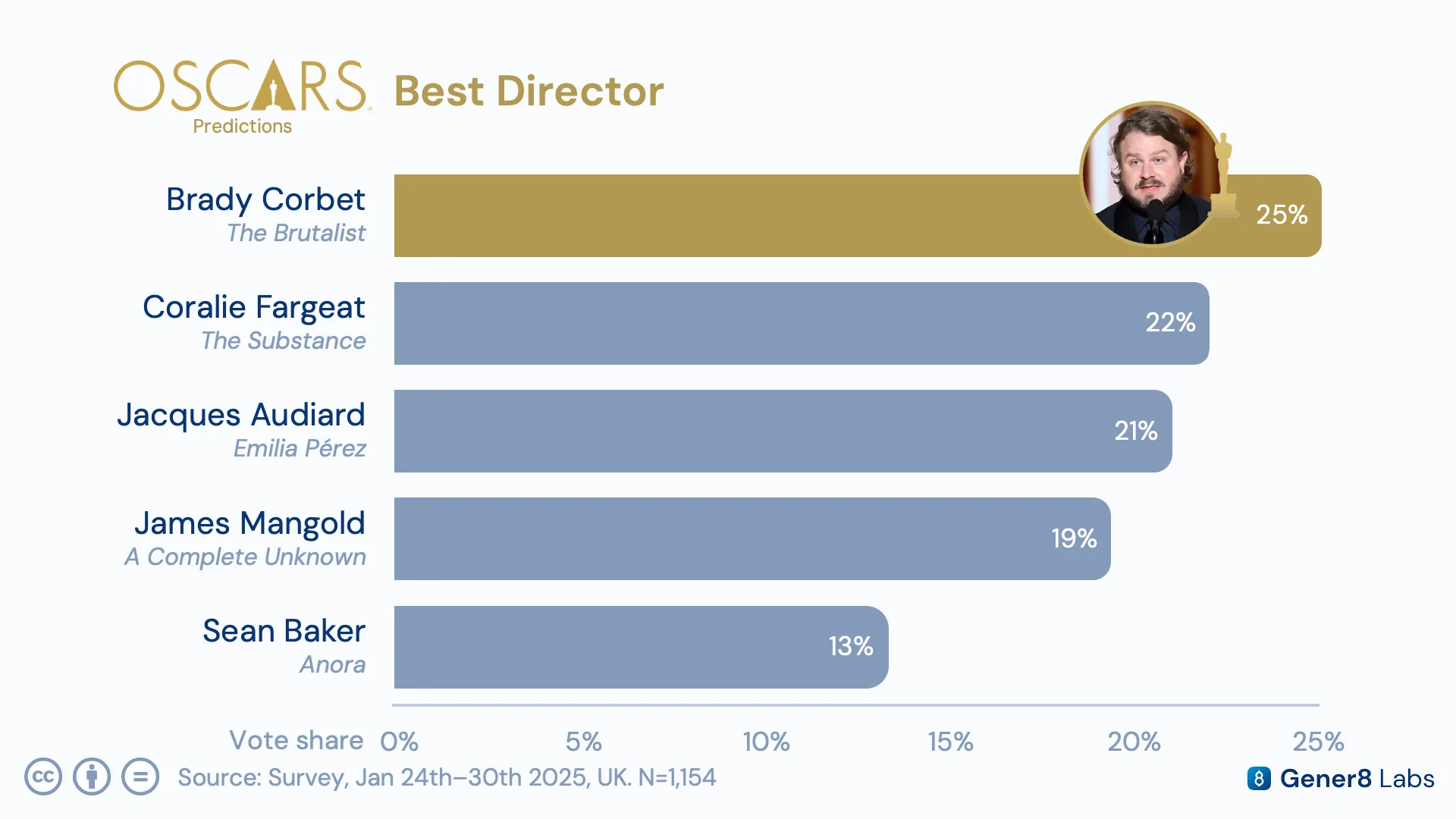
Best Director split more evenly among four contenders, with Brady Corbet picking up 25% of the vote for The Brutalist, buoyed by strong support among Gen X respondents (i127). Anora voters skewed male (i123) and Gen Z (i159), while Emilia Pérez voters skewed female (i135) and Gen X (i122).
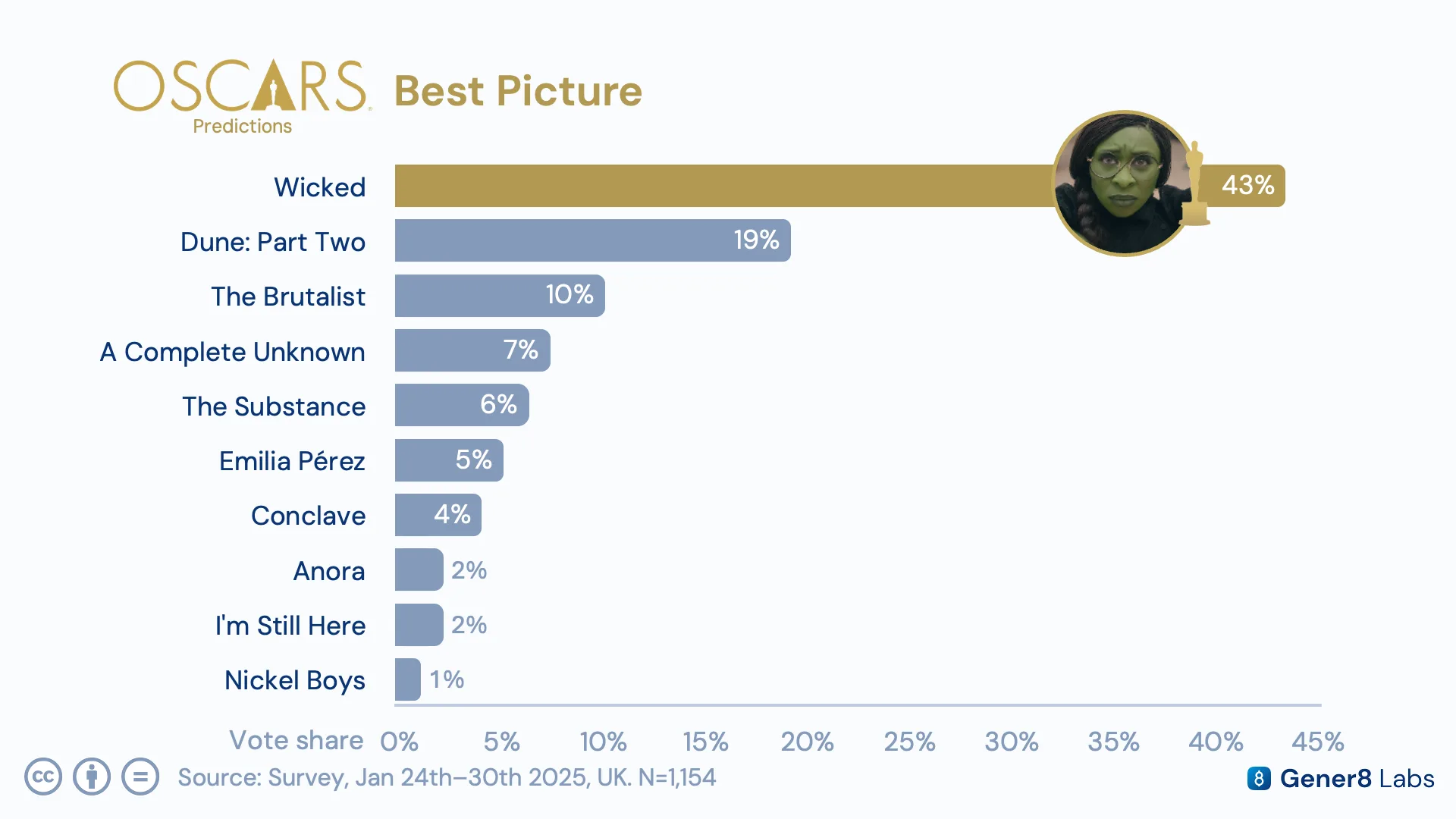
Best Picture produced the clearest gender divide of the entire survey: Wicked took the largest overall vote share, driven heavily by women (i133 versus i73 for men), while men were considerably more likely to back Dune: Part Two (i134 versus i59 for women), likely reflecting the film's traditionally male-skewing sci-fi appeal.
So, how accurate were the UK public's predictions? Were they able to foresee the unpredictable? Stay tuned for the results once the envelopes are opened.
We used Gener8's survey functionality to learn more about people's attitudes towards the Oscars. Get in touch to see how the same validated survey capability can be fielded against your own audience.