
Oscars 2025: Predicting the Unpredictable
February 4, 2025
Survey reveals UK public opinions and behavior regarding Hollywood's biggest awards night.
Learn morePublished February 17, 2025
Leverages 100k UK users for demographic, attitudinal, and behavioural competitor insights.
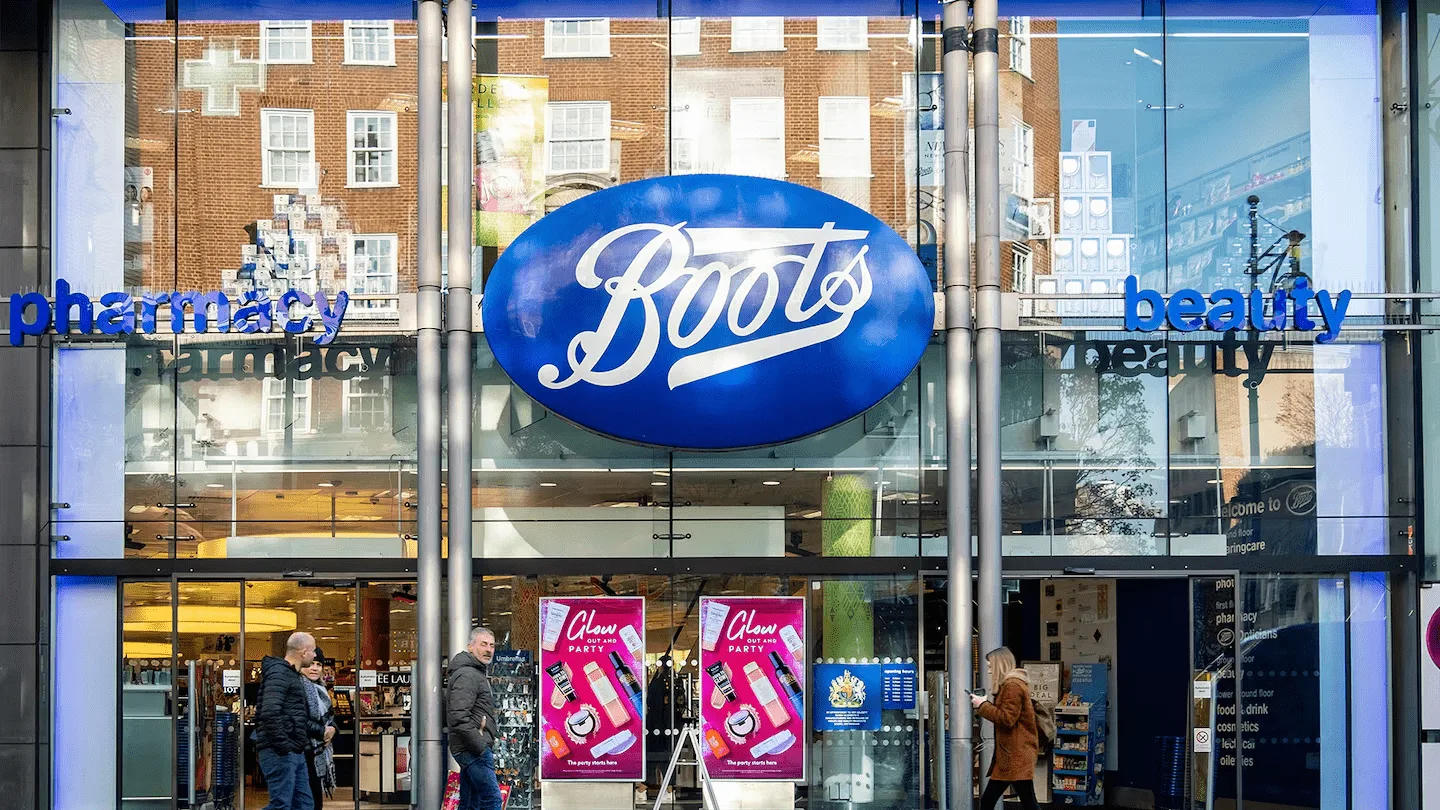
Most brands know their own customers well. Far fewer have an equally clear picture of who is buying from the competitor down the street, or the app store listing next door. That gap is exactly what Gener8's interconnected datasets are built to close, combining consumer browsing, purchase intelligence, and app usage into one audience view. We used Boots as a working case study to show what that view looks like in practice.
Our panel spans more than 100,000 UK users, each linked across datasets by a single user ID, which lets us quickly identify and size up a target audience cohort based on a number of different data connections.
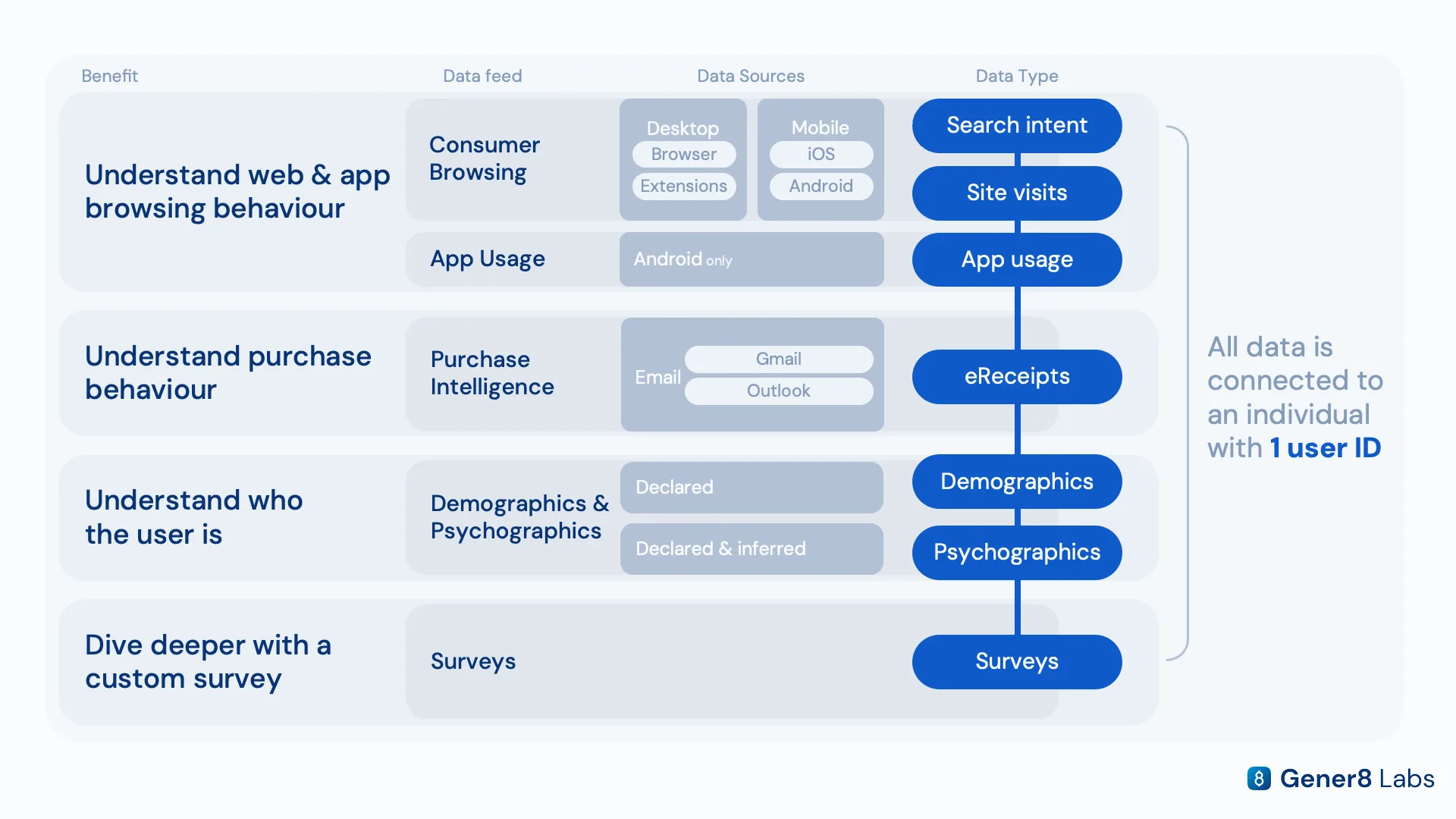
For Boots, that meant identifying 36,200 users who had visited Boots.com, 9,800 with a Boots eReceipt on record, and 4,600 who had opened the Boots app: a deduplicated total audience of 45,400 people, assembled without launching a single new survey.
After creating this audience cohort, we can start to analyse the Boots audience through both demographic and psychographic lenses.
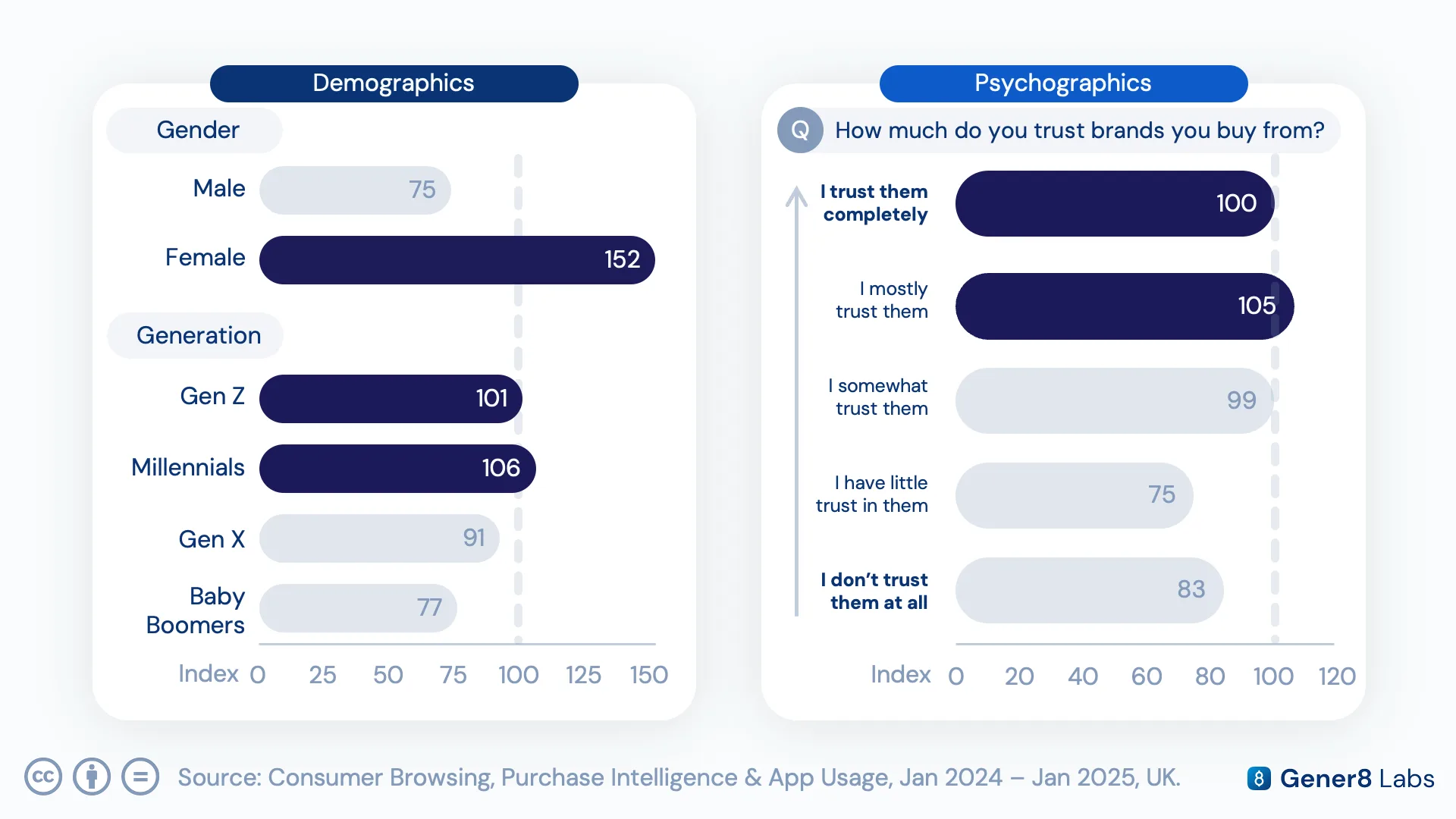
That audience indexed strongly as female (i152) and skewed younger, over-indexing among Gen Z and Millennial respondents, with a general disposition toward trusting established brands.
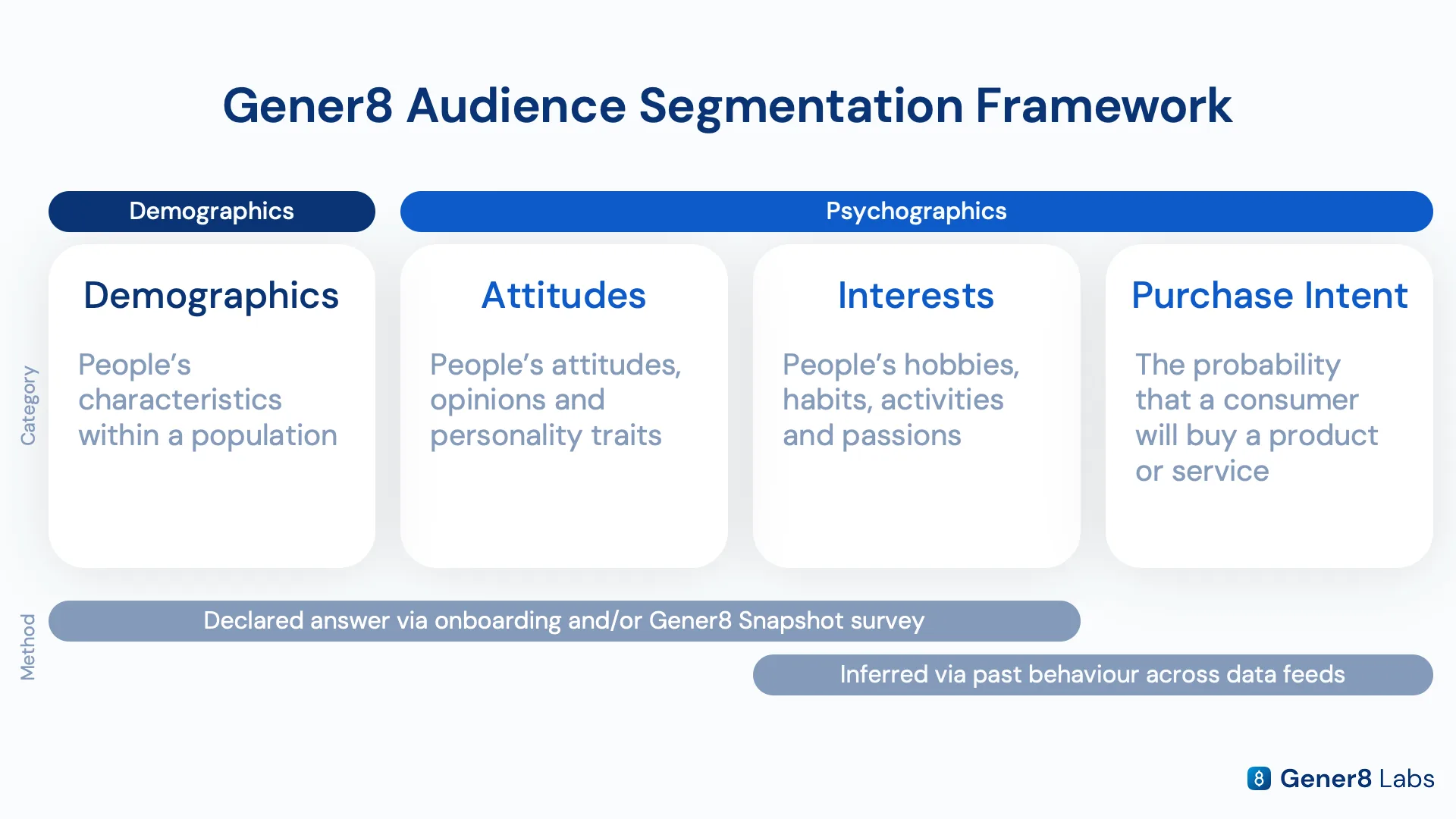
These are just a taster of what's possible within our broader audience segmentation framework, which offers countless ways to analyse and interpret data for a deeper understanding of your target audience. Four advantages fall out of working this way: a larger base than most standalone survey panels can offer, insight available immediately rather than after a fielding period, audiences validated by observed behaviour rather than self-report, and the option to layer a targeted survey on top when a specific question still needs asking.
Brands often face challenges in understanding how their audiences vary across different platforms.
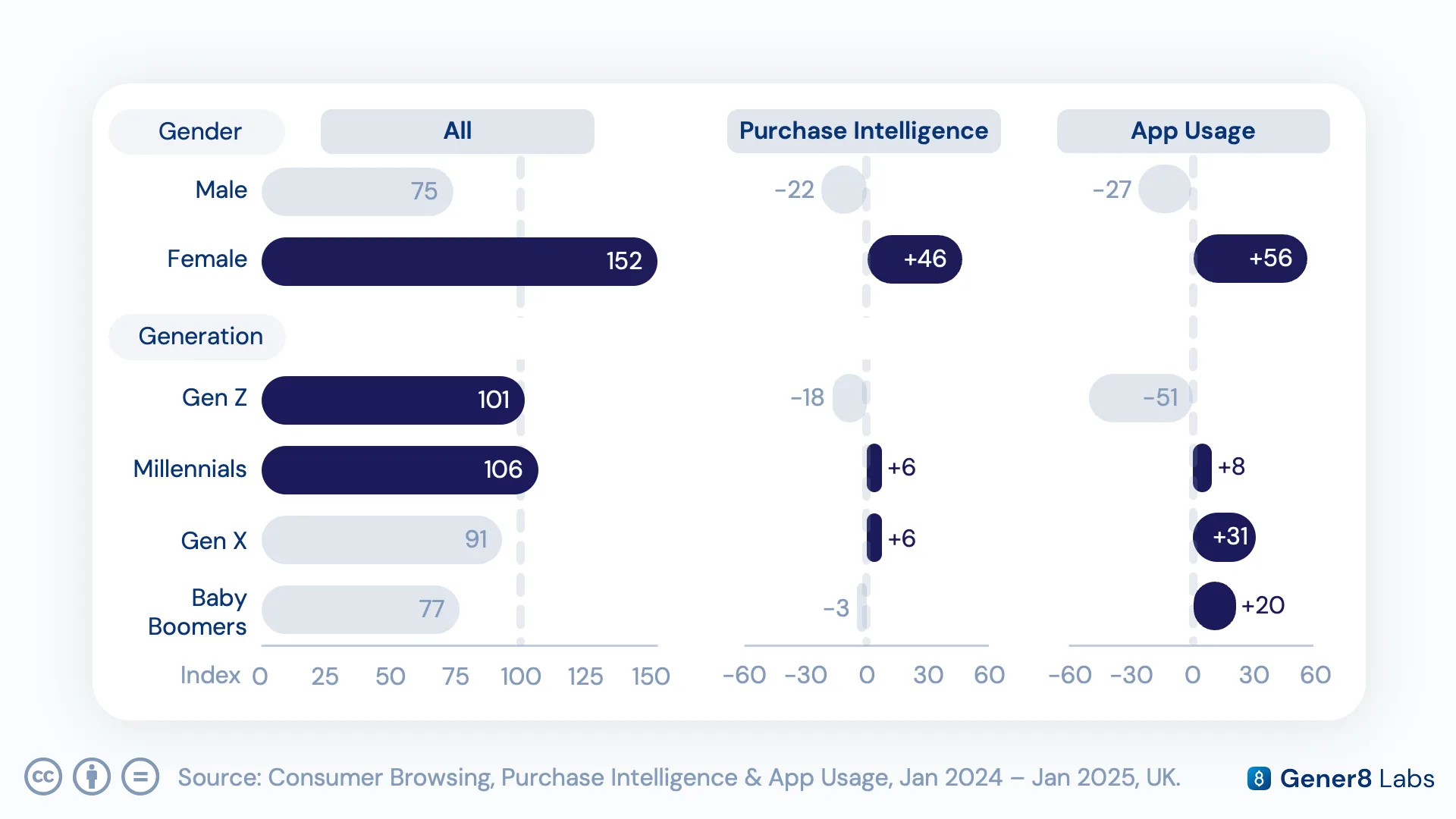
Breaking the Boots audience apart by channel showed real differences. Purchasers indexed even higher as women (i198) and Millennials (i112), while app users skewed female more strongly still (i208) and were notably less likely to be male (i48). Boots app users also skewed toward older generations compared with the overall audience, with Gen Z far less likely to use the app (i50).
Layering in activity timing, frequency, and depth, alongside close competitor activity and other target site or app activity, sharpens the picture further, and is a crucial behavioural insight for benchmarking a target audience against its close competitors.
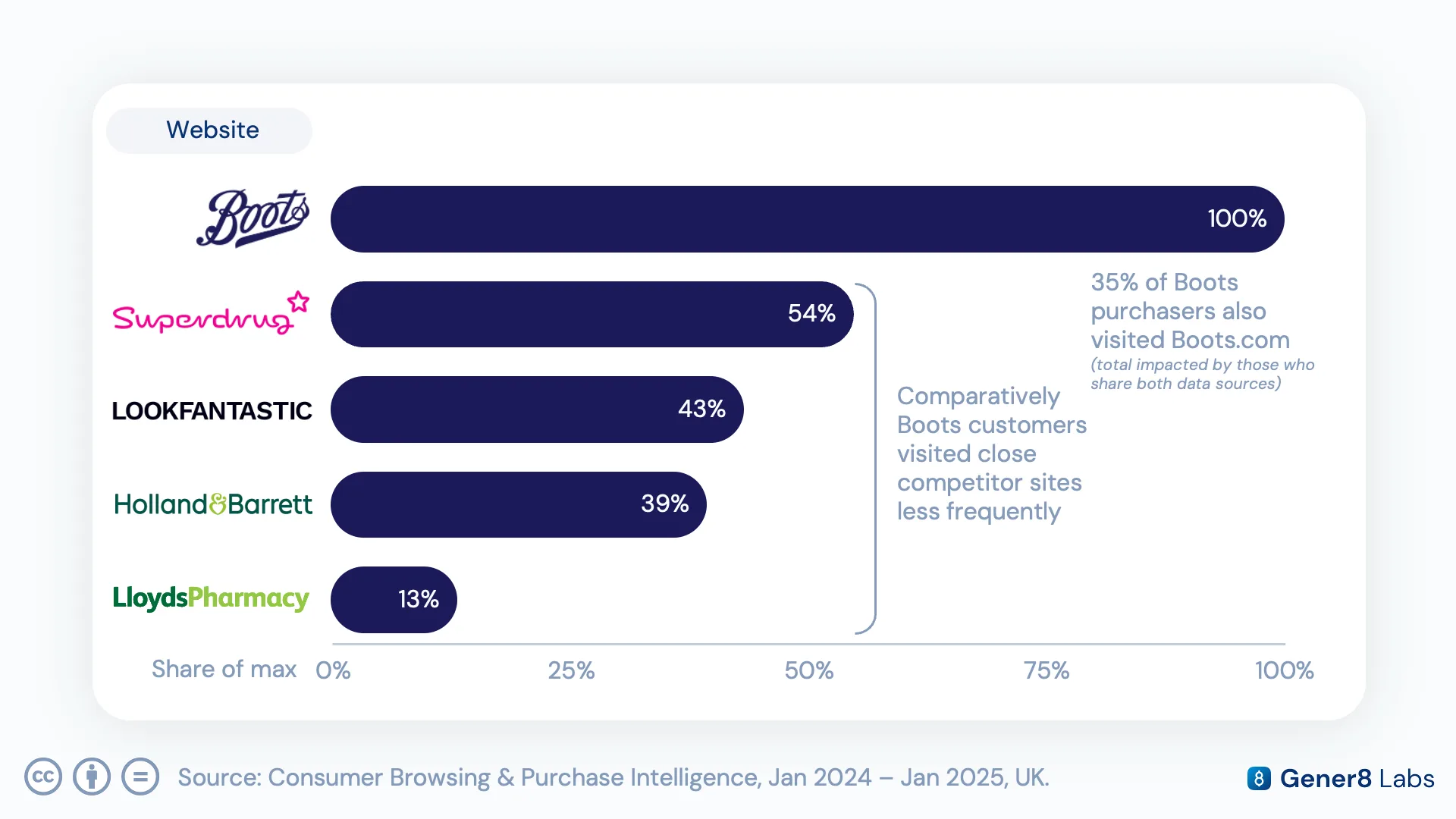
For instance, we were able to confirm that those who had purchased from Boots were also more likely to have visited the Boots website than those of close competitors Superdrug, Lookfantastic, Holland & Barrett, or LloydsPharmacy.
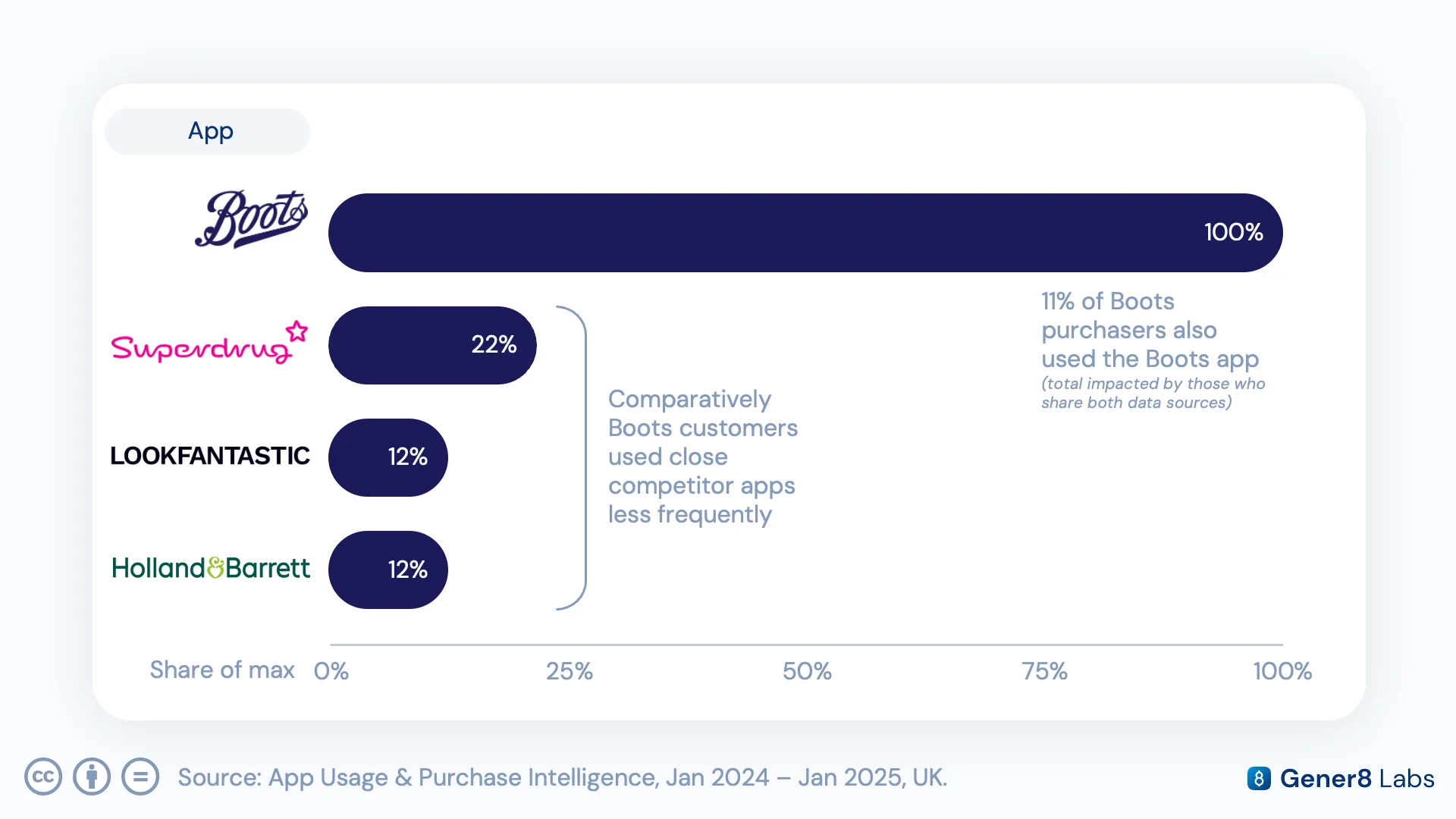
The findings were similar when we looked at app usage: those who had bought from Boots were much more likely to have also used the Boots app than those of close competitors.
It can be valuable to look beyond the demographic and psychographic profiles of your target audience and ask a broader question: what other websites do they engage with the most? Given that users can engage with millions of different websites, we focused on the top 50,000 most popular sites based on UK visits, classified to IAB standard categories.
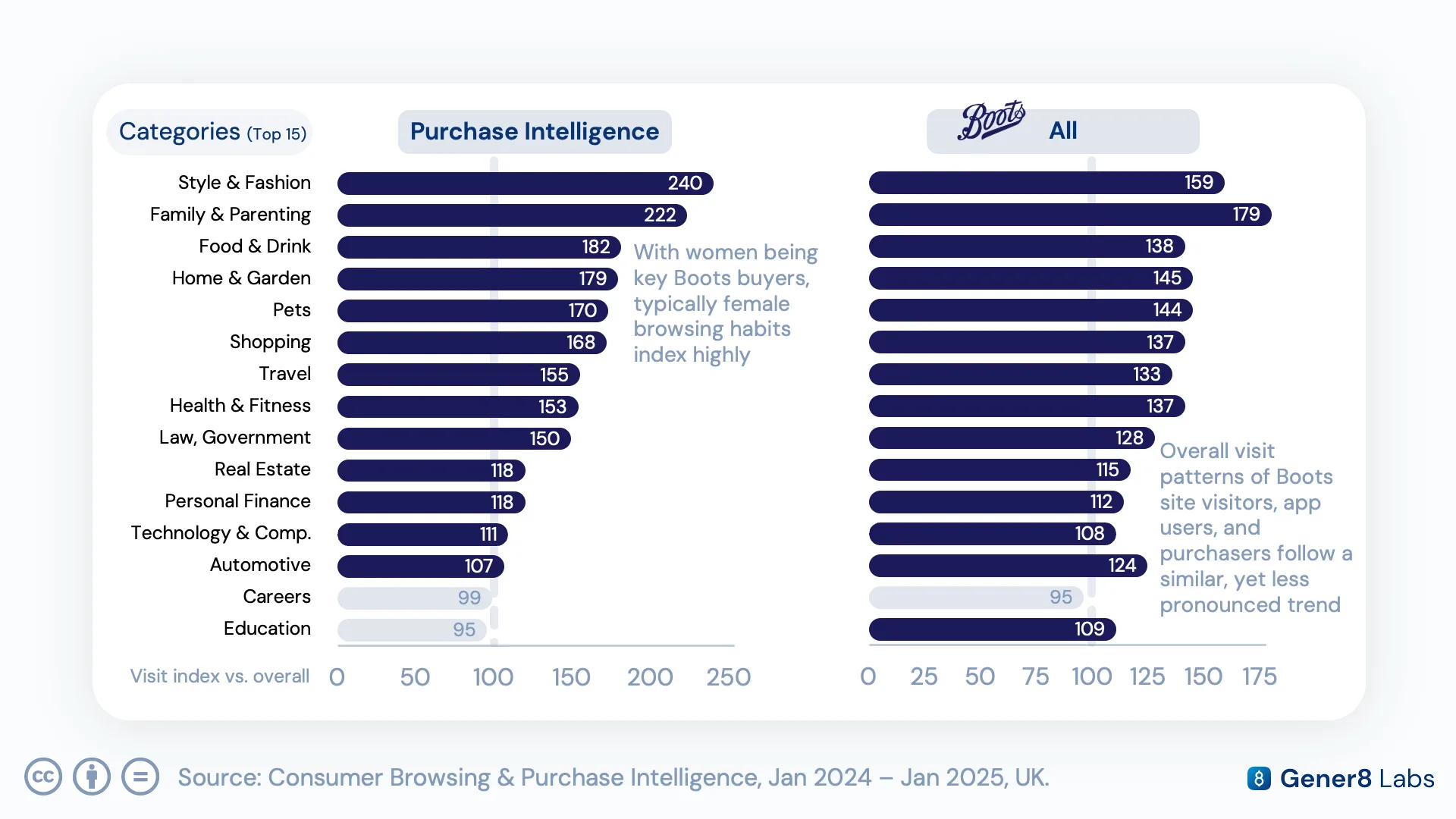
Focusing on those who had purchased from Boots, Style and Fashion (i240), Family & Parenting (i222), and Food & Drink (i182) indexed the highest, aligning with the wider female skew of Boots buyers (i196).
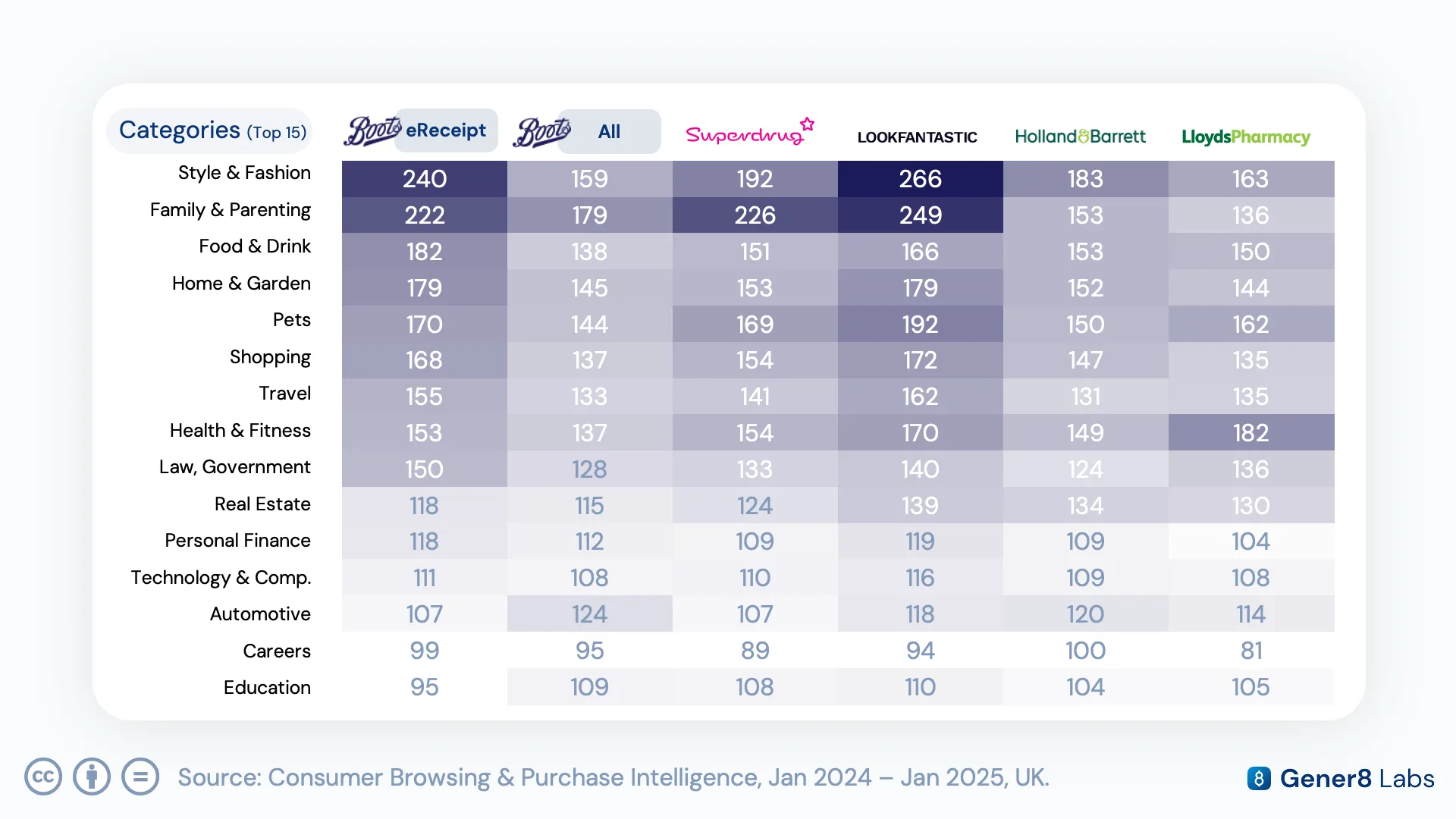
Competitor audiences largely overlapped on these same interests, highlighting how similar the audiences are in nature. But it was also useful to look for the outliers: LloydsPharmacy's audience indexed noticeably higher on Health & Fitness content, hinting at a more clinically-motivated shopper.
We can take it a step further by exploring YouTube browsing behaviour across the web. By connecting the Gener8 Consumer Browsing dataset to the YouTube API, we can delve even deeper into consumption patterns among our extensive panel of users.
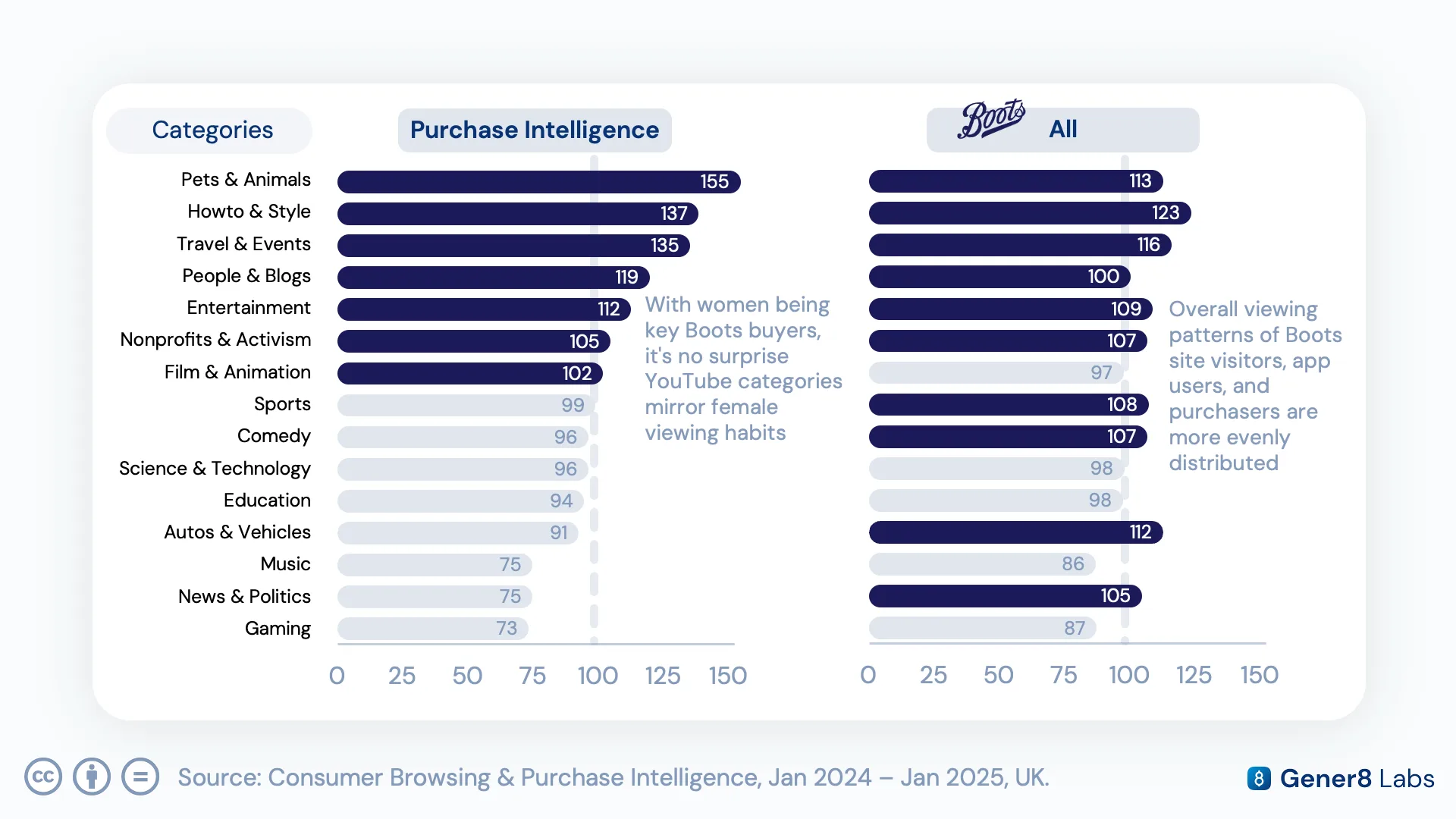
Boots purchasers showed a strong preference for Pets & Animals (i155), How-to & Style (i137), and Travel & Events (i135), content preferences typically seen in audiences with a higher female demographic.
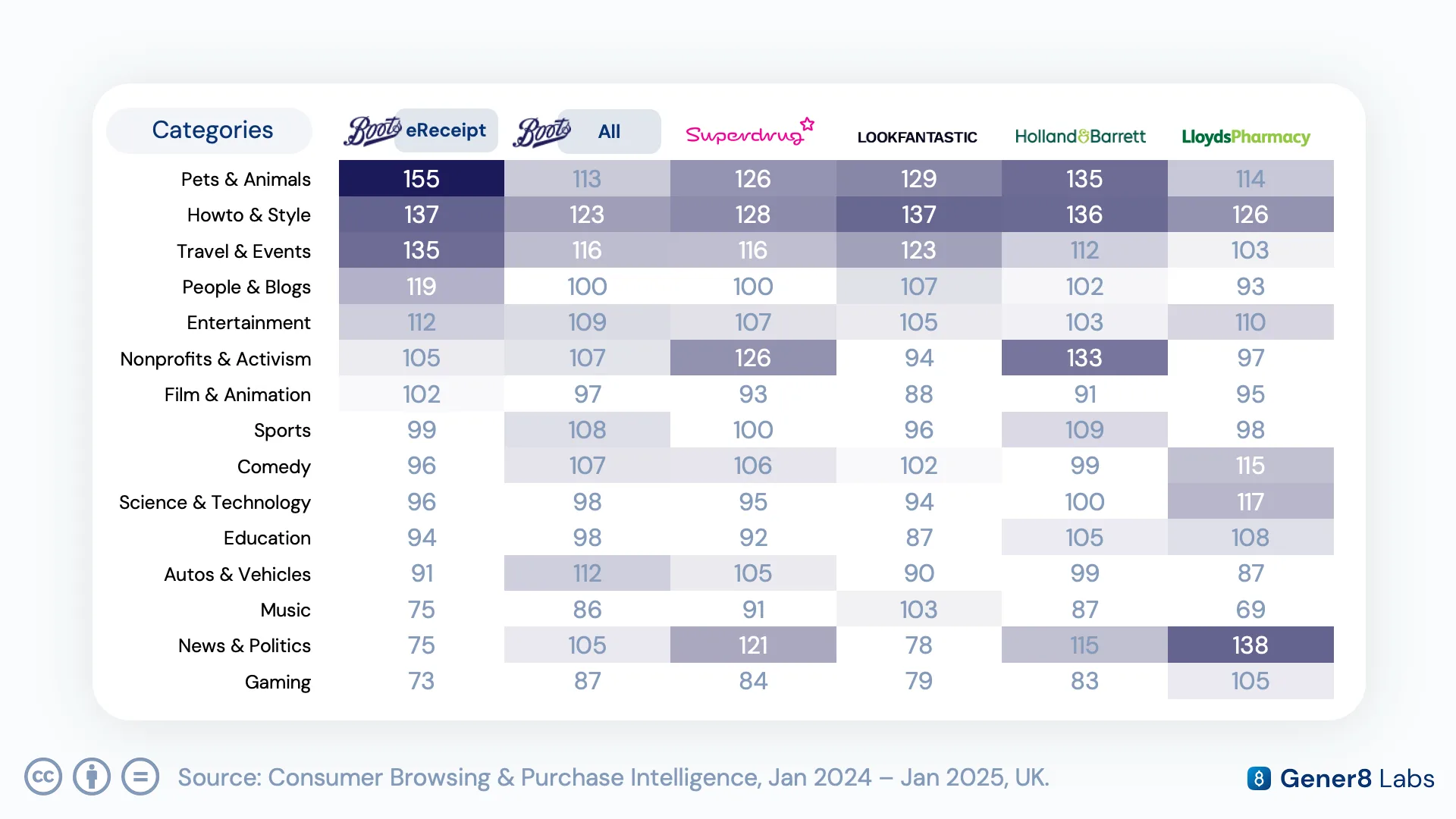
Competitor audiences shared broadly the same top three categories, though Holland & Barrett and Superdrug audiences showed a distinctly stronger pull toward Nonprofits & Activism content, a small but telling brand-affinity signal a purchase record alone would never reveal.
We used Gener8's Consumer Browsing, Purchase Intelligence and App Usage datasets alongside Domain and YouTube video classification to learn more about the Boots audience and those of its close competitors. Get in touch to see how the same behavioural truth set can power a competitor audience analysis of your own.